Where Winter's Deepest Snows Nurture Japan's Oldest Flavors
In Nagaoka, the rhythms of fermentation follow the seasons - and seven feet of powder becomes the silent keeper of culinary time.
The Landscape That Remembers
Honshu's northwestern coast wears two faces. In late summer, rice paddies glow green under the hum of tree frogs. By January, the same fields vanish beneath snowbanks tall enough to swallow buildings whole. A hotel becomes a shipwreck. A taxi driver abandons his wheel mid-route to shovel a path forward. The disorientation is absolute - and, for those who live here, entirely intentional.
This is Niigata, where the violence of seasonal change has always dictated what can be preserved, and how. The region's culinary identity rests not on novelty but on waiting. On letting time and cold and microbial patience do what haste cannot. Fermentation, in this place, is not a trend. It is survival dressed as art.
The Architecture of Aging
Sake is the star here, and for good reason. Niigata's rice - fed by mineral-rich meltwater from surrounding peaks - is transformed through inoculation with koji, a culinary mold that has shaped Japanese flavor for centuries. But the real alchemy happens in the yukimuro, warehouses insulated by snow, where temperatures hover near freezing and the brew matures slowly, without shock.
What fewer travelers know is that sake is only the beginning. Kanzuri, a fiery paste blending koji, yuzu, and chilies that are buried in snow to temper their heat, emerges each winter with a complexity no stovetop could replicate. Sakasuke, a velvety mash made from sake lees - the rice solids left behind after pressing - carries the tart, funky signature of transformation arrested mid-process.
These are not museum pieces. They are living foods, shaped by the same forces that bury roads and reshape rooflines each year.
A City Built on Patience
Nagaoka, an industrial river port with the nickname Fermentation Town, sits at the heart of this practice. The heavy snows that arrive each winter do more than inconvenience - they purify the air, lock in humidity, and create the stable cold that delicate yeast strains require. Without those seven feet of insulation, the microbial balance collapses.
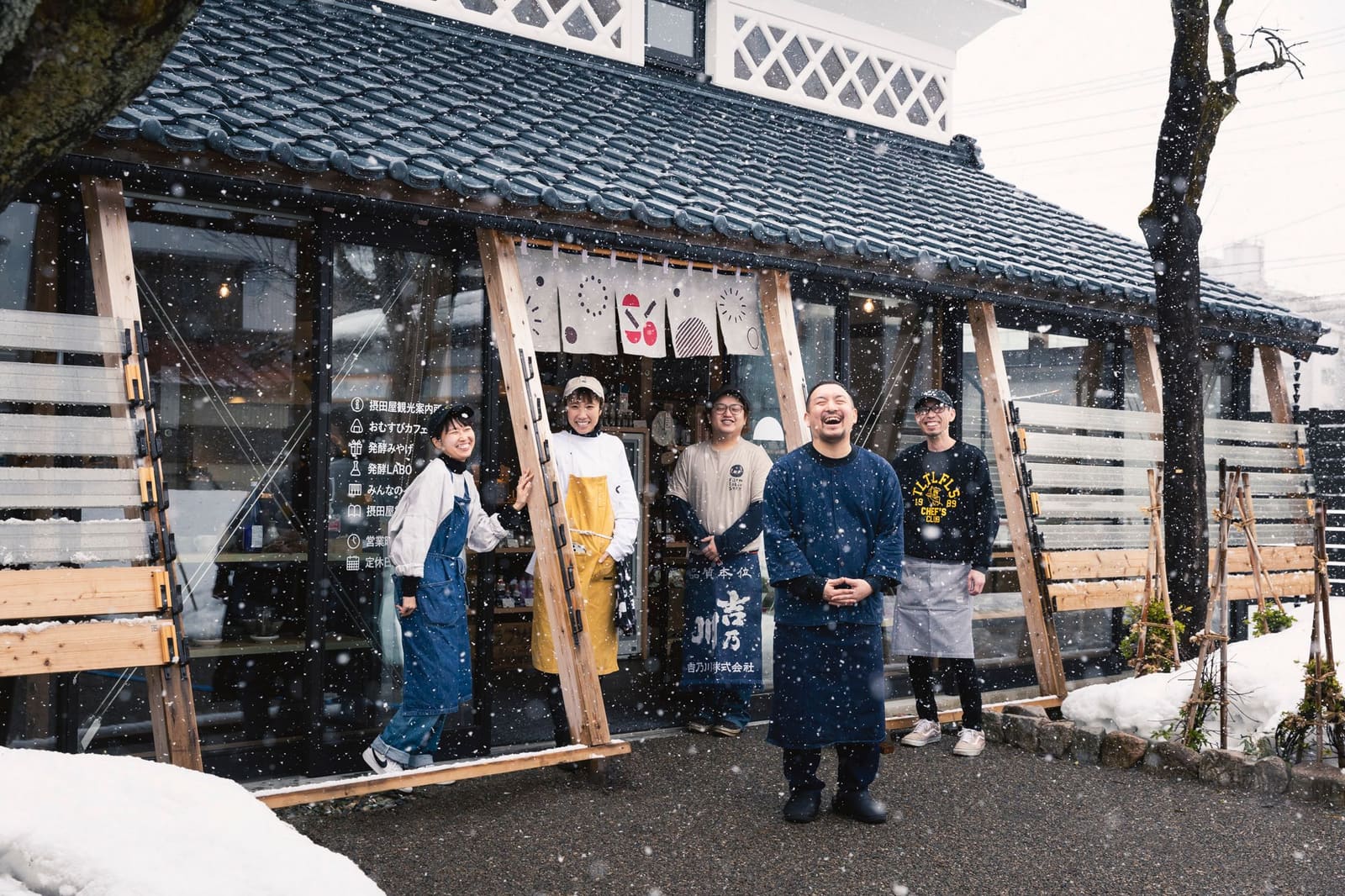
The city has formalized its identity with the Hakko Trip, a one-mile walking trail through the historic Settaya district that strings together six stops. It takes roughly two hours to complete, though that depends on how long you linger over roasted soybeans, honeyed miso, and the malty perfume of koji drifting from open doorways.
The Stops Along the Way
Willow House anchors the trail with washi lanterns, natural wood, and a soundtrack of jazz. Part of the Suzu Group - a collective of restaurants, izakayas, and guesthouses - it modernizes tradition without erasing it. Sourdough loaves share counter space with caramelized apple rolls and gratin toast enriched with dashi-infused béchamel. The café menu leans into fermentation with miso-pickled potato salad, fermented tomato salsa, and ham aged in snow.
Eguchi Dango, a fourth-generation wagashi sweets shop, offers skewers of rice dumplings glazed in sticky-sweet fermented soy sauce. The takeaway counter moves quickly, but the flavors linger - umami cut with caramel, salt balanced by chew.
The Settaya 6th Avenue Fermentation Museum Komegura occupies the former warehouse of a saffron sake brewery. Chinese zodiac panels decorate the exterior; inside, a lab explains the science of microbial transformation. The gift shop stocks miso, amazake - a rice-and-koji drink linked to longevity - and bottles of saffron liqueur produced from an 1884 recipe.
Off the official trail, Yanagi stands as a heritage miso producer that cracked the code on fermenting brown rice, a grain notoriously difficult to coax into cooperation. Wood vats line the space, each filled with brews at different stages of maturity. A miso-themed lunch served here becomes a lesson in terroir - how altitude, water source, and aging time rewrite the same base ingredient into dozens of distinct expressions.
Nakagawa Sake Brewery revived Gouriki, a nearly extinct heirloom rice variety native to the region. The grain's return required years of cultivation and trial, but the resulting sake carries a profile unavailable anywhere else - proof that preservation and innovation are not opposites.
Yoshinogawa, founded in 1548, holds the title of Niigata's oldest sake brewery. It has brewed continuously for nearly five centuries, adapting to war, climate shifts, and changing tastes without abandoning the core methods that define its output.
The Meal That Holds the Season
Hakko House Nagaoka, a two-room guesthouse, runs a quiet izakaya where chef and owner Sho Suzuki composes multicourse meals around fermentation. Eleven dishes, each paired with sake. Sweet potato tempura arrives with sake-lees cream. A lotus-root dumpling floats in flying fish dashi. The progression is deliberate, almost ceremonial.
Between courses, Suzuki offers a local expression: "The snow of winter creates the sweetness of summer." It is not metaphor. The cold that buries this place each year does not pause the cycle - it enables it. Summer's harvest becomes winter's work, which in turn feeds the next season's growth.
The Continuous Loop
Fermentation, in Nagaoka, is not about stopping time. It is about bending it, stretching it, letting microbes do what human hands cannot. The snow that forces taxis off the road and transforms hotels into half-buried relics also creates the conditions for flavors that cannot be rushed. Patience here is not a virtue - it is infrastructure.
The dishes that emerge from this process carry the memory of place: the chill of the yukimuro, the mineral trace of mountain melt, the funk of koji working in darkness. They taste like Niigata because they are made of Niigata, in a way that no recipe exported elsewhere could replicate.
To eat here is to participate in a cycle older than any of the breweries, older than the buildings, older than the trails that now guide visitors through. It is to understand that summer and winter are not opposites but collaborators, and that the best flavors are the ones that know how to wait.