Where Shadow Meets Earth: Mapping the Coming Age of Total Eclipses
Three extraordinary celestial events will paint darkness across some of the world's most compelling landscapes between 2026 and the next century - and the destinations beneath them are already rewriting their stories.
When the Sky Turns to Velvet
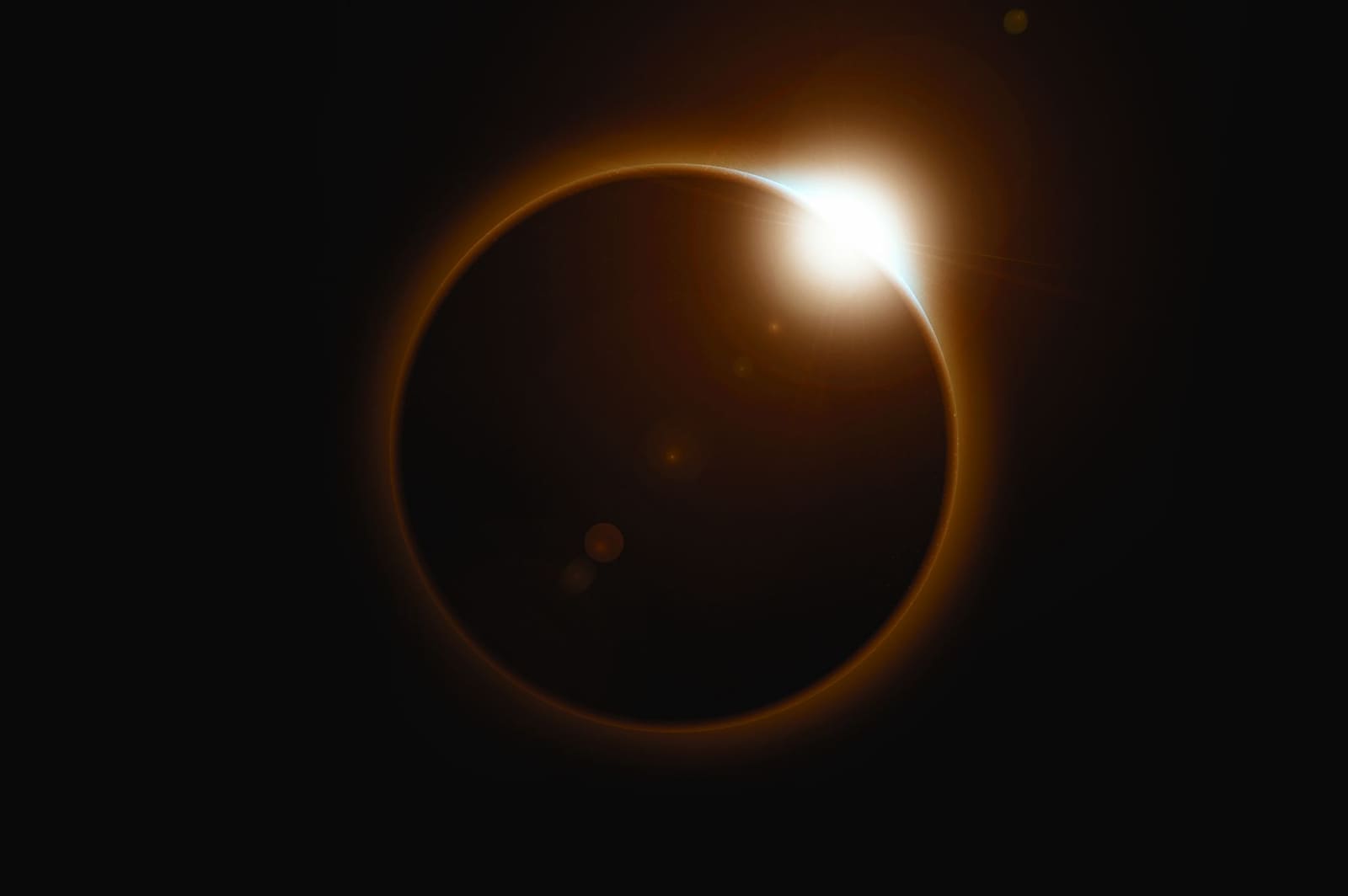
There is a particular quality to the light in the minutes before totality - a silvery dimming that feels borrowed from another world. We have watched it descend over deserts and coastlines, over cities that fell suddenly silent and mountains that seemed to lean closer to the sky. At Global Chic Voyage, we have long believed that the most profound travel experiences happen when place and moment converge in ways no itinerary can fully anticipate. And now, the cosmos is offering such a convergence on a scale we will not see again in our lifetimes.
Beginning in 2026, a sequence of three total solar eclipses will trace paths across landscapes that range from the geologically ancient to the culturally intricate. These are not merely astronomical events; they are invitations to stand in the umbra - the moon's deepest shadow - and witness the sun's corona flare into visibility against a darkened sky. What makes this trilogy remarkable is not only the rarity of the phenomenon but the duration: periods of totality that will stretch longer than any eclipse until the twenty-second century.
The destinations beneath these celestial paths are already preparing. Small villages are bracing for unprecedented arrivals. Hotels are being built or renovated. Local astronomers are partnering with international observatories. And travelers who understand the value of bearing witness are quietly marking their calendars.
The Architecture of an Eclipse Corridor
To understand what is coming, one must first grasp the geography of shadow. A total solar eclipse occurs when the moon passes directly between Earth and sun, casting a narrow band of darkness - typically no wider than a hundred miles - across the planet's surface. Step outside this corridor, even by a few dozen miles, and you see only a partial eclipse: interesting, perhaps, but not transformative. Inside the path of totality, however, day becomes night, stars emerge, and the temperature drops as if dusk has arrived in an instant.
The three eclipses in question will carve their paths across regions that offer more than celestial spectacle. They intersect with cultural heritage sites, ecological reserves, and landscapes that have long drawn travelers for reasons entirely unrelated to astronomy. This convergence is what elevates the experience from observation to pilgrimage.
The first of the trio, arriving in August 2026, will sweep across the high plateaus and coastal stretches of the Iberian Peninsula before continuing into North Africa. The second, in 2027, will trace a path through North Africa and the Middle East, crossing ancient trade routes and modern capitals alike. The third - often referred to by astronomers as the event of the century due to its extraordinary duration of totality - will occur in 2027 and will pass over regions in North Africa and the eastern Mediterranean, where the moon's shadow will linger for more than six minutes in some locations.
Where to Stand When Darkness Falls
Choosing where to witness totality is as much an aesthetic decision as a logistical one. The longest duration of totality is not always the most compelling vantage point. At Global Chic Voyage, we have always counseled that context matters: the architecture of the horizon, the cultural resonance of the place, the quality of light that returns when the sun reemerges.
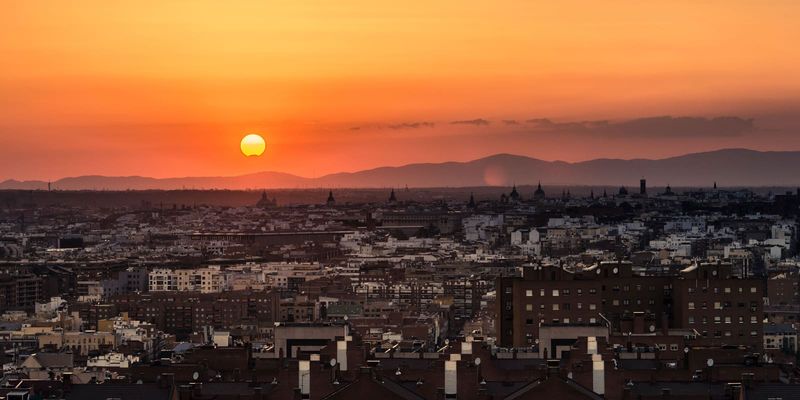
For the 2026 eclipse, the western coast of Spain and Portugal will offer dramatic Atlantic backdrops. Imagine standing on a cliff overlooking the ocean as the shadow races across the water toward you at more than a thousand miles per hour. Inland, the plateau regions of central Spain provide open skies and minimal light pollution, conditions that favor both naked-eye observation and astrophotography.
The 2027 eclipses will shift the stage eastward and southward. Morocco's Atlas Mountains and the edges of the Sahara will fall within the path, offering both altitude and clarity. Egypt's Red Sea coast, where resort infrastructure is already well-developed, will attract those who prefer comfort alongside celestial drama. Further east, the shadow will pass over sites of archaeological significance - places where ancient civilizations once tracked the movements of sun and moon with obsessive precision.
The longest totality, however, will occur over regions in North Africa and the eastern Mediterranean. Here, travelers will have the option of witnessing the eclipse from desert landscapes where the horizon stretches unbroken in all directions, or from coastal vantage points where the interplay of sea and sky amplifies the surreal quality of the moment.
The Logistics of Celestial Travel
Planning for an eclipse requires a different calculus than planning for, say, a cultural festival or a seasonal migration of wildlife. Weather is the wildcard. Cloud cover can reduce a once-in-a-lifetime experience to a disappointing dimming of ambient light. This is why many seasoned eclipse chasers book accommodations along a broad swath of the totality path, remaining mobile until the final days before the event.
Accommodations within the path of totality are already becoming scarce for the 2026 eclipse, and we expect similar pressure for the subsequent events. Small towns that typically see modest tourist traffic are now fielding inquiries from travelers accustomed to five-star service. In response, luxury hospitality groups are exploring pop-up experiences - high-end tented camps with telescopes, expert astronomers on hand, and culinary programs that reflect the local terroir.
Transportation, too, requires forethought. Roads leading into prime viewing areas can become congested in the hours before totality. Some travelers are opting for private charters or helicopter transfers to remote sites. Others are building longer itineraries that allow them to arrive days in advance, embedding the eclipse within a broader exploration of the region.
Why We Return to the Path of Shadow
There is a reason why people who witness one total eclipse often become eclipse chasers, structuring entire travel calendars around the narrow bands of totality that appear every few years somewhere on Earth. The experience is, in the most literal sense, otherworldly. The sudden appearance of the solar corona - a halo of plasma visible only during totality - reminds us that we live on a planet orbiting a star, a fact easily forgotten in the routines of daily life.
But beyond the astronomy, there is something profoundly humbling about standing in a crowd of strangers, all of you momentarily united in silence as the sky performs a vanishing act. We have found that the best eclipse experiences are those that balance solitude with shared witness - private vantage points that still allow you to hear the gasps and murmurs of others nearby, a reminder that wonder is both personal and collective.
The destinations that fall within the coming eclipse paths are not passive backdrops. They are places with their own narratives, their own reasons to be visited. The eclipses simply add a temporal urgency, a reason to go now rather than later. And for travelers who have long deferred a journey to the Sahara, or the Iberian coast, or the archaeological sites of the eastern Mediterranean, the promise of totality may be the nudge required to finally book the flight.
The Longest Wait
After 2027, the next total solar eclipse with a comparable duration of totality will not occur until 2114. This is the kind of timeline that reshapes how we think about opportunity. Most of us will not be here to see it. Our children, perhaps, but more likely our grandchildren or great-grandchildren. And so the eclipses of 2026 and 2027 carry a weight that goes beyond the immediate spectacle. They are, for many of us, the only chance we will have to stand in such prolonged darkness, to watch the sun's atmosphere shimmer into view, to feel the temperature drop and the quality of light shift in ways that no photograph or video can fully capture.
At Global Chic Voyage, we often talk about the difference between seeing and witnessing. Seeing is passive; witnessing requires presence, attention, a willingness to let an experience imprint itself upon you. The coming eclipses offer that kind of moment. They are not background events to be checked off a list. They are invitations to pause, to look up, and to remember that we are travelers not only across the surface of the Earth but through the corridors of time and space.
The hotels are already filling. The tour operators are refining their itineraries. The astronomers are calibrating their instruments. And somewhere, in a village beneath the path of totality, someone is looking at a calendar and realizing that their home is about to become the center of the world, if only for a few minutes, if only for the span of a shadow.