Where Geothermal Waters Meet the Montana Wilderness
Quinn's Hot Springs Resort has quietly drawn travelers to the northern Rockies for over a century - its appeal lies not in reinvention, but in constancy.
A Place Called Paradise
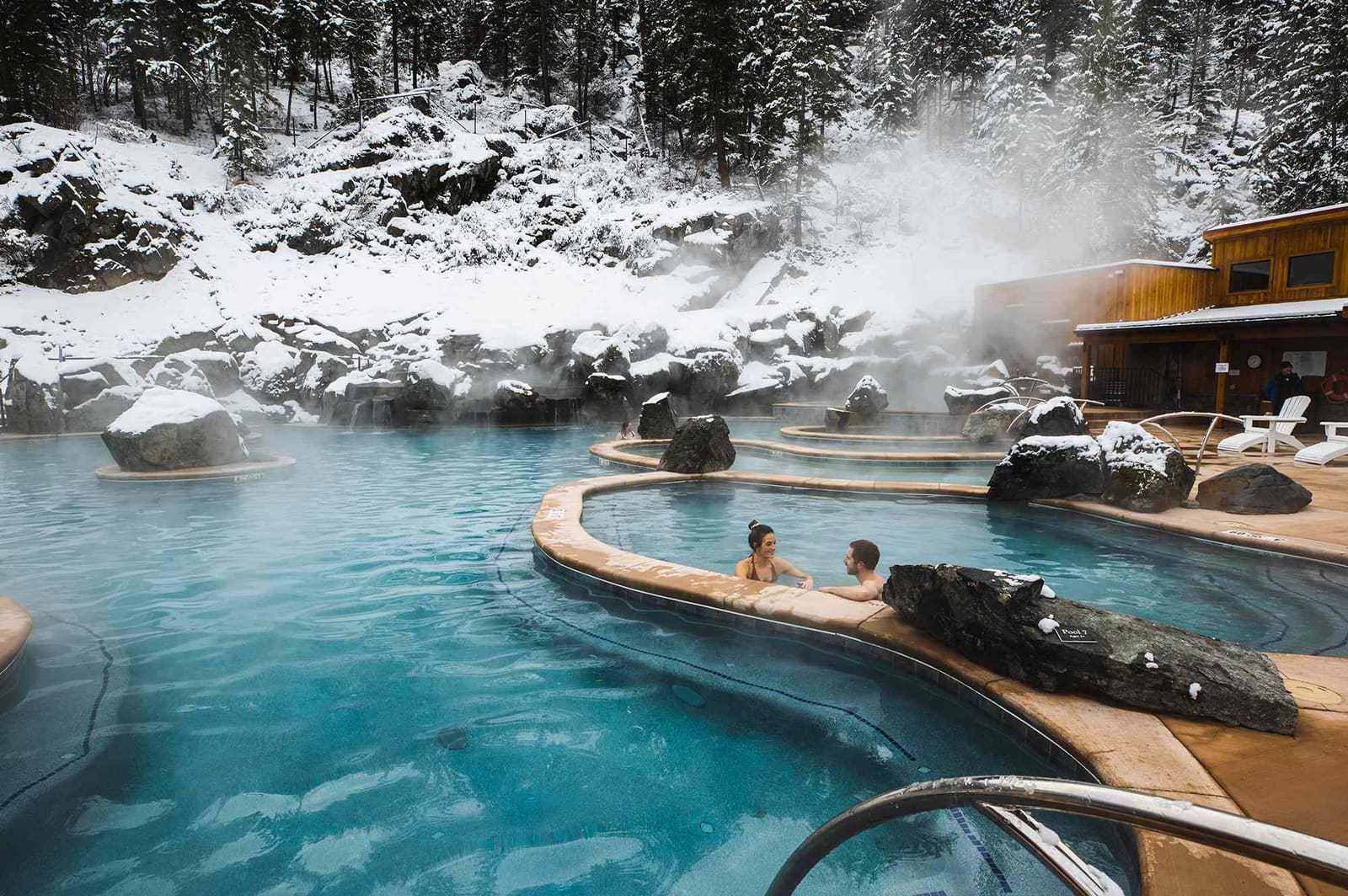
There are corners of the American West where the name on the map feels less like coincidence and more like prophecy. Paradise, Montana, is one such place - a scatter of buildings along the Clark Fork River, hemmed in by the Cabinet Mountains to the south and the Bitterroot Range to the north. Here, where Highway 135 curves along the water, Quinn's Hot Springs Resort has occupied the same patch of ground since the late 1800s, drawing heat from deep beneath the valley floor and channeling it into pools that steam against the open sky.
At Global Chic Voyage, we've watched the luxury wellness landscape tilt toward the curated, the algorithmic, the hyper-designed. Quinn's operates in a different register. Its appeal is elemental: hot water, cold air, the sound of the river at night. The architecture makes no grand statements. The amenities list is short. What it offers instead is a kind of temporal suspension - a place where the primary activity is simply being present in a landscape that has been doing its work, quietly, for millennia.
The Geology of Comfort
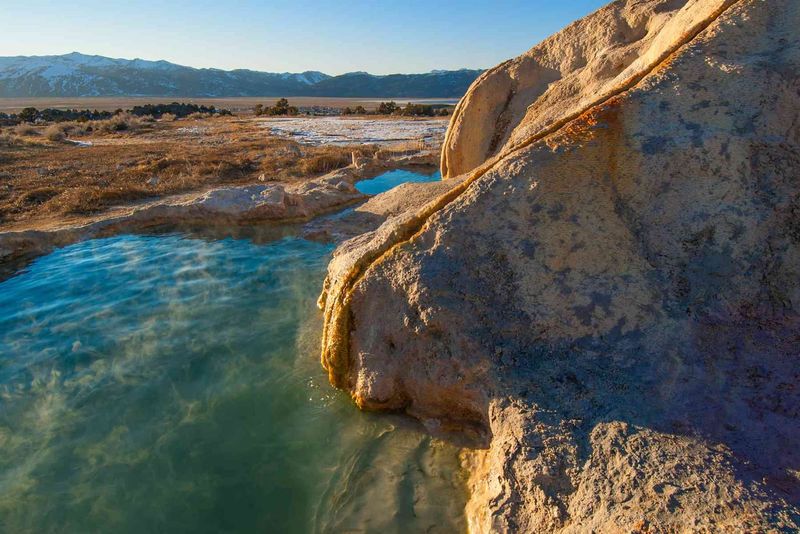
The hot springs themselves are fed by geothermal aquifers that rise through fissures in the bedrock, emerging at temperatures that hover near 110 degrees Fahrenheit. The water is rich in minerals - silica, calcium, magnesium - and carries with it the faint sulfuric signature common to volcanic regions, though the scent here is mild, almost sweet. The resort channels this flow into a series of riverside pools, each one open to the elements, positioned so that bathers can watch the Clark Fork slide past while submerged to the chin in mineral-laden heat.
The contrast is part of the experience. In winter, when the air temperature drops below zero and snow gathers on the pines, the pools become islands of warmth in a frozen world. In summer, when the valley bakes under long daylight and the river runs fast with snowmelt, the water offers a different kind of refuge - not from cold, but from the relentless pace of elsewhere.
A Century of Continuity
Quinn's history is typical of many American hot springs resorts: indigenous use for centuries, "discovery" by settlers in the late 19th century, development as a modest retreat for loggers and ranchers, gradual evolution into a destination for travelers seeking something other than the grand hotel experience. The resort has changed hands several times over the decades, but its footprint has remained relatively stable. The main lodge is unpretentious, built from local timber and stone. The cabins scattered across the property are simple, clean, outfitted with the basics. There are no marble countertops, no rainfall showers with chromotherapy settings. The luxury here is spatial and sensory: access to the pools at any hour, the absence of crowds, the proximity to wilderness.
What strikes us about Quinn's is its resistance to transformation. In an era when every historic property seems compelled to announce its relevance through renovation, Quinn's has chosen constancy. The pools are the same pools. The river is the same river. The mountains, of course, are unchanged. This is not a critique of progress - there is value in thoughtful modernization - but there is also value in recognizing when a place has already found its form.
The Rhythms of Retreat
A stay at Quinn's follows a loose, unstructured rhythm. Mornings begin with coffee on the cabin porch, mist rising from the pools, the occasional osprey circling overhead. Afternoons might involve a short drive into the surrounding national forest, where hiking trails wind through old-growth cedar and fir, or a float down the Clark Fork in a rented raft. But the gravitational pull is always back to the water - to the pools, where the hours dissolve and the only measure of time is the shifting angle of sunlight on the mountains.
The dining options are straightforward: a small restaurant on-site serving regional fare - bison, trout, huckleberry in season - and a handful of local establishments within a short drive. The food is honest, unpretentious, calibrated to appetite rather than performance. There is no tasting menu, no molecular intervention. What you taste is place: the terroir of the northern Rockies, where the growing season is short and the flavors are concentrated.
Why Some Places Endure
The question we return to, standing waist-deep in mineral water as the sun drops behind the ridge, is why Quinn's continues to draw people back. The answer, we think, lies in its refusal to be anything other than what it is. It does not market itself as a wellness destination, though the mineral springs undeniably offer therapeutic benefit. It does not position itself as a luxury retreat, though the experience of soaking under stars in the middle of Montana's wilderness is, by any measure, luxurious. It simply exists, offering access to a landscape and a resource that have been here far longer than the resort itself.
In a travel landscape increasingly dominated by the curated and the Instagrammable, there is something quietly radical about a place that asks so little of its guests. No programming, no itinerary, no suggested journey of self-discovery. Just hot water, open sky, and the understanding that sometimes the most profound luxury is the freedom to do nothing at all.
The Broader Context
Quinn's is part of a larger constellation of geothermal sites across the American West - places where tectonic activity and hydrology converge to produce what indigenous communities have long understood as sacred waters. The commercialization of these sites has been uneven: some have become tourist spectacles, others have been protected as cultural heritage, and a few, like Quinn's, occupy a middle ground, offering public access while maintaining a low profile.
The challenge for such places is sustainability - not in the environmental sense, though that is critical, but in the economic and cultural sense. How does a historic hot springs resort remain viable without succumbing to the pressures of expansion, branding, and demographic targeting? Quinn's answer, so far, has been to stay small, to resist the impulse toward scale, and to trust that there will always be travelers who value immersion over amenity, who seek out places that feel discovered rather than designed.
A Closing Thought
We left Quinn's on a morning when fog clung to the river and the mountains were invisible behind a veil of cloud. The pools were empty, the water still steaming. Somewhere upstream, an eagle called. The road back to Missoula was long and winding, and as we drove, we found ourselves already planning the return - not because Quinn's offers anything we couldn't find elsewhere, but because it offers something increasingly rare: a place that has resisted the urge to become anything other than itself. In a world of constant reinvention, that kind of constancy feels like its own form of luxury.