When Water Becomes Medicine: A Journey Through Seven Immersive Therapies
From moonlit floats in the Riviera Maya to silent dives beneath Maldivian lagoons, the world's most inventive spas are returning to water's oldest promise - that immersion can heal.
The Memory Water Holds
There is a moment, just before you slip beneath the surface, when the body remembers something older than language. The skin registers temperature, the ears adjust to pressure, and somewhere deep in the brainstem, an ancient recognition fires: you are returning to the element that first held you. At Global Chic Voyage, we've watched the wellness industry cycle through infrared saunas, cryotherapy chambers, and sound-healing pods, but the most compelling therapies emerging now are those that strip away technology and return to water's fundamental capacity to transform.
What distinguishes this new wave of aquatic treatments from the hotel pool or resort hot tub is intentionality. These are not amenities but rituals, designed with the precision of choreography and the reverence of ceremony. They ask participants to surrender weight, to relinquish control, to float or dive or steam in ways that dissolve the membrane between body and element. We sought out seven experiences that exemplify this shift, each one proof that water's therapeutic power grows not from what we add to it, but from how deliberately we enter it.
Floating Under Stars in the Riviera Maya
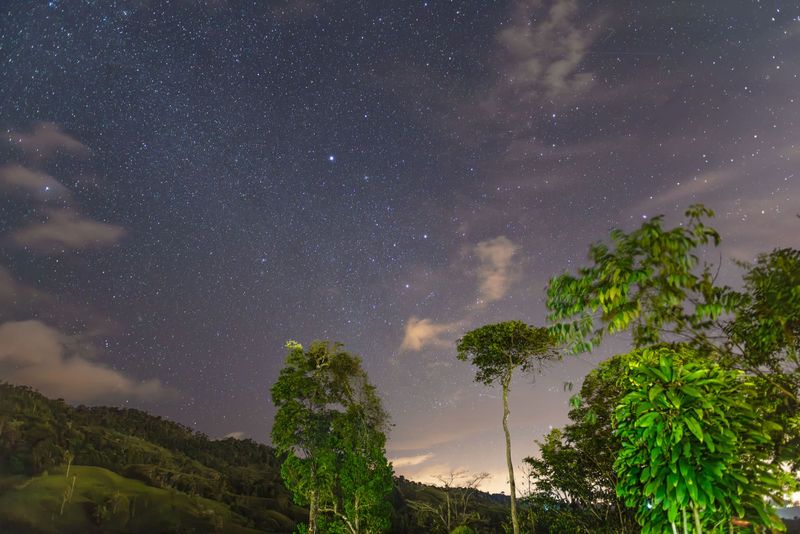
At Rosewood Mayakoba, the Float & Glow Evening Soak begins after dark, when the jungle settles into its nocturnal rhythm. Offered between eight in the evening and midnight at the property's Sense spa, the treatment unfolds in a private pool surrounded by dense foliage. You lie on a floating mat, weightless, while therapists move around you with Tibetan singing bowls. The instruments rest occasionally on your sternum or abdomen, their vibrations traveling through water and bone in equal measure.
The genius lies in the timing. By restricting the experience to nighttime hours, Rosewood has created a treatment that doubles as a sleep ritual. The combination of buoyancy, darkness, and harmonic resonance quiets the nervous system in ways that feel less like spa pampering and more like a carefully engineered descent into rest. We've tried similar sound-bath therapies on massage tables, but the addition of water changes the equation entirely. Vibration moves differently through liquid, and the body, mostly water itself, becomes a kind of secondary instrument.
Rebirth in a Seven-Colored Lagoon
Lake Bacalar, in Mexico's Yucatan Peninsula, earns its nickname honestly. The lagoon shifts through gradients of turquoise, cobalt, and jade depending on depth and limestone bed, and it is in these chromatic waters that Habitas Bacalar offers Janzu. The practice, developed in the 1980s by a German aquatic bodyworker, combines elements of Watsu, dance, and breath work into something that feels less like therapy and more like liquid choreography.
A shamanic aquatherapist guides you through a series of movements, some above the surface, many below. A nose clip prevents inhalation, which sounds clinical until you realize it grants permission to stop thinking about breath and simply be moved. You are rotated, stretched, cradled, and occasionally submerged in patterns that follow no logic your conscious mind can track. The effect is profoundly disorienting in the best sense. Without the anchors of gravity or predictable movement, the mind has nothing to organize, and in that cognitive pause, something unwinds.
Those who have experienced Janzu often describe it as a return to the womb, though that comparison feels too tidy. It is more accurate to say that the treatment dissolves the boundary between self and environment, a sensation both unsettling and deeply relieving.
Foam, Steam, and the Architecture of Cleansing
Hammam traditions stretch back over a thousand years, rooted in Roman bathhouse culture and refined through Islamic practices across the Middle East and North Africa. At Meraki Wellness on Grand Cayman, the ritual has been translated into a Caribbean context without losing its essential structure. The 90-minute experience moves through stations, each governed by a different temperature and texture of water.
Steam opens the pores. Exfoliating scrubs, applied with rhythmic pressure, remove dead skin. Then comes the foam, great billowing clouds of it, applied with a cloth and worked across the body in long, sweeping strokes. Warm water, poured from copper bowls, rinses everything away. The sequence is methodical, almost liturgical, and that repetition is part of the therapy. You do not have to think or choose. You only have to move from one station to the next, letting the ritual carry you.
What we appreciate about Meraki's approach is its refusal to modernize the hammam beyond recognition. The space is contemporary in design, all clean lines and natural light, but the treatment itself honors the original grammar of the practice. Water in motion, applied with intention, remains the central language.
Rain That Remembers the Sea
On France's Atlantic coast, Hôtel Barrière L'Hermitage La Baule has built its spa philosophy around thalassotherapy, the therapeutic use of seawater. The Marine Rain Massage, offered at the property's Ora Longevity Bay, takes that principle and adds a single elegant variation: continuous flow.
You lie on a treatment table beneath a fixture that releases a steady, gentle rain of warm seawater. A therapist works through muscle groups while the water runs over your skin, never pooling, never stopping. The mineral content of seawater, rich in magnesium, potassium, and trace elements, is absorbed transdermally, while the constant sensation of flow creates a hypnotic backdrop that quiets mental chatter.
The treatment speaks to a larger truth about water therapy: temperature and mineral content matter, but so does movement. Still water soothes, but moving water engages the nervous system differently, providing just enough sensory input to occupy the mind without overwhelming it. The result is a state of alert relaxation, the body awake but the mind mercifully empty.
Silence at the Ocean Floor
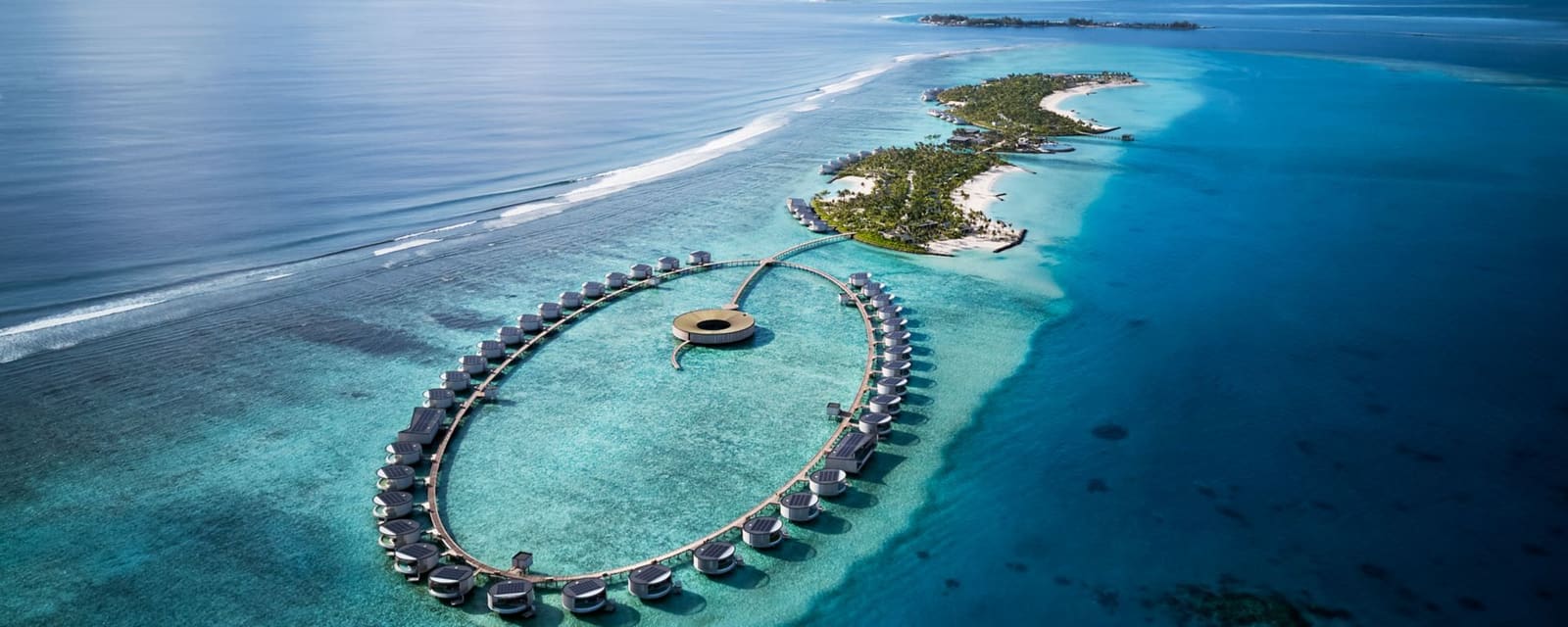
If most water therapies aim to relax, Blue Awakening at The Ritz-Carlton Maldives, Fari Islands pursues something closer to awe. Led by Vincent Meurice, a scuba instructor trained in meditation techniques, the experience involves descending to the lagoon floor in full dive gear and simply sitting. No fish-watching, no reef exploration, just breath and stillness and the strange, encompassing quiet of being underwater.
The session lasts between 45 minutes and an hour, long enough for the initial novelty to fade and something deeper to emerge. Participants report a profound sense of calm, though that word feels insufficient. The ocean floor, even in a shallow lagoon, offers a kind of sensory deprivation chamber that no spa can replicate. Sound is muffled, movement is slowed, and the visual field narrows to shades of blue and the occasional passing shadow.
What makes Blue Awakening particularly compelling is its accessibility. No prior diving experience is required, and the shallow depth means the experience is physically gentle. Yet the psychological impact is anything but mild. To sit on the ocean floor, breathing mechanically but calmly, is to confront the strangeness of your own aliveness in a way that few land-based practices can provoke.
Cold as a Catalyst
Ice diving at Ultima Hotel Courchevel flips the script on aquatic relaxation. This is not about warmth or buoyancy or gentle surrender. It is about shock, controlled and brief, delivered in the service of inflammation reduction and mood elevation. Participants wear dry suits that cover everything except the face, then descend into Lake Le Praz with an instructor. The water hovers just above freezing.
The cold hits immediately, a full-body jolt that triggers a cascade of physiological responses: vasoconstriction, adrenaline release, heightened alertness. The dive itself lasts only minutes, but the aftereffects linger for hours. Cold immersion has been studied extensively for its anti-inflammatory properties, and anecdotal reports from regular practitioners describe improved mood, sharper focus, and a kind of mental clarity that feels almost euphoric.
What distinguishes ice diving from simpler cold plunges is the immersion, literal and metaphorical. You are not dipping into a tub; you are entering an alien environment that demands complete attention. The cold becomes secondary to the strangeness of being beneath ice, moving through water so clear it barely registers as a medium. When you surface, the hotel's fireplace and hot chocolate feel earned in a way that no poolside lounging ever could.
Stones That Hold Heat, Herbs That Hold History
In Bhutan's Paro Valley, Amankora offers a bath that doubles as a lesson in resourcefulness. The Himalayan Stone Bath follows a technique used by Bhutanese farmers for generations: river stones are heated over open flame until they glow, then lowered into a wooden tub filled with water. The stones release their heat slowly, and as the water temperature rises, Khempa herb, a local artemisia variety, is added. The plant infuses the bath with oils believed to ease joint pain and improve circulation.
You soak for 30 minutes, long enough for the mineral content of the stones and the herbal compounds to work on skin and muscle. The tub is outdoors, positioned to overlook the valley, and the contrast between hot water and cool mountain air creates its own kind of therapy. This is water treatment at its most elemental: heat, stone, plant, and the body learning once again that simplicity can be sufficient.
The Return to Immersion
What unites these seven experiences is a shared conviction that water, approached with intention, can do more than clean or cool. It can reset. At Global Chic Voyage, we've spent years tracking wellness trends, and the ones that endure are rarely the most technologically advanced. They are the ones that feel both ancient and urgent, that tap into something the body recognizes even if the mind cannot name it.
Water therapy, in its current incarnation, is not new. But the care with which these properties are designing immersion experiences, the willingness to slow down and strip away, suggests a maturation in how luxury hospitality thinks about rest. These are not treatments you rush through on the way to the next appointment. They are destinations in themselves, reasons to travel, moments when the journey and the arrival become indistinguishable. The water, as it always has, simply waits to receive you.