
Tokyo Is the World's Most-Searched City and Japan's Arrivals Are Still Falling
Amadeus ranks Tokyo first among the world's most-searched destinations for October, but third on bookings. Japan's foreign arrivals fell 9.6 per cent in August, and the data cannot say whether price or politics explains the gap.
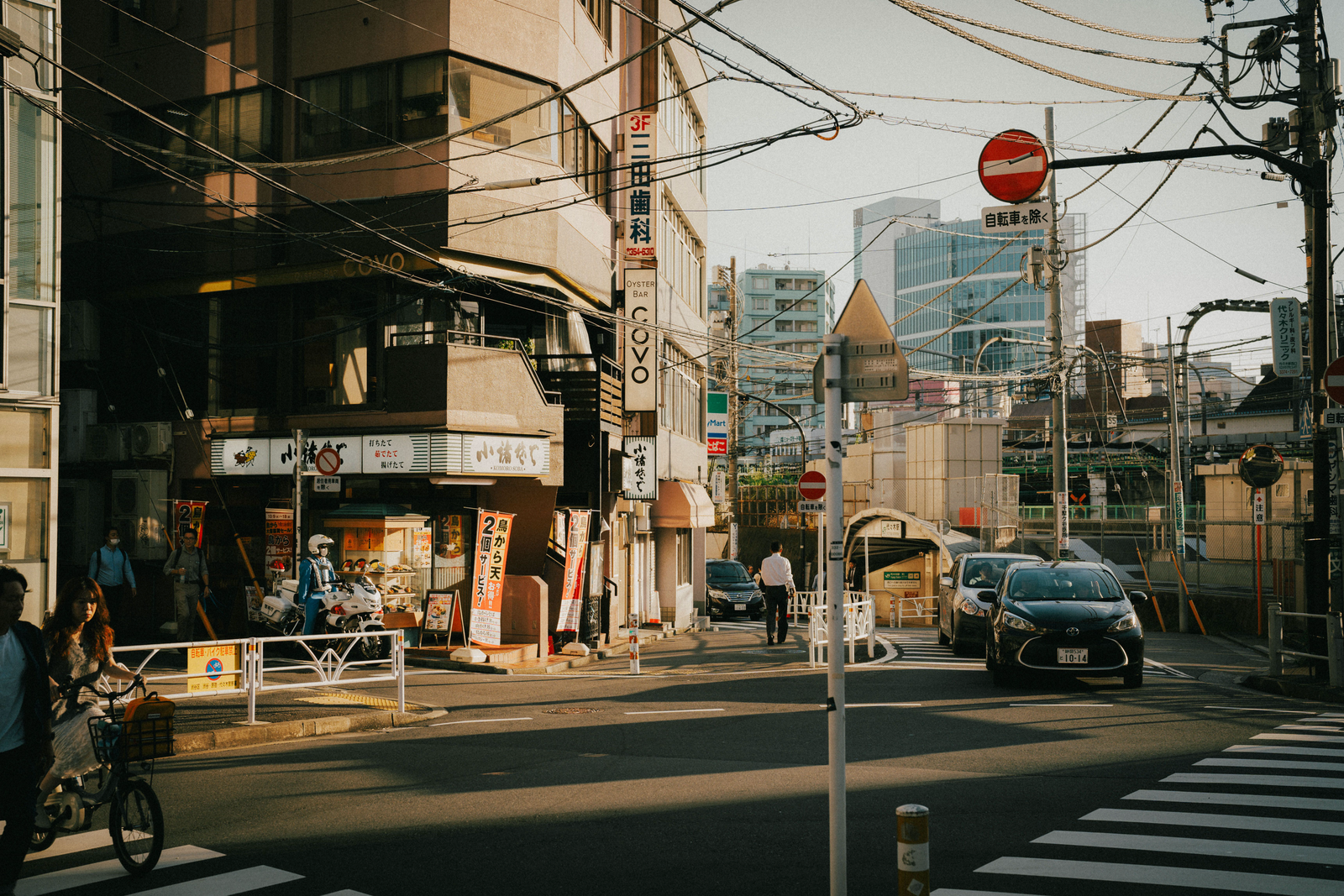
Amadeus places Tokyo first among the world's most-searched outbound destinations for October 2026, ahead of London, on search data captured to 21 September 2026. On the bookings table for the same month, Tokyo sits third, behind Seoul and New York City. Over roughly the same period Japan received 3,098,900 foreign visitors in August, 9.6 per cent fewer than in August 2025, and 27,626,300 across the first eight months of the year, a fall of 2.7 per cent, according to the Japan National Tourism Organization.
Destination marketing budgets are still set against interest. The October figures suggest interest and purchase have separated in the markets where travel has become most expensive, and Tokyo is the clearest instance of it in the dataset.
What the two tables are counting
The searched column and the booked column are not the same measurement taken twice. Amadeus builds the first from air searches by destination city and the second from tickets actually issued for travel in October, both read on a single day in late September. A destination that converts late in the booking window will look weaker on bookings than it eventually performs, because the snapshot catches the searches but not the purchases that follow. The hotel occupancy figures carry the same caveat: Demand360 reports rooms on the books for a future month, so every number in the report is a pace reading rather than a result.
That is the honest limit of the dataset, and it cuts directly against the argument this piece is making. It is also why the Tokyo case is worth separating from the noise: a one-position slip is a timing artefact, and a gap that repeats across several markets in the same direction is something else.
The gap repeats across Europe

Rome ranks eighth among the world's most-searched cities for October and misses the top ten booked entirely. Madrid ranks tenth searched and also fails to appear. Paris, by contrast, moves from sixth searched to fifth booked, and Amadeus has Paris growing occupancy year on year at 72 per cent while Rome holds the same 72 per cent three points behind its own last two years. Vienna is the region's fastest-growing market into October.
Two of the most heavily searched cities in Europe are converting worse than their interest implies, and both sit in markets that have spent two years debating visitor caps and charges.
What has made Tokyo expensive
Japanese hotel rates have risen faster than Japanese hotel occupancy for two years. The average daily rate across six major metropolitan markets ran 13.1 per cent higher year on year for January to April 2026, after a 7.2 per cent rise across full-year 2025, while national occupancy stayed anchored near 61 per cent, on MetroEngines Research data covering between 7,500 and 8,400 properties a month alongside Japan Tourism Agency figures. January 2026 alone came in 18.1 per cent above the previous January. Occupancy over the same stretch improved by one to two points a year.
Cost pressure inside the operation explains much of that. Lodging staff turnover runs at 26.6 per cent against 15.4 per cent across all Japanese industries, paid leave taken averages 5.9 days against 11.0, and around 70 per cent of operators report labour shortages. Rate increases of that size, with occupancy flat, describe an industry passing payroll through to the guest.
Policy has added to the bill. Kyoto approved a revised lodging levy on 25 March 2025 that took effect in March 2026, with the top band reaching 10,000 yen per person per night on rooms priced at 100,000 yen or above. The city has said the revenue goes to infrastructure and the repair of cultural sites.
The complication: Tokyo's hotels are full
Amadeus puts Tokyo at 70 per cent on-the-books occupancy for October, the highest of any market listed in the Rest of Asia Pacific table and ahead of last year, with Seoul behind it at 67 per cent. Third place on a global bookings ranking is not a weak result for a city of Tokyo's size, and a hotel sector running at those levels on rising rates is having a good quarter by any revenue measure.
The arrivals decline also has a cause that has nothing to do with price. Chinese arrivals to Japan fell 59 per cent in August to 418,000, which JNTO attributes to a Chinese government travel advisory. Fourteen source markets set August records in the same month, among them South Korea at 850,500 visitors, up 28.7 per cent, with Italy and Spain posting all-time monthly highs. Japan has lost one market and gained in most of the others.
A destination can shed more than half a million visitors a month to a single advisory and still fill its hotels at a higher rate than last year.
Why that may not matter much
One. Rate-led revenue and destination demand are different things, and only one of them appears in the occupancy line. Korea offers the controlled comparison: 15.05 million foreign visitors in the first eight months of 2026, up 21.6 per cent from 12.38 million, a record, with Seoul leading both the searched and the booked column in Amadeus's Asia Pacific tables. Seoul did that on an entry-policy lever, easing visa requirements for travellers from eleven Southeast Asian markets from 30 March. Same region, same months, same dataset, opposite direction.
Two. Rome and Madrid produce the same searched-to-booked failure with no advisory anywhere in the picture. Whatever is suppressing conversion in those two cities is a cost and capacity story, and its appearance in Tokyo is unlikely to be coincidence.
The real test. Whether the Tokyo gap is price or politics cannot be settled from this dataset. Chinese travellers who search Tokyo and then do not book would produce exactly the pattern on the worldwide tables that a priced-out traveller from anywhere else would produce, and Amadeus's published rankings do not break searches down by origin for destination cities. Anyone claiming to know which effect dominates is reading more into the ranking than it holds.
What can be said is narrower and still useful. Across three cities in two regions, search interest is holding while bookings are not following, and in each of those cities the cost of a night has moved sharply.
What to watch
JNTO publishes monthly arrival estimates around the middle of the following month. If the cumulative decline narrows from 2.7 per cent once the Chinese advisory effect washes through the base, the price explanation weakens considerably.
Amadeus's November and December editions will show whether Tokyo closes the distance between its search rank and its booking rank as the window shortens. A city that converts late will recover position; a city that is losing bookings on cost will not.
The Japanese rate series is the third marker. Rate growth above ten per cent with occupancy anchored near 61 per cent cannot continue indefinitely without either occupancy breaking or rates stalling, and whichever gives first will say more about Japanese inbound demand than any search ranking.
Sources
This article draws its rankings and occupancy figures from the October 2026 edition of Amadeus Hospitality Market Insights, a monthly report built on the company's Demand360 and Destination Getaway datasets, with search data read on 21 September 2026 and hotel data on 23 September. Japanese arrival figures come from the Japan National Tourism Organization's August 2026 estimates, reported by Travel Voice on 16 September 2026. Japanese hotel rate and occupancy figures come from MetroEngines Research, which samples between 7,500 and 8,400 properties a month, alongside Japan Tourism Agency data, as analysed by HotelBank. The Kyoto lodging levy was reported by the South China Morning Post on 25 March 2025. Korean arrival figures were released by the Ministry of Culture, Sports and Tourism on 28 September 2026 and reported by the Korea JoongAng Daily.