Where Singapore's Cocktail Culture Meets Global Recognition
The city-state's bar scene continues to command attention across Asia, with a new generation of drinking destinations rewriting the rules of hospitality and craft.
A City That Drinks With Purpose
There is a particular kind of quiet that falls over Purvis Street just before sunset, when the light turns amber and the first bartenders unlock their doors. At Nutmeg & Clove, Colin Chia is already arranging bottles behind the counter, each one part of a larger story about spice routes and colonial trade. The bar earned the twelfth position in this year's regional rankings, and sitting inside, it becomes immediately clear why. This is not a place that simply serves drinks. It is a space where Singapore's layered history becomes something you can taste, where familiar ingredients like pandan and chili are reimagined through the lens of classical bartending.
At Global Chic Voyage, we have long believed that the best bars do more than mix spirits. They create context. They invite conversation. Singapore's drinking culture has evolved into something far more complex than its reputation might suggest, and the recent recognition of eleven local establishments in Asia's most influential bar rankings offers a window into that evolution.
The Anchors of a Scene
Jigger & Pony, now in its fourteenth year, placed ninth. The bar has become something of an institution, its location inside the Amara Singapore drawing both neighborhood regulars and international visitors. What keeps people returning is not novelty but consistency, a commitment to hospitality that feels both polished and genuine. The cocktails here lean into seasonality without theatrics. A Strawberry Matcha Cloud arrives delicate and layered; the Wasabi Highball surprises with its balance. These are drinks that respect the drinker's intelligence.
Offtrack, ranked sixteenth, takes a different approach. Music pulses through the space, curated with the kind of care usually reserved for the cocktail menu itself. The Pan-Asian plates are substantial enough to anchor an evening, and the bar's cult following has as much to do with atmosphere as with craft. A Rum & Raisin Manhattan becomes the soundtrack's liquid counterpart, rich and resonant.
Then there is Origin Bar at the Shangri-La, holding the forty-third spot. The design nods to old train stations, all polished wood and vintage fixtures, but the inventory is decidedly forward-looking. More than six hundred spirits line the shelves, sourced from distilleries across continents. The bartenders here are encyclopedic in their knowledge yet unpretentious in their delivery, a combination that makes exploration feel effortless.
Newcomers and Risk-Takers
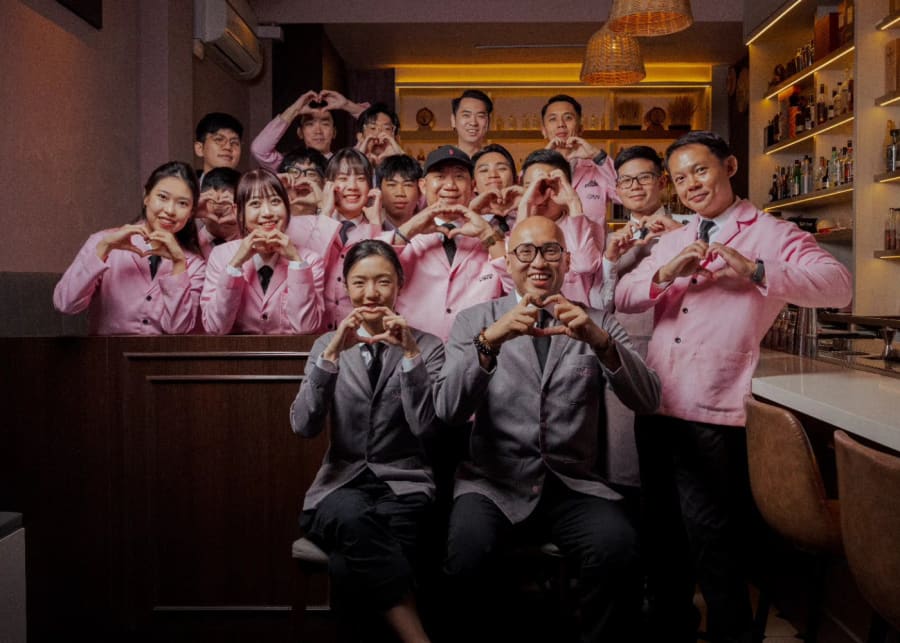
Bartenders of Pony opened less than six months before the rankings were announced, yet it claimed the fifty-second position and earned the Campari One To Watch designation. The speed of its ascent speaks to something deeper than hype. The space draws from Korean aesthetics, the traditional obangsaek color palette grounding the design, while a tiger painting inspired by Joseon-era folk art watches over the room. Jason Oh, whose culinary work gained attention on Culinary Class Wars, shaped the food menu. The Dalgona iced coffee and Perilla Smash have already become signatures, drinks that feel both culturally specific and universally appealing.
Side Door, at fifty-seven, operates on a different scale. Created by husband-and-wife bartenders Tryson and Bannie, the space feels like a living room where you happen to be served exceptional cocktails. The Kumquatini is bright and sharp, the Melon Soda Pop playful. There is no pretense here, just skill and warmth.
The Elephant Room, ranked fifty-eight, takes inspiration from Indian culture, its spice corner stocked with lesser-known varieties sourced directly from the subcontinent. The drinks are aromatic and savory, with sweetness dialed back to let other flavors emerge. Mr. Samy's Curry and Briyani are cocktails that challenge Western assumptions about what a drink should taste like, and they do so with confidence.
Sustainability and Experimentation
Native, at eightieth, has built its reputation on sustainability. The first floor houses a restaurant; the second, a bar. Both spotlight local and regional ingredients, and the team maintains an in-house lab dedicated to fermentation and research. The Oolong Highball and Pandan cocktails showcase the results of that work, drinks that feel rooted in place yet innovative in execution. Native also offers flights of house-made ferments, an invitation to taste the bar's philosophy in concentrated form.
Cat Bite Club, ranked eighty-sixth, hides behind a coffee shop facade, its small size belying the ambition of its program. The focus here is on agave and rice spirits, categories often overshadowed by gin and whiskey. The Cat Bite Margarita and Soju Sprint educate as much as they delight, each sip an argument for expanding one's palate.
Bar Bon Funk, at ninetieth, occupies a corner of New Bahru with the kind of elegance that never feels stuffy. The Coop & Spud and A Glass of Milk are cocktails that play with texture and expectation, and the staff's hospitality turns first-time visitors into regulars.
Stay Gold rounds out the list at ninety-seven, its rock-and-roll theme extending from the music to the menu. The space glows with neon, and the Dirty Bananas and Michelada feel like drinks designed for long nights and good company.
What the Rankings Reveal
These accolades, determined by votes from industry professionals across the region, do more than celebrate individual bars. They map the contours of a drinking culture that values both craft and context, innovation and tradition. Singapore typically sees five to eight bars appear in the annual rankings, and this year's eleven represents not just strength in numbers but diversity in approach.
The city's bar scene has matured into something that resists easy categorization. There are hotel bars with world-class inventories and neighborhood spots with a dozen seats. There are places that experiment with fermentation and others that perfect the classics. What unites them is a commitment to intentionality, a belief that every element, from glassware to garnish, contributes to the experience.
The Broader Implications
For travelers, these rankings serve as a curated guide, a way to navigate a city with no shortage of drinking options. But they also reflect broader shifts in how we think about bars. The emphasis on sustainability at Native, the cultural specificity at The Elephant Room, the hospitality-first approach at Side Door - these are not trends but values, and they are reshaping what it means to run a bar in Asia's most competitive markets.
Singapore's success in these rankings also highlights the city's role as a regional hub for talent. Bartenders train here, open here, and push the boundaries of what is possible within a relatively small geographic footprint. The density of quality creates a kind of ecosystem, where competition drives innovation and collaboration strengthens the scene as a whole.
As we look toward the next year, the question is not whether Singapore will continue to perform well in these rankings but how the bars will continue to evolve. The foundations are strong. The talent is deep. And the city's drinkers, both local and visiting, are more discerning than ever. That combination suggests that what we are witnessing is not a peak but a plateau, a level of excellence that can be sustained and built upon.
The bars that made this year's list have earned their recognition, but they have also set a standard. The next generation of bartenders will have to meet it, and if Singapore's recent history is any indication, they will do so with creativity, rigor, and a deep respect for the craft.