Riding the Rails Through Canada: A 2,737-Mile Journey Across the Continent
The longest passenger rail route in North America traces a path from ocean to mountain, forest to prairie, revealing the country's vast geography through the unhurried rhythm of train travel.
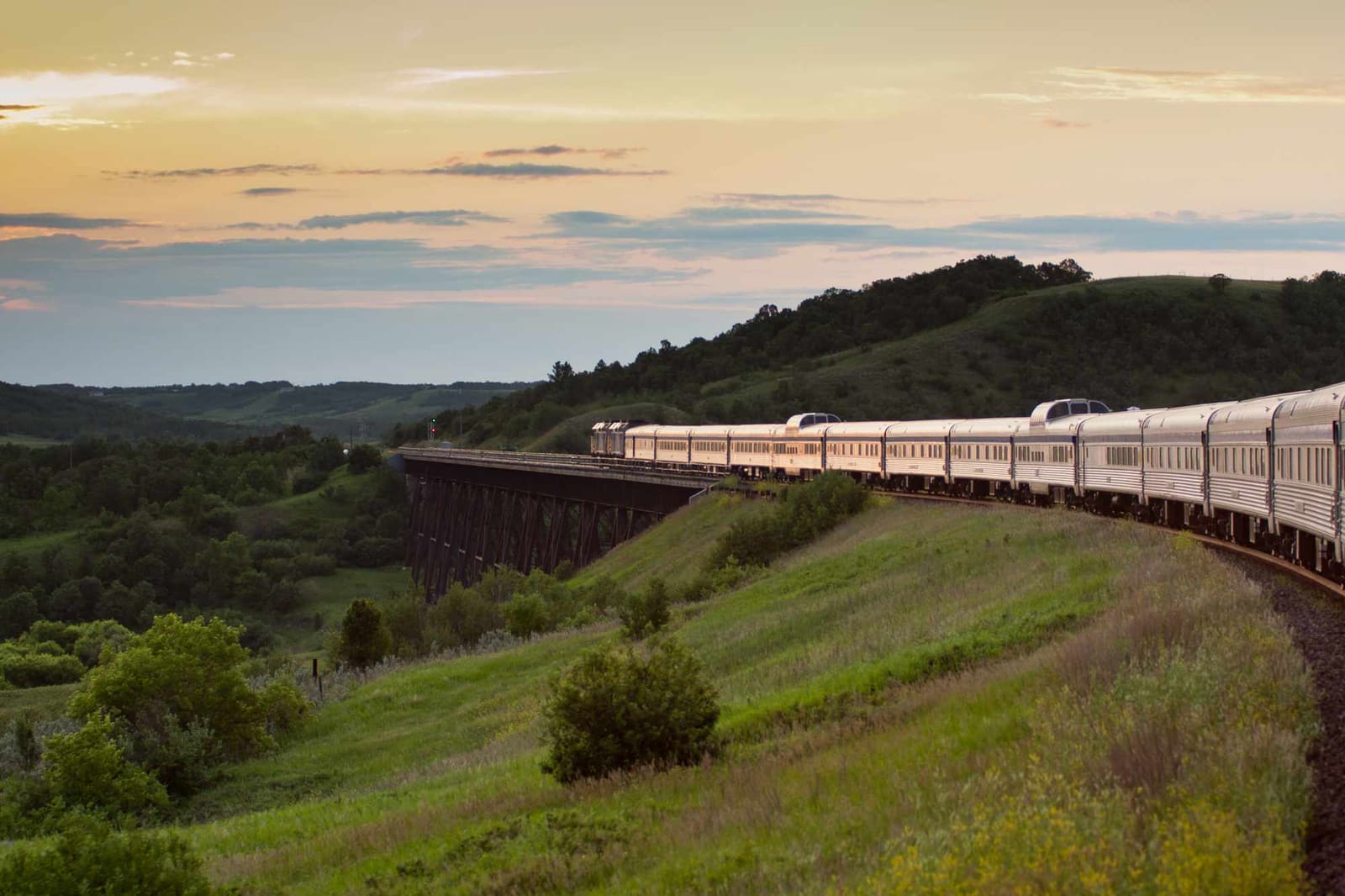
A Ribbon of Steel Across a Nation
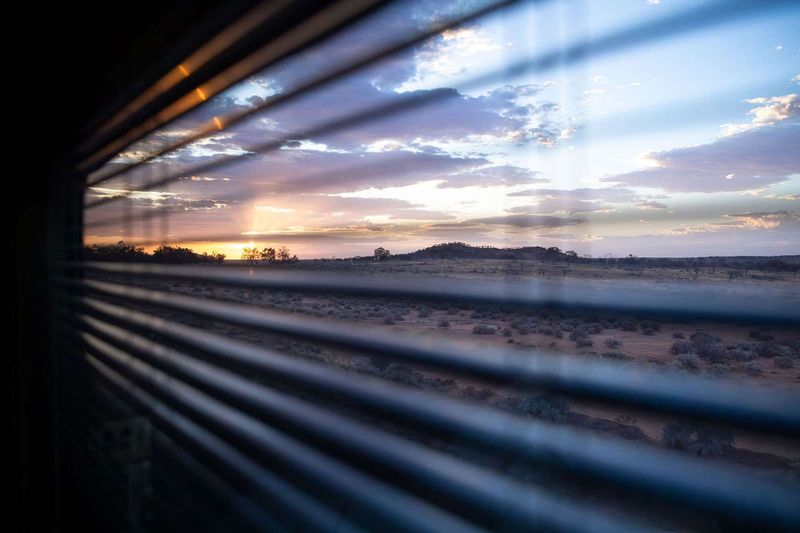
There is a particular quality to the light that filters through a train window in the early morning, when the Canadian landscape is still waking. The glass frames the view like a moving painting, one that changes every few seconds: boreal forest gives way to wheat fields, wheat fields to foothills, foothills to the sudden vertical thrust of mountains. At Global Chic Voyage, we've long believed that the best journeys are those that allow you to lose track of time, and few routes accomplish this as thoroughly as Canada's transcontinental rail line, which stretches 2,737 miles across the breadth of North America.
This is not a journey for those in a hurry. The route demands patience, curiosity, and a willingness to trade efficiency for experience. In an era when most travelers measure trips in flight hours, there remains something quietly radical about spending days aboard a train, watching a country unspool at a pace that allows you to actually see it.
The Geography of Distance
The sheer scale of the route defies easy comprehension. From Toronto's urban density to Vancouver's Pacific edge, the train crosses six time zones and traverses terrain so varied it might as well be several countries stitched together. The first leg moves through Ontario's lake country and the granite shield of the Canadian north, where water and rock have shaped each other for millennia. Then comes the prairie expanse, where the horizon stretches so far you begin to understand why early settlers spoke of the land as an ocean.
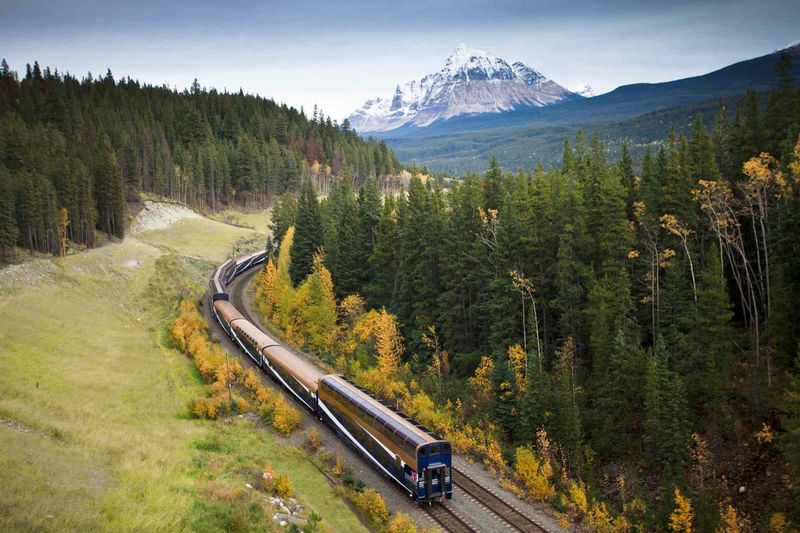
But it is the approach to the Rockies that passengers remember most vividly. The mountains announce themselves gradually, first as a distant smudge on the western horizon, then as distinct peaks, and finally as towering walls of stone and ice that press close to the tracks. The railway engineers who laid this route in the 1880s chose their path with an eye for drama as much as practicality, threading through passes and along canyon edges where the views border on operatic.
The Architecture of Train Travel
Modern long-distance rail travel in Canada has evolved into something that occupies a space between transportation and hospitality. The train itself becomes a kind of mobile hotel, with sleeping compartments that range from economical berths to suites with private facilities. Dining cars serve meals prepared onboard, and observation cars feature floor-to-ceiling windows and glass-domed ceilings designed specifically for taking in the landscape.
What distinguishes this experience from cruise ships or luxury coaches is the sense of connection to the ground you're covering. You feel the train working to climb mountain grades, sense the shift in momentum as it descends. When you stop in small prairie towns or mountain hamlets, you step directly onto platforms where local life continues regardless of whether tourists are watching. There's no insulating buffer, no resort bubble. The journey feels immediate and real in a way that more curated travel experiences often do not.
Beyond the Window
The route has become particularly appealing to travelers seeking alternatives to air travel, whether for environmental reasons or simply for the experience itself. Rail advocates point out that trains produce significantly lower carbon emissions per passenger-mile than planes, though the time investment remains substantial. The full transcontinental journey takes four days, not including time spent exploring cities along the way.
Yet this extended timeline is precisely the point. In our observation, the travelers who derive the most satisfaction from the route are those who treat it not as a means to an end but as a destination in itself. They bring books they've been meaning to read, journals for sketching or writing, or simply the willingness to sit and watch the world pass. The train enforces a kind of productive idleness that modern life rarely permits.
The Rockies as Theater
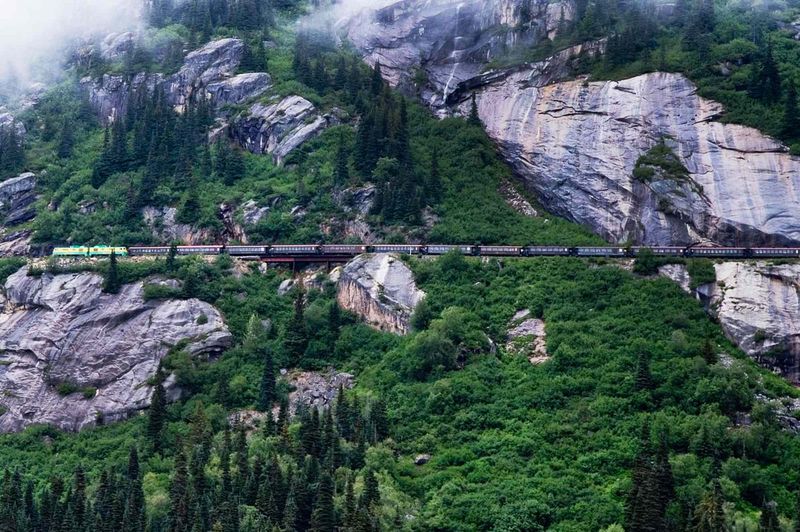
If the entire route is impressive, the section through the Canadian Rockies elevates the journey into something approaching spectacle. The train follows river valleys hemmed in by peaks that rise thousands of feet on either side. Glaciers cling to north-facing slopes, their blue ice visible even from the valley floor. In certain sections, the tracks spiral through tunnels and across trestle bridges, engineering marvels that have been carrying trains for more than a century.
This portion of the route also intersects with several of Canada's most celebrated national parks. Passengers often break their journey in Jasper or Lake Louise, using the train as a starting point for hiking, wildlife viewing, or simply absorbing the alpine environment at a more leisurely pace. The parks themselves have become increasingly focused on managing visitor numbers and promoting sustainable tourism practices, making the train an appealing entry point for those seeking lower-impact ways to experience protected landscapes.
The Social Dimension
One unexpected aspect of multi-day train travel is the community that forms among passengers. Unlike planes, where interaction is minimal and often unwelcome, trains create natural gathering spaces in dining and observation cars. Conversations develop organically, often with fellow travelers from different countries and backgrounds who share little beyond their choice of transportation.
We've heard from seasoned rail travelers that these chance encounters often become as memorable as the landscapes outside. There's something about the shared experience of slow travel, the communal meals, and the collective awe at particularly stunning views that breaks down the usual barriers between strangers. By the journey's end, it's not uncommon for passengers to exchange contact information and promises to meet again, though whether these connections endure beyond the trip is another matter entirely.
Practical Considerations and Future Prospects
The route operates year-round, though the experience varies considerably by season. Summer offers the longest daylight hours and warmest weather for potential stops, but also draws the largest crowds and highest prices. Winter transforms the landscape into something stark and beautiful, with far fewer tourists but also limited daylight and the possibility of delays due to weather. Shoulder seasons of spring and fall often provide the best balance of reasonable weather, manageable crowds, and lower fares.
Booking requires advance planning, particularly for peak summer months when sleeper accommodations can sell out weeks ahead. Fares vary widely depending on class of service and time of year, with budget-conscious travelers able to book coach seats for a fraction of the cost of private sleeping rooms. The trade-off, naturally, is comfort and privacy over multiple days of travel.
Looking forward, Canada's passenger rail infrastructure faces the same challenges confronting long-distance train service across North America: aging equipment, competition from faster modes of transportation, and the need for continued public investment. Yet the route's popularity among both domestic and international travelers suggests that demand for this style of experiential travel remains strong, even as the world accelerates around it.
The Value of Going Slowly
In the end, what makes this 2,737-mile journey compelling is not any single element but rather the cumulative effect of spending days immersed in the act of crossing a continent. The rhythm of the rails becomes a kind of meditation, the changing landscapes a reminder of the sheer physical diversity contained within national borders that are often reduced to abstractions on maps.
At Global Chic Voyage, we return again and again to the idea that luxury travel is not always about the most exclusive destinations or the most elaborate amenities. Sometimes it is simply about having the time and space to pay attention, to notice the way light moves across a mountain face or how the quality of silence changes as you move from forest to prairie. The Canadian transcontinental rail route offers exactly this kind of spaciousness, a rare commodity in contemporary travel and in contemporary life more broadly.
For those willing to embrace the pace and the constraints of rail travel, the journey offers something increasingly difficult to find: the experience of distance, not as an obstacle to be overcome as quickly as possible, but as something to be inhabited and savored. In a world that measures value in speed and efficiency, there remains a powerful argument for occasionally choosing the longer, slower path.