The Quiet Revolution Behind the World's Most Creative Cocktail Bars
From Oslo to Kuala Lumpur, a new generation of bartenders is reimagining waste as opportunity, and the drinks have never been more compelling.
When the Bar Becomes a Laboratory
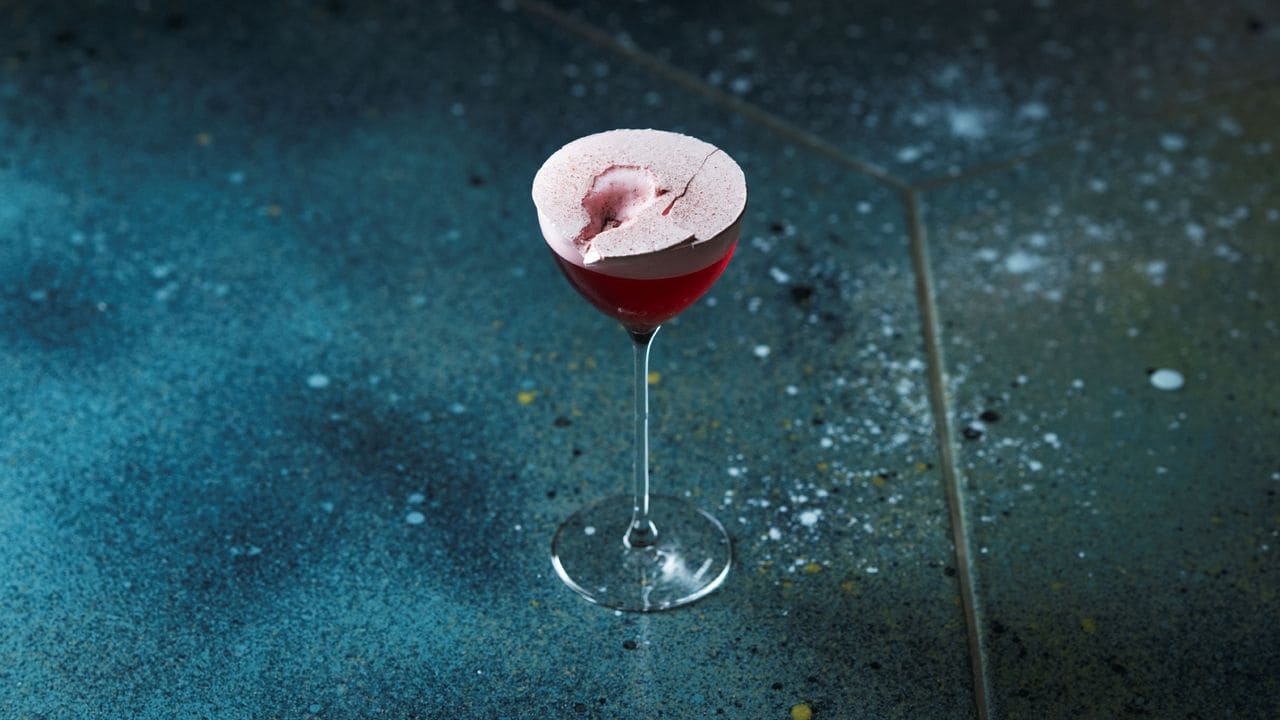
There's a moment, late in the evening at a certain kind of bar, when you realize the drink in your hand is not quite what you expected. Not the flavor, which is impeccable, but the story behind it. The citrus twist on the rim might have been destined for compost yesterday. The syrup sweetening your glass could have started as banana peel. The ice you assumed was there, cooling your spirit, might not exist at all.
At Global Chic Voyage, we've watched the cocktail world transform from a theatre of excess into something more considered, more inventive. The shift has been quiet but unmistakable. Where waste once pooled behind the bar, unnoticed and unremarked, a new ethos has taken root. The most creative bars we've encountered this year are not simply reducing their footprint; they're using constraint as a creative engine, and the results are some of the most compelling drinks we've tasted in a decade.
The Full Circle of Flavor
In Oslo, Himkok operates as both cocktail bar and distillery, sourcing every ingredient from Norwegian producers and powering its operation with renewable energy. Everything served at the bar is made on-site, a closed loop of production that would be admirable even if the drinks weren't exceptional. But they are.
Madrid's Angelita has taken a different route, one that challenges a fundamental assumption of bartending: the necessity of ice. By eliminating ice entirely from their system, the bar saves 45,000 kilograms of water annually. The drinks arrive at the correct temperature through prebatching and precision refrigeration, a technique that demands more planning but delivers consistency impossible to achieve through traditional shaking and stirring. Their menu showcases ancestral fermentation methods, vacuum techniques, and modulated temperatures, all applied to ingredients sourced exclusively from Spanish producers.
Singapore's Fura pushes the philosophy further still. Co-founded by Christina Rasmussen, who once foraged for Noma, and Sasha Wijidessa, the bar maintains its own garden and builds a primarily plant-based menu from what it harvests. The Jellyfish Martini, which sounds like provocation, is actually pragmatism: the species is overpopulated in regional waters, and using it makes ecological sense. For those less adventurous, there are crickets, presented as "future proteins" with the same care other bars lavish on wagyu or caviar.
These are not fringe experiments. Several appeared on the inaugural Europe's 50 Best Bars list released in July 2026, a signal that the industry's tastemakers have recognized what the most thoughtful drinkers already knew: sustainability and excellence are not opposing forces.
Responsibility as Creative Constraint
Hyacinthe Lescoêt, who co-founded Cambridge Public House in Paris's Marais district, prefers the word "responsibility" to "sustainability." The distinction matters. "As a business, we are responsible for our staff, for our community and for the planet," Lescoêt explains. "It is our duty to make sure we have a good impact."
Cambridge operates as a certified B Corporation, publishing environmental, social, and governance reports audited by external agencies. But the philosophy plays out most visibly in the weekly menu, which changes with the seasons and centers each cocktail on a single local ingredient. The rule is simple: the ingredient must be used completely or composted. "The best way of tackling waste is to not make any at all," Lescoêt notes. "Everything in the ingredients is used throughout the conception of the drink."
The constraint has not stifled creativity. If anything, it has sharpened it. Bartenders work within a defined set of parameters, but those parameters force invention. A carrot becomes not just juice but leaves for garnish, pulp for syrup, skin for infusion. Nothing is wasted because nothing can be.
The Dialogue Between Kitchen and Bar
Across Paris in the second arrondissement, De Vie has built its identity on transparency. The bar and restaurant source exclusively from French farmers and producers, ideally those closest to Paris. Citrus appears on the menu only when French citrus is in season; during the rest of the year, the bar achieves acidity through preserves and infused vinegars.
Co-founder Barney O'Kane describes a constant dialogue between bar and kitchen, a feedback loop that ensures nothing is discarded. Fruit pulp left over from wine batches or infusions is processed in the kitchen and reincorporated into dishes. Like Angelita, De Vie has eliminated ice, relying instead on prebatched cocktails held at precise temperatures in refrigerated drawer units.
"Working within this ethos means we have to carefully plan the next steps for all the stages of preparation and production," O'Kane says. "If we source carrots from a small farm, what will we use the carrot leaves for? We see these challenges as a positive, as it forces our hand and pushes us to create more interesting ways to utilise and re-utilise all our ingredients."
The approach demands more labor and more thought than conventional bartending. But it also produces drinks that tell a story, and in an industry where differentiation is survival, story is currency.
Asia's Forward Edge
The movement is perhaps most pronounced in Asia, where bars have embraced both technological innovation and traditional methods. In Seoul, Zest has won awards specifically for its approach, using at least one locally sourced ingredient in each signature drink and listing the exact farms from which they came. The transparency is not incidental; it's part of the experience.
Reka:Bar in Kuala Lumpur, currently listed among the World's 50 Best Bars, has developed a signature menu called the "Domino Effect." Each cocktail uses the byproduct of the main ingredient from the previous drink as a secondary ingredient in the next, creating a chain reaction of flavor that minimizes waste while building narrative across the entire menu. Founder Nick Choo describes it as "an exciting story for guests," but it's also a technical achievement that requires precise planning and execution.
Beyond the menu, Reka works with ethical farmers who avoid synthetic fertilizers and pesticides. One partner, A Little Farm on the Hill, operates on the principle that it grows soil, not plants, a philosophy that prioritizes long-term ecological health over short-term yield. The bar itself is designed to reduce electricity consumption through all-LED lighting and insulation that minimizes air conditioning use in Kuala Lumpur's tropical climate.
Choo's team has also begun experimenting with flavor replication, recreating the taste of high-carbon-footprint fruits like lychee using low-impact ingredients such as celery and guava. The technique, featured in their new "Magic" menu, suggests a future in which luxury and responsibility are not just compatible but inseparable.
The Economics of Invention
It would be easy to dismiss these practices as expensive gestures, the kind of thing only high-end establishments can afford. But the economics tell a different story. Prebatching reduces labor costs during service. Sourcing locally often means lower transportation expenses and stronger relationships with suppliers. Using every part of an ingredient stretches budgets further than conventional purchasing. And in an industry facing margin pressure from rising rents and labor costs, efficiency is not optional.
The bars leading this shift are not doing so out of altruism alone. They are doing it because it makes business sense, because it attracts a clientele increasingly attuned to environmental impact, and because it gives them a competitive edge in a crowded market. The fact that it also happens to be the right thing to do is, perhaps, beside the point.
What We Order Now
At Global Chic Voyage, we've long believed that the best travel experiences are those that leave both guest and place better than they were before the encounter. The bars we've returned to this year are the ones that understand this implicitly, that see waste not as an unfortunate byproduct but as a design flaw to be solved.
When you sit down at Cambridge Public House or Reka:Bar or De Vie, you are not asked to compromise. The drinks are as sophisticated, as surprising, as memorable as anything poured at bars with no such commitments. You might not even know, unless you ask, that the banana peel in your garnish was rescued from the compost, or that the bar uses no ice at all, or that the jellyfish in your martini is helping to rebalance an ecosystem.
But increasingly, we find ourselves asking. And the answers, when they come, are part of the pleasure. Because the best drink is not just the one that tastes extraordinary in the moment. It's the one that leaves you thinking, long after the glass is empty, about what else might be possible.