The Quiet Power of Craft in an Age of Endless Acceleration
From embroidery studios in Lucknow to guild workshops in London, the world's artisans are teaching travelers something technology never can: the language of making.
The Memory in Thread
There is a particular weight to embroidered silk when you hold it against the light. The fabric carries not just pattern but history, each paisley and lotus traced by fingers that learned the rhythm from someone older, who learned from someone older still. In northern India, the embroidery tradition known as chikankari has moved through centuries this way, from the Mughal courts of the 1600s into contemporary homes, adapting its motifs while preserving the essential gesture: needle through cloth, thread pulled taut, the slow accumulation of beauty.
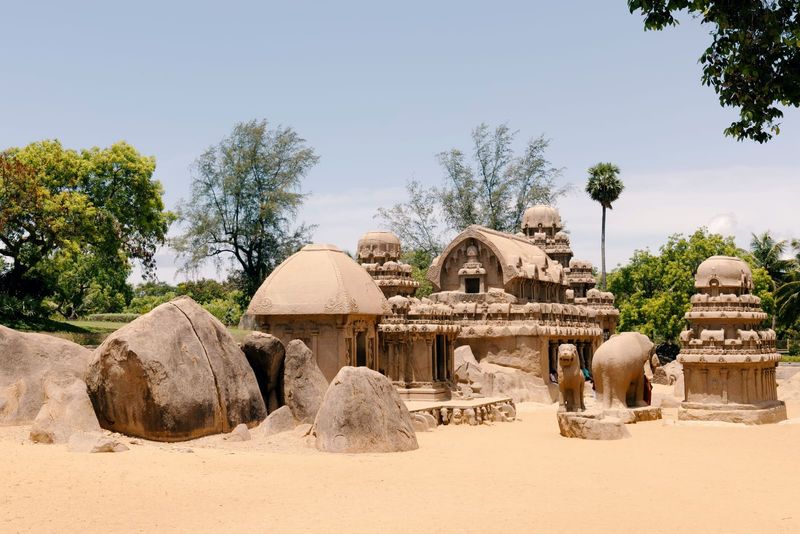
At Global Chic Voyage, we've watched this tension play out across dozens of destinations. Craft exists in a peculiar temporal space. It reaches backward through generations of knowledge while simultaneously adjusting to the present moment, absorbing new materials, aesthetics, and purposes. The carved temples and block-printed cottons drying on Indian streets represent not museum artifacts but living practices, evolving organisms that survive precisely because they refuse to fossilize.
The question travelers increasingly ask is not where to see craft but where to practice it. And that shift, subtle but profound, changes the entire architecture of a journey.
Continuity Beneath Reinvention
London presents itself as perpetual motion, a city addicted to its own transformation. Yet beneath the surface churn, another London persists. Since the medieval period, guild structures have sheltered generations of artisans, creating institutional memory that allows technique to compound across centuries. A contemporary furniture maker in Shoreditch works within a lineage stretching back to joiners who built Tudor chests. A silversmith in Hatton Garden inherits methods refined when the area first became synonymous with metalwork in the 1800s.
This continuity does not mean stasis. The craftspeople sustaining these traditions are not costumed interpreters performing historical tableaux. They are adapting inherited skills to contemporary problems, using traditional joinery for modern furniture designs, applying centuries-old enameling techniques to jewelry that speaks to current sensibilities. Tradition survives through flexibility, not rigidity.
For travelers, this creates opportunities that conventional tourism cannot provide. You do not simply observe a workshop. You enter it, take up tools, make mistakes, and gradually understand how a material responds to pressure, heat, or patience. The experience is not curated in the way a museum exhibition is curated. It is messier, slower, and far more memorable.
The Satisfaction of Making
There is something particular happening in the gap between human capability and algorithmic efficiency. As artificial intelligence systems become more sophisticated at generating images, text, and music, the act of making something physical with your own hands takes on new significance. The imperfection becomes the point. The slowness becomes valuable rather than inconvenient.
Travelers are responding by seeking immersive encounters that center on creation rather than consumption. Weaving workshops in rural Guatemala, pottery studios in Japan, natural dyeing sessions in Morocco, cooking classes that begin in the market and end at the table. These experiences share a structure: they require time, attention, and a willingness to fail. They resist the accelerated pace that characterizes much contemporary travel.
The objects you make during these encounters carry a different weight than souvenirs purchased in a shop. You understand their difficulty. You know where the clay came from, how the dye was extracted, why the weaving pattern requires that particular sequence of movements. The item becomes inseparable from the story of its creation, which is also the story of your temporary apprenticeship to someone whose skill exceeds your own by orders of magnitude.
This is not nostalgia. It is a recognition that certain forms of knowledge cannot be transmitted through screens or text. They require physical presence, repetition, and the kind of attention that only emerges when your hands are occupied and your mind must follow.
Economies of Connection
The economic dimension matters, though it often gets obscured by romantic language about tradition. When travelers pay to learn a craft directly from a practitioner, money flows into local economies in ways that benefit individuals rather than large hospitality corporations. The transaction is more direct, more visible, and more likely to support the continuation of the practice itself.
But the exchange is not purely financial. These encounters create relationships, however temporary. You learn someone's name, see their workspace, understand the constraints they navigate. The craftsperson is not a abstraction or a cultural symbol but a specific person with opinions, preferences, and a particular way of holding their tools. That specificity matters. It transforms craft from heritage category into living practice, maintained by individuals making daily decisions about what to preserve and what to change.
Communities that open their workshops to travelers also gain something beyond income. They gain audience, which can revitalize practices that younger generations might otherwise abandon. When visitors express genuine interest, it validates the worth of skills that may feel marginal in rapidly modernizing economies. This attention can tip the balance for an artisan considering whether to continue their work or pursue more obviously lucrative paths.
The danger, of course, is commodification that flattens craft into performance. But when structured thoughtfully, with sufficient time and real instruction, these exchanges can support both cultural continuity and economic sustainability without collapsing into theater.
The Slowness Is the Point
There is no shortcut to understanding how clay feels as it centers on a wheel, how much pressure a carving tool requires, or how natural dyes shift color depending on water temperature and mineral content. These are lessons that unfold through the body, not the intellect. They require the kind of presence that travel, at its best, can cultivate.
This slower approach runs counter to checklist tourism, where the goal is coverage rather than depth. You cannot learn a craft while also hitting twelve other attractions in the same day. The practice demands focus, which means accepting a different relationship to time and productivity. For many travelers, this reorientation is precisely the appeal.
It also changes what you notice afterward. Once you have tried your hand at weaving, you see textiles differently. You recognize complexity you would have previously overlooked. You understand why certain items command high prices. Your consumption becomes more informed, more selective, and more aligned with values of quality and durability.
What Hands Remember
Objects made by hand carry traces of their making. Slight irregularities, evidence of tools and gestures, marks that reveal process. In an era of algorithmic perfection, these imperfections register as authenticity. They confirm that a human being, with a body subject to fatigue and variability, brought this thing into existence.
When you have participated in that process, even briefly, you carry that knowledge differently. The embroidered silk from Lucknow is not just beautiful fabric. It is the accumulated effort of artisans who spent years mastering a technique introduced during the Mughal empire and adapted across four centuries. The carved wooden box from London is not just a container. It is the result of joinery methods preserved by guild structures that predate the modern nation-state.
Travel, approached this way, becomes a form of apprenticeship. You will never achieve mastery, but you gain respect for those who have. And you return home with objects that function as tangible reminders not just of a place but of the people who continue to shape that place through their skill, patience, and willingness to share what they know.
The work of artisans around the world reminds us that tradition is not the opposite of innovation. It is the accumulated innovation of all the hands that came before, refined through repetition and adapted through necessity. And in a moment when so much feels automated, accelerated, and abstracted, the opportunity to make something physical, however imperfect, offers a kind of grounding that no algorithm can replicate.
That may be craft's most enduring value: not what it produces, but what it teaches us about attention, patience, and the deep satisfaction of making something real.