The Archipelago's Hidden Shores: Indonesia's Quiet Coastlines Beyond the Tourist Trail
Where volcanic sand meets turquoise water, and the only footprints are your own.
The Geography of Solitude
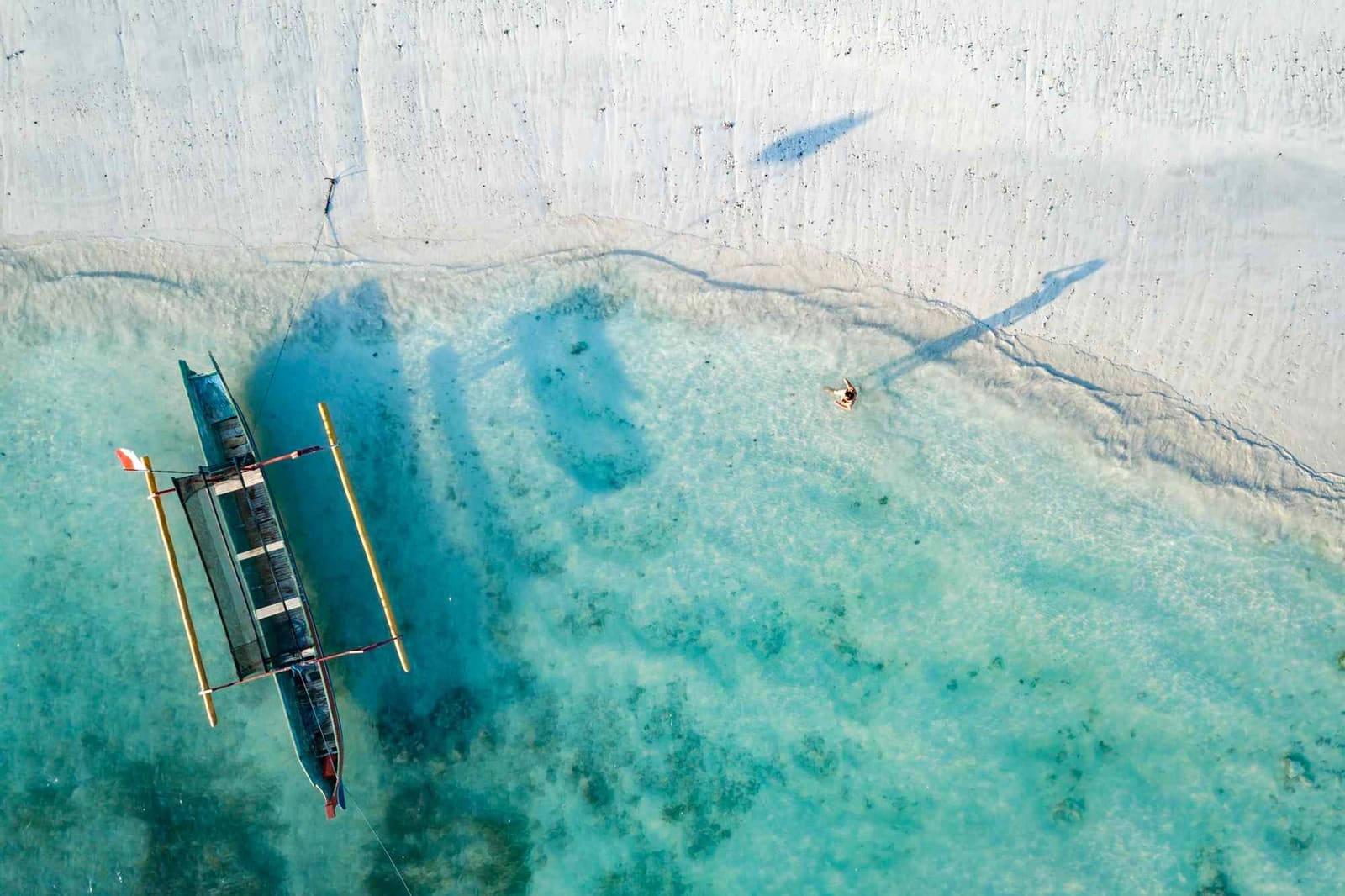
The fisherman mending nets on Sumbawa's southwest coast works without glancing at the water. Behind him, a crescent of pale sand curves into forest; ahead, the Indian Ocean folds into itself in sets so rhythmic they could mark time. No umbrellas, no vendors, no selfie queues. Just the slow pull of tide and the occasional frigatebird tracing thermals overhead.
Indonesia's fame as a beach destination has long been tethered to Bali, and for good reason - its southern coasts have perfected the infrastructure of leisure. But the archipelago's 17,000-plus islands hold a different kind of coastal wealth: shores where arrival still requires intention, where sand textures shift from powdered coral to volcanic black, and where the traveler willing to venture past the familiar is rewarded not with convenience, but with presence.
These are not undiscovered beaches in the romantic, colonial sense. People live near them, fish from them, hold ceremonies on them. They are simply beaches that have not yet been re-engineered for volume tourism, and in that restraint lies their particular gravity.
The Volcanic Coasts of Flores and Komodo
Flores, the long, mountainous island stretching east from Bali, offers coastlines shaped by volcanism and time. The beaches here tend toward drama - black and charcoal sands, steep drop-offs, water so clear that depth becomes difficult to judge. Pink Beach, despite its name's tourist-friendly ring, remains relatively uncomked by infrastructure. The rosy tint comes from pulverized red coral mixing with white sand, a phenomenon visible only in certain light and at certain tides.
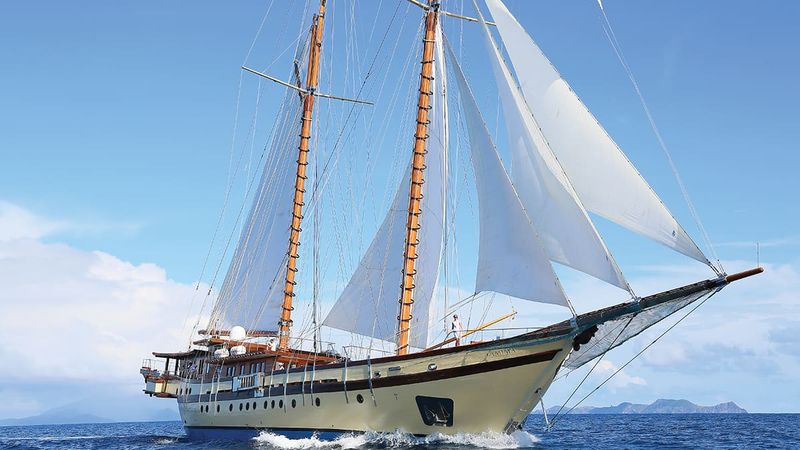
Nearby, within the Komodo National Park, the islands of Komodo and Rinca harbor coastlines framed by savannah hills and patrolled, famously, by the world's largest lizards. The beaches serve as staging points for divers heading to some of the planet's most biodiverse reefs, but on land they retain a raw, end-of-the-earth quality. The park's protected status has kept development minimal; what exists is largely limited to ranger stations and a handful of low-impact liveaboards.
Accessibility here is a feature, not a bug. The journey - by boat from Labuan Bajo, itself a small harbor town - filters out the casual day-tripper and ensures that those who arrive have made a choice.
Sumba: Ceremony and Surf
Sumba, the island south of Flores, has become a quiet pilgrimage site for surfers chasing consistency. Its southern coast catches swells from the Roaring Forties, and the reefs break with a mechanical precision that seems almost sculptural. But the beaches themselves - long stretches of bone-white sand backed by limestone cliffs - hold appeal beyond the wave count.
The island's interior remains one of Indonesia's most traditionally animist regions, where megalithic tombs dot hillsides and ikat weaving is both art and lineage. That cultural continuity extends to the coast, where fishing villages operate on rhythms older than the surf tourism that has recently, gently, arrived. A handful of boutique properties have emerged, designed with restraint and an eye toward environmental integration, but the beaches themselves remain largely as they were: open, wind-scrubbed, and empty.
The Mentawai Chain: A Question of Access
West of Sumatra, the Mentawai Islands rise from the Indian Ocean as a chain of forested peaks and fringing reefs. The surf breaks here are legendary in certain circles - Lance's Right, Macaronis, Telescopes - names that carry weight among those who chase barrels for a living. But the beaches, tucked into bays and accessible primarily by boat, remain insulated from the kind of resort sprawl that can flatten a coastline's character.
The Mentawai are not easy. Flights to Padang, then boats that take hours, sometimes overnight. The reward is immersion: jungle that grows to the high-tide line, water temperatures that require no wetsuit, and a near-total absence of the transactional energy that can seep into more accessible destinations. The local Mentawai people, indigenous to the islands, have maintained cultural practices despite centuries of external pressure, and their relationship to the coast - spiritual, practical, unsentimentalized - offers a counterpoint to the visitor's gaze.
Maluku's Coral Gardens and Colonial Echoes
The Maluku Islands, once the fabled Spice Islands, scatter across the sea between Sulawesi and Papua. Their beaches are less about surf and more about stillness - protected bays with water so calm and translucent it mirrors sky, fringing reefs that begin a few strokes from shore, and a historical layering that includes Portuguese forts, Dutch colonial architecture, and indigenous seafaring cultures that predate both.
Ora Beach, on the island of Seram, exemplifies the region's aesthetic: a slim arc of sand facing a marine reserve where coral health remains high and pelagic visitors - manta rays, reef sharks, the occasional whale shark - pass through on seasonal routes. The handful of guesthouses that exist are simple, family-run, and embedded in local economies rather than bypassing them.
The journey to Maluku requires commitment - flights via Ambon, then smaller planes or ferries - but that friction is also a form of curation. It ensures that the traveler who arrives is not simply consuming a beach, but entering a region with its own complex identity, one in which the coastline is just one thread.
Nusa Tenggara's Eastern Arc
The chain of islands stretching east from Bali through Lombok, Sumbawa, Flores, and into Timor forms a cultural and ecological gradient. Beaches here shift in character with geography: the white coral sands of the Gili Islands off Lombok (though increasingly crowded), the rugged southern coasts of Sumbawa where river mouths meet ocean, the sheltered northern bays of Flores where traditional wooden boats still outnumber fiberglass.
Nihiwatu, on Sumba's western coast, has in recent years become synonymous with ultra-luxury, but the broader coastline remains largely undeveloped. Nearby beaches - accessible by motorbike or on foot - offer the same sweeping views and powerful surf without the price tag or the valet. The region's relative poverty has, paradoxically, preserved much of its coastal integrity; development has been slow, piecemeal, and in many cases community-led rather than externally imposed.
The Ethic of Arrival
What unites these coastlines is not aesthetics - they vary widely in sand color, wave energy, and hinterland character - but rather the quality of encounter they demand. These are beaches that require the traveler to make a series of small choices: to take the slower ferry, to ask directions in broken Indonesian, to accept that not every shore will have a beachfront café or reliable Wi-Fi.
That friction, minor as it may be, changes the nature of the visit. It introduces an element of earned arrival, a sense that the beach is not simply a backdrop for leisure but a place with its own logic, its own community, its own set of relationships between land and water.
Tourism, of course, is never neutral. Even low-impact travel reshapes the places it touches, and Indonesia's smaller islands are beginning to feel the early pressures of discovery. The question, as always, is not whether these beaches will change - they will - but whether that change will be shaped by the people who live there, or imposed from elsewhere.
A Closing Thought on Distance
There is a particular quality of light that arrives late in the afternoon on Indonesia's eastern islands, when the sun drops toward the Indian Ocean and the water takes on a hammered-metal sheen. In that hour, on beaches where the only sound is wind moving through palms and the occasional outrigger scraping against sand, distance feels less like a barrier and more like a gift.
These coastlines will not remain quiet forever. But for now, they offer something increasingly rare: the chance to sit on a beach and feel, for a moment, that the world is still larger than the map we carry in our pocket.