A City That Moves in Layers: Finding Bangkok Beyond the Obvious
Twenty years ago, the Thai capital was a backpacker rite of passage. Today, it demands a different kind of attention.
The City That Refuses a Single Story
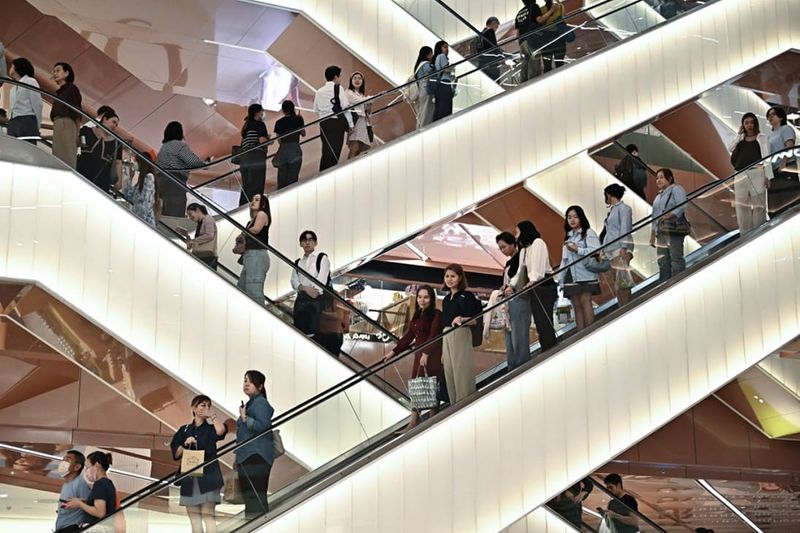
Stand at any corner in Bangkok after dark and you will see three cities at once. Motorcycles thread through gridlock carrying everything from office workers to entire families. Street vendors grill satay under plastic tarps while, two floors up, a speakeasy pours Japanese whisky into hand-cut crystal. The BTS Skytrain glides overhead, silent and air-conditioned, while below, a grandmother pushes a cart of mango sticky rice through air thick with jasmine and exhaust.
This is not the Bangkok of gap-year itineraries or wellness retreats repackaged as enlightenment. It is a sprawling, contradictory metropolis of more than ten million people, a place where gilt stupas stand next to glass towers, where century-old shophouses sell amulets beside Apple Watches, where the sacred and the commercial have long since made peace with one another.
The challenge is not finding things to do. The challenge is understanding which version of the city you are willing to meet.
Temples That Demand More Than a Selfie
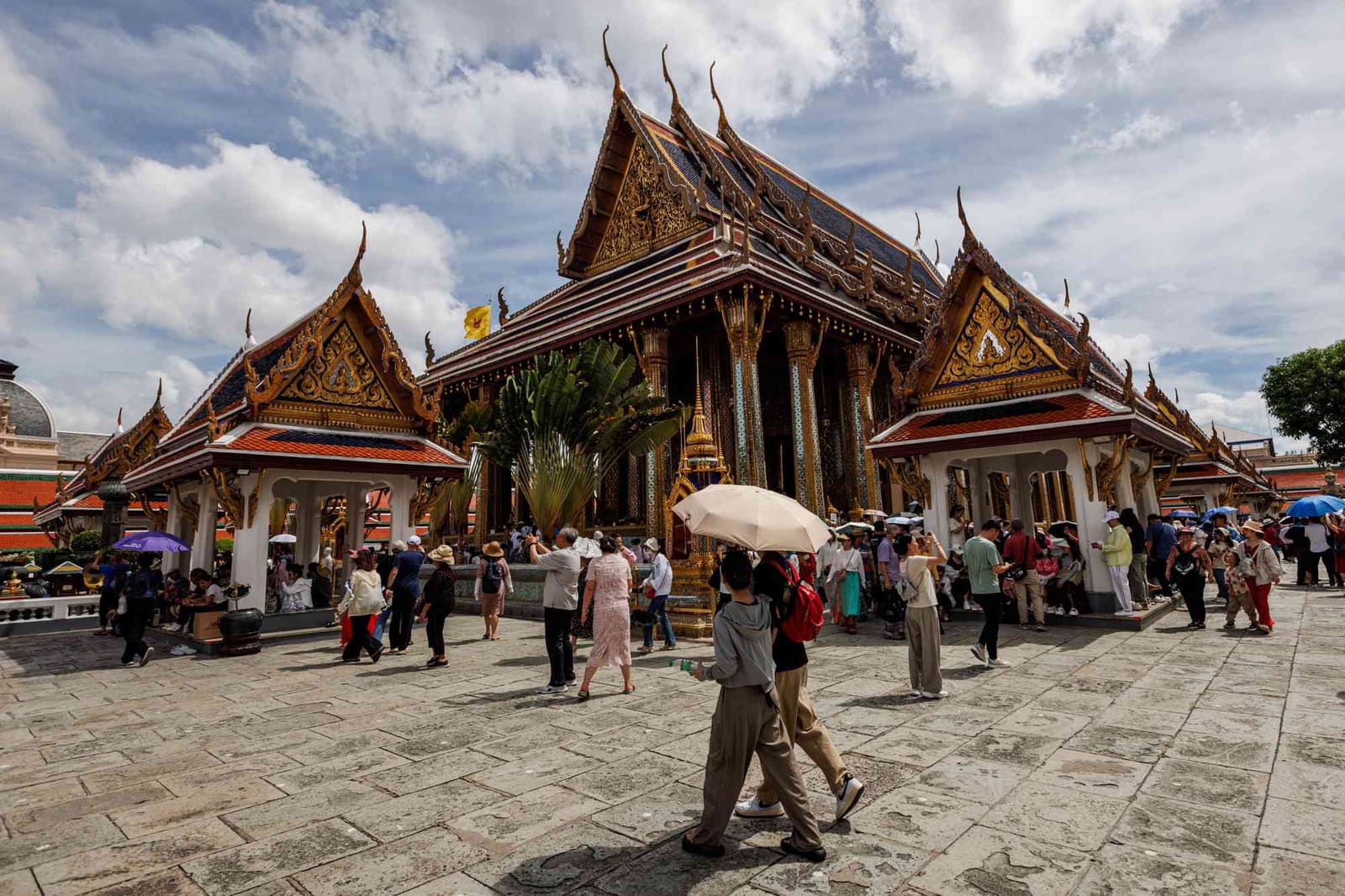
Wat Pho, home to the forty-six-meter Reclining Buddha, remains the most visited temple complex in the capital. Most visitors spend twelve minutes inside. They photograph the gold-leaf feet, circle the statue once, and leave. What they miss is the rest of the compound: a sprawling collection of courtyards, chedis, and pavilions that constitute one of the oldest centers of traditional Thai medicine and massage. The temple has operated a massage school since the 1960s, and a treatment here, under the hands of a practitioner trained in centuries-old technique, is less spa indulgence than embodied history.
Wat Arun, the Temple of Dawn, sits across the Chao Phraya River and is best approached by ferry in the early morning, when the light is still soft and the Khmer-style prang tower catches the sun. The structure is covered in porcelain fragments, remnants of broken Chinese pottery once used as ballast on trading ships. Up close, the decoration reveals itself: tiny flowers, mythical creatures, shards of color embedded in plaster. Climbing the steep steps to the upper terraces is not for the faint of heart, but the view over the river and the old city is worth the vertigo.
Wat Saket, or the Golden Mount, offers another perspective entirely. The artificial hill was constructed in the nineteenth century, and the chedi at its summit is a destination for pilgrims during the annual Loy Krathong festival. The climb is gradual, shaded by trees, and the 360-degree view from the top encompasses both old Bangkok and the new skyline beyond. It is a place that makes the scale of the city legible.
Markets That Function as Time Machines
Chatuchak Weekend Market is enormous, chaotic, and essential. Spread across fifteen thousand stalls, it sells everything from vintage Levi's to live puppies, hand-hammered cookware to bootleg concert tees. The market operates every Saturday and Sunday, and navigating it requires stamina, a willingness to get lost, and cash. Bargaining is expected. The best strategy is to arrive early, before the heat becomes punishing, and to focus on one or two sections rather than attempting the whole grid.
Pak Khlong Talat, the flower market near Memorial Bridge, operates around the clock but is most atmospheric in the pre-dawn hours, when trucks arrive from the provinces and wholesalers arrange mountains of marigolds, lotus blooms, and orchids. The market supplies the city's hotels, restaurants, and spirit houses. It is a working space, not a tourist attraction, and the energy reflects that: hurried, transactional, beautiful in its efficiency.
For a market that feels less like spectacle and more like neighborhood infrastructure, try Or Tor Kor, adjacent to Chatuchak. It is a covered produce market known for impeccable quality and higher prices. The fruit here is flawless: mangosteen with unblemished skins, durian from specific growers in the south, dragon fruit the color of fuchsia. There are cooked-food stalls in the back serving regional Thai dishes rarely seen on restaurant menus.
Food That Tells You Where You Are
Bangkok's street food culture is under pressure. Rising rents, municipal crackdowns, and shifting dining habits have pushed many vendors out of the central districts. What remains is worth seeking out, but it requires flexibility and a tolerance for uncertainty.
Jay Fai, the shophouse restaurant where the chef cooks over charcoal in ski goggles, earned a Michelin star and became an international symbol of Thai street food elevated to art. The crab omelet is still extraordinary, fluffy and rich and impossibly decadent, but the wait can stretch to three hours and reservations are difficult. It is a pilgrimage site now, not a casual meal.
For something less choreographed, head to the neighborhoods: Ari for hip cafes and wine bars that double as natural wine shops; Thonglor for Korean barbecue and Japanese izakayas; Yaowarat, the old Chinatown, for roast duck, bird's nest soup, and dim sum served in dining rooms that have not updated their decor since the 1970s.
The Chao Phraya River also functions as a culinary corridor. Riverside restaurants like Supanniga Eating Room serve refined versions of northeastern Isaan cuisine: grilled river fish, som tam salads that balance heat and acid, and sticky rice served in woven baskets. The setting is elegant but not fussy, and the view over the water at sunset is one of the city's great free pleasures.
Neighborhoods That Reward Walking
Bangkok is not a walkable city in the way that Paris or Barcelona is walkable. The heat, the traffic, the uneven sidewalks, the sheer horizontal sprawl all conspire against the pedestrian. But certain pockets repay the effort.
The old Rattanakosin district, clustered around the Grand Palace, retains traces of the royal capital that King Rama I established in 1782. The streets here are narrower, the buildings lower. Amulet markets spill onto the sidewalks. Small museums occupy former mansions. The neighborhood has the feel of a place that has been lived in continuously for two centuries, which it has.
Bang Rak, near the river, is where you will find the remnants of Bangkok's early international community: the Portuguese embassy, the Assumption Cathedral, colonial-era shophouses with peeling paint and rusted shutters. It is quieter than the tourist core, and the lack of obvious attractions is precisely the point. This is a place to wander without agenda.
Thonburi, on the west bank of the Chao Phraya, feels like a different city altogether. The canals here, or khlongs, were once the primary transportation network, and boat tours through the narrow waterways offer a glimpse of wooden houses on stilts, floating kitchens, and temples accessible only by water. It is slower, greener, less monetized than the east bank, and it will not remain that way forever.
Art and Design in a City Catching Up to Itself
Bangkok's contemporary art scene has matured significantly over the past decade. The Bangkok Art and Culture Centre, a multi-story exhibition space in the middle of a shopping district, hosts rotating shows of Thai and international artists. The building itself is worth visiting: a white spiral atrium that feels like a tropical Guggenheim. Entry is free.
The Jim Thompson House, a teak compound assembled from traditional Thai structures and filled with Southeast Asian art and antiquities, tells the story of the American silk entrepreneur who disappeared in Malaysia in 1967. The house is a museum now, meticulously preserved, and the guided tour is one of the few in the city that offers genuine insight into mid-century Thai aesthetics and the farang fascination with them.
For design and architecture enthusiasts, the new wave of boutique hotels and independent projects offers a counterpoint to the city's glass-tower monotony. The Jam Factory, a repurposed warehouse on the river, combines galleries, design shops, and restaurants in a compound that feels more Brooklyn than Bangkok, which is either a compliment or a warning depending on your tolerance for gentrification as aesthetic.
Rooftops and Rivers: The Vertical and the Horizontal
Bangkok's rooftop bar scene has been well documented, perhaps over-documented. But the view from sixty floors up remains clarifying. Sky Bar at Lebua State Tower is the most famous, thanks to its appearance in The Hangover Part II, and the open-air setting is genuinely dramatic, if expensive and crowded. For something slightly less theatrical, try Octave at the Marriott Sukhumvit or Above Eleven, a Peruvian-Japanese fusion spot with a wraparound terrace.
The river, meanwhile, offers a horizontal alternative. Dinner cruises along the Chao Phraya are a tourist staple, and most are exactly what you expect: buffet meals, amplified Thai music, and scripted commentary. But chartering a private long-tail boat for an evening tour, or simply taking the public ferry from pier to pier, gives you the same view without the performance. The ferry costs fifteen baht. The cruise costs fifteen hundred. The river does not care.
Markets After Dark
Night markets in Bangkok are less about shopping than about atmosphere. Rot Fai Market, originally located near the old railway depot and now relocated to Srinakarin, is a sprawling open-air bazaar specializing in vintage goods, retro toys, vinyl records, and mid-century furniture. The aesthetic is deliberately nostalgic, and the crowd skews younger, local, and more interested in browsing than buying.
Asiatique the Riverfront is more polished, more commercial, and more accessible to first-time visitors. It occupies a former dock warehouse and combines shopping, dining, and entertainment in a layout designed for tourists. It is not authentic in any meaningful sense, but it is well lit, well organized, and offers a Muay Thai cabaret show that is surprisingly well produced.
For night markets that feel less curated, try Talad Neon, a small late-night market near Sukhumvit, or the weekend market at Jodd Fairs, which has become popular with Bangkok residents for its range of regional Thai street food.
The City That Does Not Explain Itself
Bangkok does not offer the immediate visual coherence of Kyoto or the architectural drama of Istanbul. It is a city built in layers, where the old and the new coexist without much concern for harmony or narrative. The Grand Palace sits next to a 7-Eleven. A spirit house receives offerings of Fanta and incense. A monk scrolls through his phone on the Skytrain.
This is not a place that will hold your hand. It will not apologize for the traffic or the heat or the fact that the sidewalk ends abruptly in front of a construction site. But for travelers willing to move at the city's pace rather than imposing their own, Bangkok remains one of the great urban experiments in Southeast Asia: a metropolis that has absorbed wave after wave of influence and somehow remained itself.
The best things to do here are not the things that appear on lists. They are the moments when the city stops performing and simply exists: a vendor rolling rice noodles by hand at dawn, a temple cat asleep on a marble floor, the smell of frying garlic drifting up from a street cart at midnight. These are not attractions. They are the texture of a place that has been lived in, loved, and constantly remade for more than two centuries.
Pack light. Bring cash. Expect delays. And do not mistake efficiency for discovery.