How André Fu Built a Language of Luxury Between East and West
A new Assouline monograph traces fifteen years of the Hong Kong designer's hotels, restaurants, and the philosophy that connects them.
A Practice Built on Synthesis
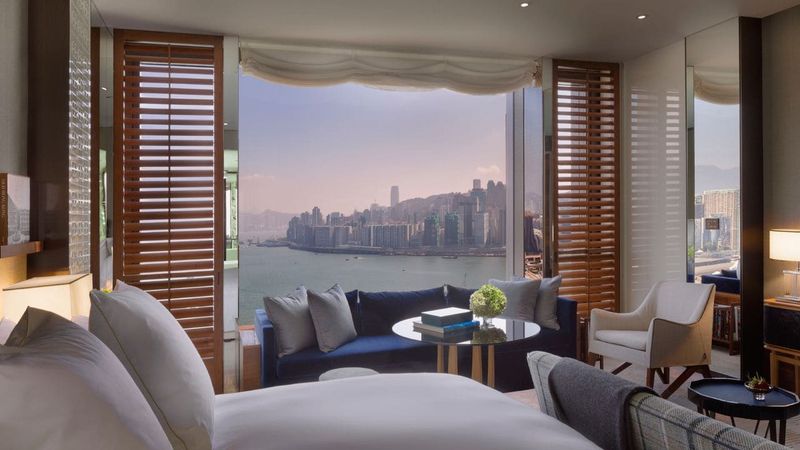
There is a moment in the lobby of The Upper House in Hong Kong when the light shifts and the space seems to exhale. It is not an accident. André Fu, the interior designer behind that project and dozens of others across three continents, has built a career on choreographing such moments: places where Eastern restraint meets Western volume, where artisanal detail converges with contemporary ease. His work resists easy categorization, and that is precisely the point.
Assouline has now published a monograph that attempts to chart this terrain. Written by Daven Wu, the volume gathers fifteen years of Fu's output into a single, considered narrative. It is less a portfolio than a meditation on method, tracing the designer's evolution from early commissions to his current position as one of the most influential voices in global hospitality design.
Three Frames, Dozens of Projects
The book organizes Fu's work into three thematic sections: Heritage Reimagined, Escape, and Cultural Dialogue. Each serves as a lens rather than a rigid taxonomy. The first examines projects where historical context becomes a design ingredient. The second explores retreats and sanctuaries, spaces conceived as counterpoints to urban intensity. The third investigates how design can mediate between distinct cultural traditions without flattening either.
Among the case studies: Duddell's in Hong Kong, where contemporary art and Cantonese dining occupy the same carefully calibrated interior; the St Regis Hong Kong, a study in vertical luxury; the Residence Suites at Villa La Coste in Provence, where French light and Japanese spatial thinking coexist; and the Waldorf Astoria Osaka, a project that reinterprets art deco through a distinctly Japanese sensibility. Each project is documented with photography and analysis, the latter attuned to materials, proportion, and the social life of spaces.
Hotel The Mitsui Kyoto and the Berkeley Hotel Pavilion Suites in London also feature prominently. The former engages with Kyoto's layered history, translating centuries of craft into a contemporary hospitality framework. The latter reimagines a corner of Knightsbridge as a series of intimate, art-filled rooms that feel more like a private residence than a hotel.
Conversations as Structure
Interspersed with the project documentation are interviews between Fu and figures who have shaped or intersected with his practice. Daniel Calvert, head chef of Sézanne, discusses the relationship between culinary and spatial design. Designer and retailer Joyce Ma reflects on aesthetics, commerce, and the evolution of taste in Asia. These conversations function as a kind of intellectual scaffolding, revealing the network of influences and collaborations that underpin Fu's work.
The format is deliberate. Rather than positioning Fu as a solitary auteur, the book situates him within a broader creative ecosystem. It is a portrait of a designer who listens as much as he directs, who understands that the best interiors are often the result of productive tension between disciplines.
A Vocabulary of Relaxed Luxury
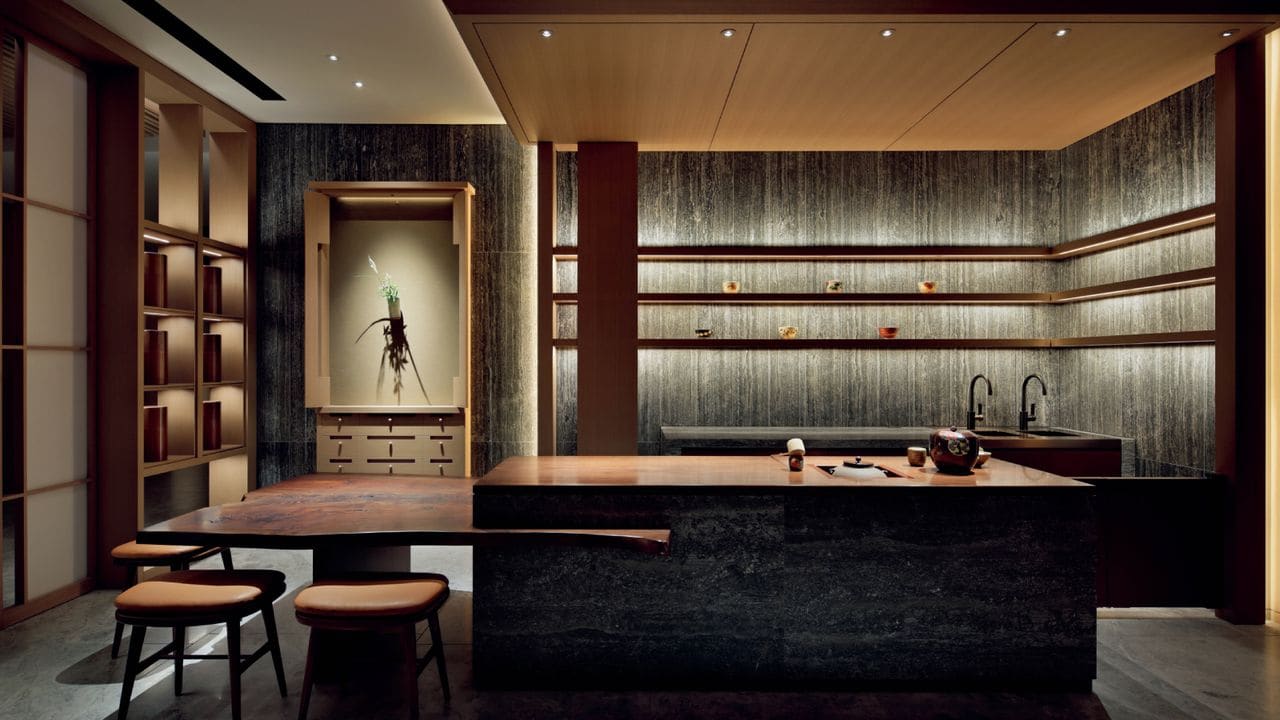
What emerges across the projects is a consistent formal language. Fu favors natural materials, subtle tonal shifts, and a restrained palette that privileges texture over color. His interiors are rarely loud. They invite slow observation, rewarding the kind of attention that reveals detail over time. There is a deliberate absence of ornament for its own sake; every element serves a spatial or experiential purpose.
This approach has been codified, to some extent, in André Fu Living, the designer's lifestyle brand. The venture extends his aesthetic into furniture, textiles, and objects, offering a more accessible entry point into his world. It also reflects a broader ambition: to articulate a design philosophy that operates across scales, from the intimacy of a teacup to the sweep of a hotel lobby.
What Comes Next
The monograph also gestures toward future work. Projects such as the Dusit Thani Bangkok and Capella Taipei are mentioned as forthcoming, each representing a new context and a new set of constraints. The book does not speculate about these in detail, but their inclusion suggests a practice still in motion, still testing the boundaries of its own vocabulary.
For readers interested in contemporary hospitality design, the volume offers both a retrospective and a primer. It is a document of how one designer has navigated the space between cultural specificity and global reach, between tradition and innovation. And it is a reminder that the most enduring interiors are often those that resist easy summary, that hold complexity without collapsing into confusion.
A Book as Object
Published by Assouline, the monograph itself is a designed object. The production values are high, the photography carefully sequenced. It is the kind of book meant to sit on a coffee table, to be opened and reopened, to function as both reference and inspiration. At one hundred pounds, it is positioned as a luxury item, which is fitting given the subject matter.
The release comes at a moment when hospitality design is undergoing its own reckoning, caught between the pressures of sustainability, the demands of social media, and the enduring human need for spaces that feel both distinctive and welcoming. Fu's work, as documented here, offers one possible path forward: design that is culturally literate, materially honest, and quietly ambitious.