How a 900-Year-Old Duck Recipe Found New Life in Chicago
One chef's search for ancestral roots led him to build a restaurant around ancient spice routes, live fire, and the stories carried in migration.
The Name That Became a Map
Zubair Mohajir spent years wondering why his family carried the surname they did. The word itself, muhājir, translates to "one who migrates" in both Arabic and Urdu - a designation given to Muslims who moved from India to Pakistan during the 1947 Partition. But the question lingered: why had this particular name stuck to his lineage?
The answer arrived through his late maternal grandfather's obsession with genealogy. The family line, it turned out, traced back to southern Basra in present-day Iraq, a city that once sat at the crossroads of one of history's most vital spice routes. For Mohajir, who had left a career in finance to cook, the revelation became a culinary compass. The routes that carried cardamom, cumin, and coriander across continents were the same paths his ancestors likely travelled. Food and migration, he realised, were not separate stories.
That discovery now anchors Muhājir, his Chicago restaurant that opened in 2026. The dining room functions as both a historical archive and a living kitchen, tracing the spice road that wound from Portugal through the Mediterranean, across the Levantine region, out of Basra into the Persian Gulf, and finally to southern India, where Mohajir's own roots lie.
Cooking Over Flame, Not Stove
The decision to centre the restaurant around live fire was not born from technical mastery - Mohajir had never cooked over open flame professionally before opening Muhājir. Instead, it emerged from memory. Growing up in his grandmother's house in India, gas stoves were not ubiquitous. Meals were cooked over wood and coal, the smoke threading through courtyards and clinging to fabrics.
When the concept for Muhājir began to take shape, the choice became obvious. A sauté pan on a modern stovetop could not carry the weight of the narrative he wanted to build. The spice routes he sought to honour were ancient, their culinary traditions formed long before industrial kitchens. To tell that story honestly required returning to elemental methods.
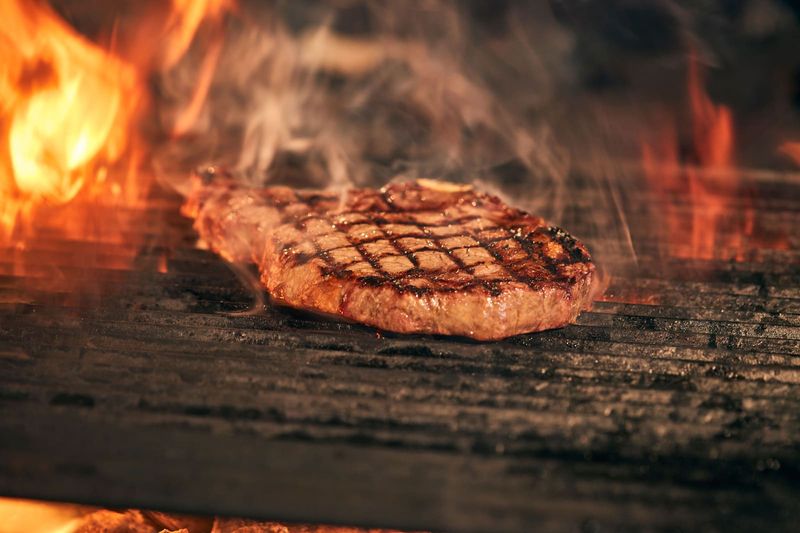
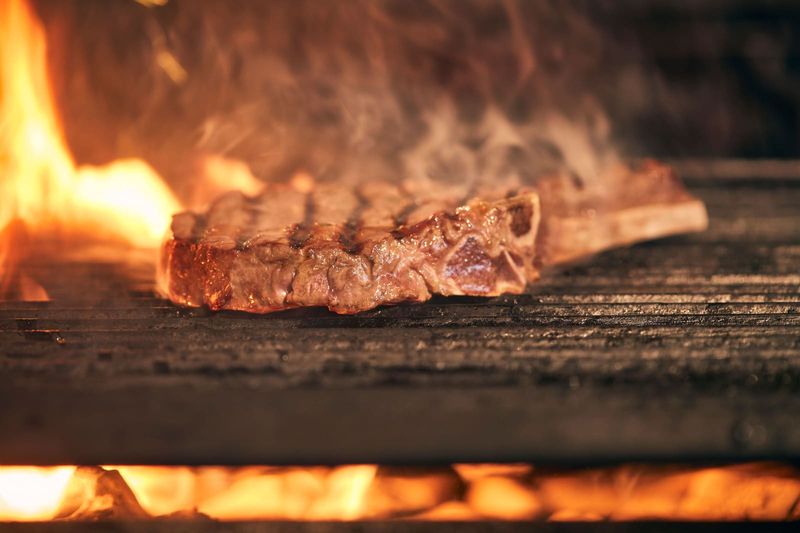
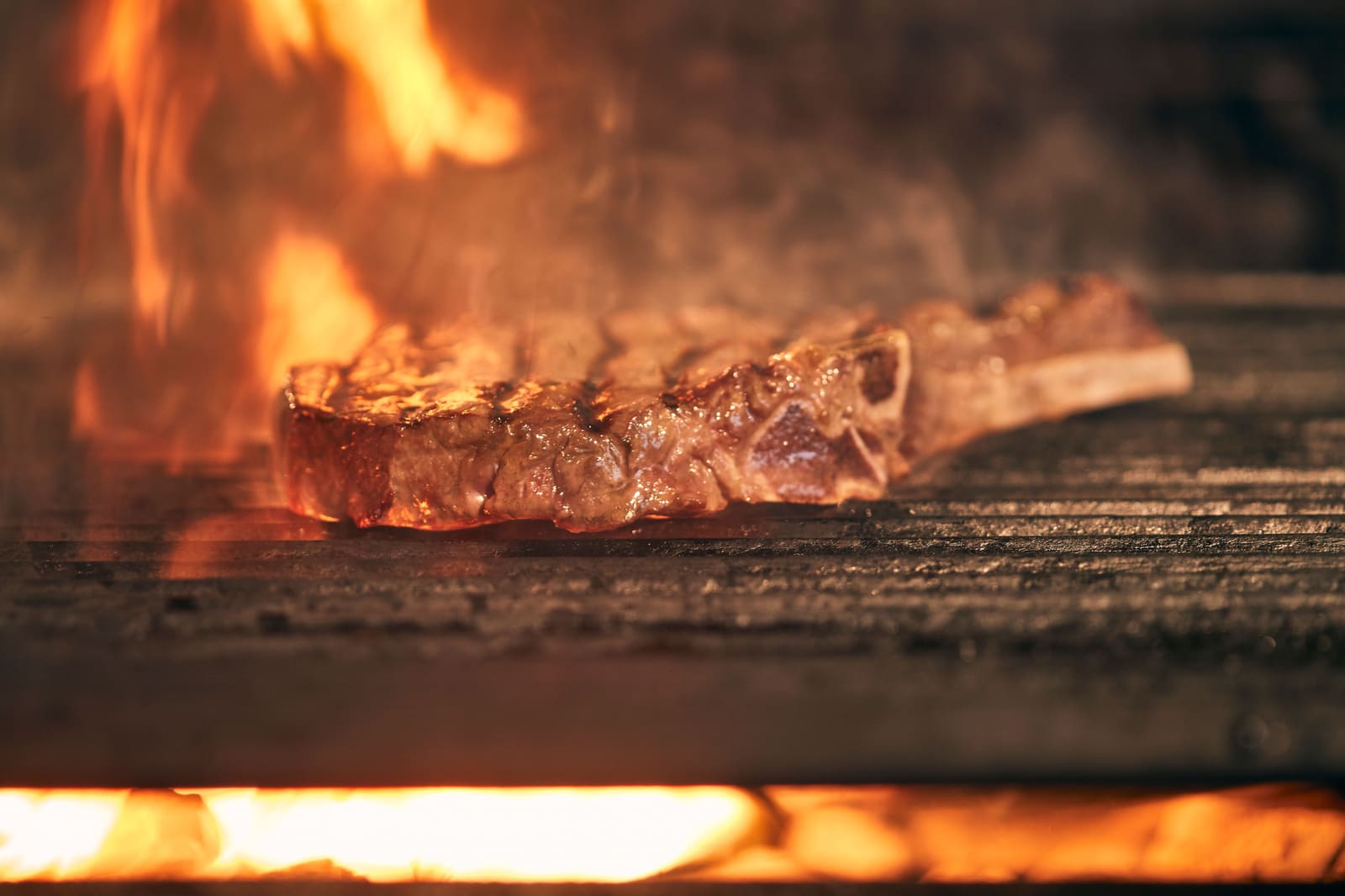
Now, whole duck crowns hang over the brasa during service, their skins blistering and rendering in full view of diners. The visual theatre is intentional, but it is not mere performance. The fire is the engine of the menu, the method through which centuries-old recipes are reinterpreted for contemporary palates.
A Duck That Crosses Nine Centuries
The centrepiece of Muhājir's menu is a dish rooted in a recipe from southern Spain, dated to the year 1099. The preparation reflects the layered influences of pre-Crusade Iberia: Roman fermented fish sauces, Muslim spice blends, Jewish cooking techniques, and the imprint of Southeast Asian traders who moved goods along the Mediterranean.
According to Mohajir, the dish begins with a whole duck, which is butchered in-house. The crown is dry-aged for seven days, while the wings are rendered into jus and the legs transformed into confit. At the start of each service, the duck crown is blasted over open flame, then finished in the brasa. Diners seated near the fire can watch the birds as they hang, fat dripping onto coals.
The final presentation arrives on an ornate Turkish platter: sliced duck breast with crackling skin, duck rice, crisp medallions of rendered skin resembling chicharrón, black raspberry achaar, and a saucier of jus. The breast itself is dusted with the original spice blend from the 927-year-old recipe - cumin, coriander, cardamom, toasted pine nuts, red wine vinegar, and fish sauce.
It is a dish that refuses to belong to a single cuisine. Instead, it embodies what Mohajir describes as cross-cultural collaboration, a culinary artefact shaped by trade, conquest, and the movement of people across borders.
The Bar That Shares the Story
Behind Muhājir sits Bobo, a bar named after the father of Jacob Dela Cruz, Mohajir's business partner. The Tagalog word "bobo" translates loosely to "silly" or "stupid," used as a term of affection. The choice reflects the dual nature of the project: while Muhājir leans into historical gravitas, Bobo offers levity.
The two spaces are physically connected - guests cannot reach Bobo without walking through the restaurant. Early arrivals are often led to the bar to wait for their table; others drift back after dinner. The flow between the two creates a curious dynamic, each space drawing attention to the other. Diners glimpse strangers moving through the corridor and wonder what lies beyond. Bar patrons peer into the dining room and see ducks suspended over flame.
Dela Cruz's influence extends beyond the bar. It was he who first suggested naming the restaurant Muhājir, pointing out that the concept of migration was not unique to Mohajir's family. "We're all immigrants," Dela Cruz told him - a statement Mohajir describes as both simple and profound. The acknowledgment reframed the project, transforming it from a personal narrative into a broader meditation on displacement, belonging, and the stories carried in food.
Building Without the Safety of Distance
Muhājir is not Mohajir's first restaurant. Over the past several years, he has opened Lilac Tiger, Mariela, Mirra, and Sarima, each with distinct concepts and collaborators. At Mirra, for instance, he helped shape the vision but stepped back to let chef Rishi Kumar run the kitchen. The model allowed him to build multiple projects simultaneously, but it also meant he was often outside the kitchen rather than inside it.
Muhājir is different. This is the kitchen he intends to grow old in, the one that feels less like a business venture and more like a homecoming. The distinction is not just emotional - it is operational. He is present during service, managing the fire, tasting dishes, adjusting as the evening unfolds.
The challenges of opening a restaurant have not diminished with experience, but the panic has. Mohajir describes a methodical approach to problem-solving now, a willingness to confront obstacles directly rather than react. The investors, he notes, are not private equity firms but the guests themselves - a structure that shifts accountability and aligns incentives differently.
Still, the intensity remains. The restaurant has been open only a short time, and the rhythm of service is still settling. But increasingly, he says, there are moments when the chaos recedes and he feels rooted. Those are the moments when the dining room becomes less a project and more a place.
What the Spice Road Carries
The menu at Muhajir spans geographies, but it is not fusion in the conventional sense. Mohajir has spent years studying historical recipes, particularly those from southern Spain and Portugal during the period before the Crusades, when Muslim, Christian, and Jewish communities coexisted and traded with merchants arriving from Southeast Asia. That research, conducted over five years at Coach House, laid the groundwork for Muhājir's approach.
The restaurant does not attempt to recreate dishes exactly as they were prepared nine centuries ago. Instead, it uses historical recipes as frameworks, adapting techniques and ingredients to contemporary kitchens while preserving the intent. The result is a menu that feels both ancient and immediate, informed by scholarship but executed with the tools and sensibilities of the present.
The spice road itself serves as both literal and metaphorical structure. It is the route that carried cardamom from India to Europe, that brought North African techniques to Iberia, that connected Basra to Lisbon. But it is also a lens through which to understand migration - not as a singular event, but as a continuous process that shapes culture, cuisine, and identity.
For Mohajir, the restaurant is an attempt to make visible what is often erased: the movement of people, the blending of traditions, the ways food becomes a record of displacement and adaptation. The 900-year-old duck recipe is not a relic. It is evidence of what happens when cultures collide, when necessity and creativity intersect, when home becomes a place you carry rather than a place you stay.
And in a Chicago dining room where whole ducks hang over open flame and guests move between bar and table, that history is no longer distant. It is alive, smoky, and immediate - a story told through spice, fire, and the simple act of feeding strangers.