
Why We Keep Returning to Sydney When So Many Other Cities Compete for Our Attention
Between harbour light and sandstone warmth, Australia's harbour city offers a rhythm that feels less like tourism and more like rediscovery.
SI
16 Jun 2026 · 5 MIN READ · UPDATED 17 AUG 2026
The Light That Pulls You Back
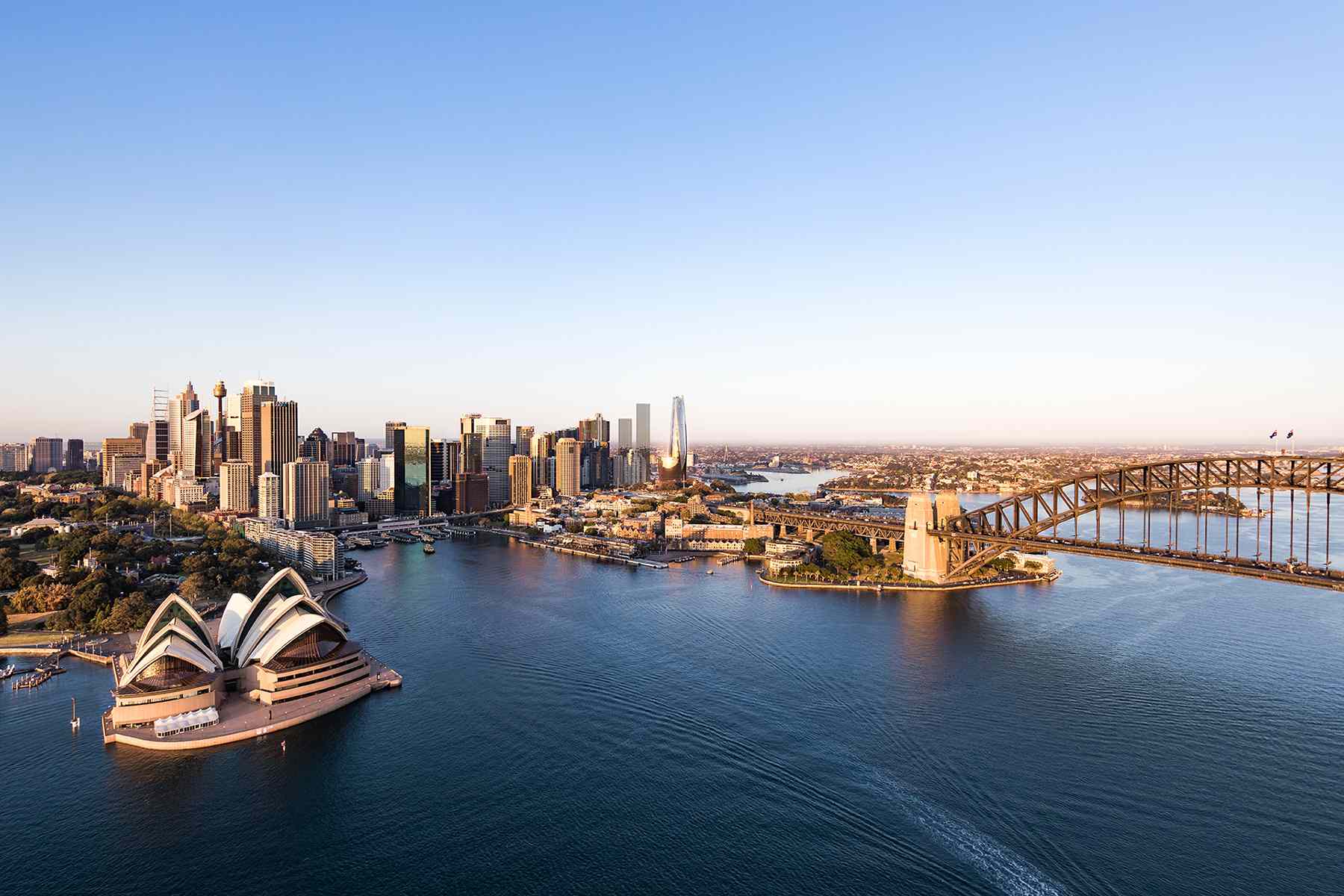
There is a particular slant of morning light across Sydney Harbour that no photograph quite captures. We have watched it countless times from ferry decks and hotel terraces, the way it turns the water pewter and gold simultaneously, the way the white shells of the Opera House seem to float rather than sit. It is this light, perhaps more than any single landmark, that defines the city for those of us who return year after year. Sydney is not a place you visit once and check off a list. It is a city that unfolds slowly, revealing itself in the quality of an espresso pulled at a Surry Hills corner shop, in the unhurried conversations along coastal walks, in the layered histories embedded in sandstone facades.
At Global Chic Voyage, we have watched Sydney mature from a harbour city trading on iconic architecture into a metropolis that understands its own complexity. Nearly half its residents were born beyond Australia's shores, and that demographic reality has reshaped everything from the restaurant landscape to the tenor of public life. The Gadigal people of the Eora Nation have inhabited this harbour country for tens of thousands of years, and contemporary Sydney is slowly, imperfectly learning to acknowledge that depth of time. What emerges is a city less interested in performing for visitors and more confident in its own cosmopolitan identity.
The Seasons We Prefer
Timing matters in Sydney more than in cities where seasons blur into a perpetual summer marketing fantasy. We have learned to favour the shoulder months, late spring in October and November or the soft decline of early autumn in March and April, when humidity retreats and the quality of outdoor life reaches its peak. The summer crush from December through February brings heat that hovers in the high twenties Celsius, humidity that clings, and crowds that swell during the long school holidays between Christmas and late January. If your tolerance for both is high, summer offers the full roster of festivals, from the sprawling Sydney Festival in January to the exuberant Mardi Gras parade in February.
Winter, spanning June through August, is a different proposition entirely. Temperatures drop to single digits in the early mornings, and rain arrives with greater frequency. Yet winter in Sydney is far from bleak. The Vivid festival illuminates the harbour precinct in May and June with light installations and projections, transforming the city into a nocturnal gallery. The Film Festival follows in June, and Bondi hosts its own festival in July. Prices soften, crowds thin, and the city belongs more to its residents than to the seasonal influx.
We have come to appreciate Sydney's humid subtropical climate, the way rain distributes itself fairly evenly across the calendar year, accumulating to around 1,200 millimetres annually. There is a mildness here, a lack of weather extremes that makes outdoor life possible in every season. August and September are the driest months, and July the coolest. January tends toward the warmest days, though the heat is rarely oppressive by tropical standards.
Where We Choose to Stay
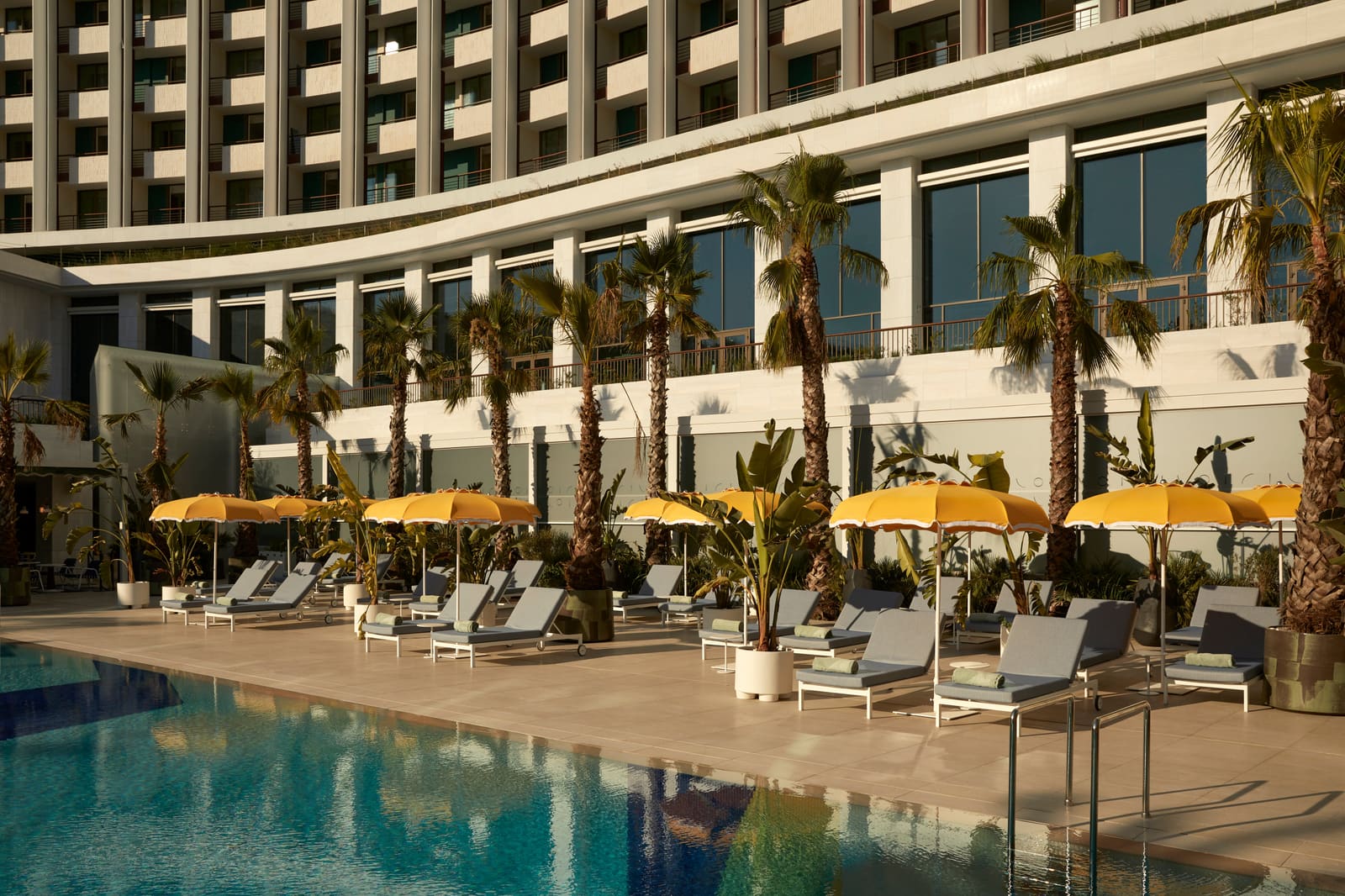
The question of accommodation in Sydney has become more interesting in recent years as a new generation of luxury properties has opened alongside heritage stalwarts. In The Rocks, the historic quarter built on convict-laid cobblestones, The Langham occupies a position that balances romance with convenience. Its indoor pool and spa offer refuge after long days of exploration, and certain rooms extend onto private terraces with harbour views that justify the premium. The hotel welcomes pets with the same attention it affords human guests, a detail that speaks to a broader Australian ease with dogs in public life.
Capella Sydney has reimagined the former Department of Education building in the central business district, transforming its golden sandstone shell into 192 guest rooms and suites distributed across eight levels. The architecture retains its civic gravitas while accommodating the quiet luxuries contemporary travellers expect: Brasserie 1930 on the ground floor, the Auriga Spa accessible only to guests, a sense of sanctuary within the urban grid. The building's history is not erased but rather woven into the experience, sandstone and modernity in conversation.
Over in Woolloomooloo, Ovolo occupies a different register entirely, its aesthetic more playful, its location on the finger wharf offering a perspective on the harbour that feels more intimate, less monumental. Each of these properties understands that Sydney's appeal lies not in ostentation but in a kind of relaxed sophistication, a confidence that does not need to announce itself.
The Democracy of Coffee and Cuisine
Sydney's obsession with coffee is both well-documented and ongoing. Walk any residential neighbourhood in the inner suburbs and you will encounter espresso bars that would hold their own in Milan or Melbourne. The flat white, that perfect marriage of espresso and microfoam with only the thinnest layer of cream, may or may not have originated here, the claim is contested with Melbourne, but it certainly thrives in Sydney's cafes. What matters more than origin mythology is the city's refusal to accept mediocrity in its morning ritual. Coffee here is democratic, accessible, and executed with a seriousness that borders on devotion.
The same ethos extends to the broader food culture, which has matured far beyond the seafood-and-steak clichés that once defined Australian dining. The reopening of the Sydney Fish Market in January 2026 signals the city's ambition to position itself as a seafood destination on par with Tokyo's Tsukiji or Bergen's fish markets. The redeveloped precinct now houses not only retailers but cooking schools and restaurants that treat local catch with the respect it deserves. Kingfish, barramundi, rock oysters from the southern estuaries, each ingredient tells a story of cold currents and clean waters.
Beyond seafood, Sydney's dining landscape reflects its migrant majority. Vietnamese pho shops sit alongside Lebanese bakeries, Cantonese roast duck hangs in windows next to Italian salumerias. This is not fusion for the sake of novelty but rather the lived reality of a city where culinary traditions coexist and, increasingly, inform one another. The result is a food scene that feels less curated than organic, less about chasing trends than honouring the diverse palates of its residents.
Moving Through the City
We have always appreciated cities that make public transport intuitive and pleasant, and Sydney largely succeeds on both counts. The Opal card system integrates trains, ferries, buses, and light rail into a single network that covers the metropolitan area and beyond. The ferries, departing from Circular Quay, remain our preferred mode of transport, not for efficiency alone but for the experience itself. A twenty-minute crossing to Manly Beach or a longer journey up the Parramatta River offers perspectives on the city that no car or train can provide, the skyline receding, the harbour suburbs revealing themselves in sequence, the play of light on water.
The train network radiates from Central Station, its lines reaching the airport, the Blue Mountains, and the South Coast. Light rail cuts through the city centre, connecting Circular Quay to Darling Harbour and beyond. Buses fill the gaps, running through neighbourhoods without rail access, and NightRide services maintain skeletal routes between midnight and four in the morning. Taxis and ride-sharing services are ubiquitous, though we find ourselves using them less frequently than in other cities, the public options are simply too good.
One detail worth noting: Sydney's tap water is among the cleanest in the world, drawn from protected catchments and delivered without the metallic aftertaste that plagues many cities. Bottled water is available but increasingly frowned upon, and rightly so. It is a small thing, the ability to drink freely from any tap, but it contributes to a sense of the city as fundamentally well-managed, a place where basic infrastructure functions as it should.
The Rituals We Have Adopted
Over multiple visits, we have developed our own rituals, the routines that distinguish a place known from a place merely seen. Early morning walks along the Bondi to Coogee coastal path, before the crowds arrive and the sun climbs too high. Afternoon sessions at the Art Gallery of New South Wales, particularly the Australian galleries where colonial landscapes hang alongside contemporary Indigenous works, the dialogue between them still unresolved, still vital. Late lunches in Surry Hills or Newtown, neighbourhoods where the pace slows and the clientele is more local than tourist.
We have learned to time our visits to The Rocks for weekday mornings when the weekend markets are absent and the cobbled lanes feel almost meditative. We have discovered the small pleasure of a schooner, the standard beer glass in New South Wales, enjoyed at a harbourside pub as ferries come and go. We have grown fond of the city's casual relationship with alcohol, the bottle shops that sell wine and beer without ceremony, the absence of puritanical restrictions that govern drinking in other Anglophone cities.
Smoking is banned indoors and in many outdoor public spaces, beaches, parks, transport stops, a policy that enhances rather than restricts the experience of shared spaces. Tipping is not customary, service and tax are included by law, and wages are structured to make gratuities unnecessary. For exceptional service, a gesture of ten to twenty percent is appreciated but never expected. This absence of tipping culture removes a layer of transactional awkwardness that can mar interactions elsewhere.
Why the Architecture Matters
Sydney's built environment tells a story of layered time. The sandstone facades of Victorian-era buildings glow amber in afternoon light, their solidity a reminder of the city's origins as a colonial outpost. The Harbour Bridge, opened in 1932, remains an engineering marvel and an icon so embedded in the city's identity that locals refer to it simply as the coat hanger. The Opera House, completed in 1973 after a famously troubled construction, has transcended its status as landmark to become shorthand for the city itself, those white sails visible from dozens of vantage points across the harbour.
But Sydney's architectural interest lies not only in its icons. The adaptive reuse of heritage buildings, the Department of Education structure now housing Capella Sydney, the old wharves transformed into residential and hospitality spaces, demonstrates a city grappling thoughtfully with its past. New developments rise in the central business district, glass and steel towers that catch the harbour light, yet the most successful projects are those that acknowledge rather than erase what came before.
Walking through The Rocks, the oldest surviving neighbourhood, you encounter buildings constructed by convict labour in the late eighteenth and early nineteenth centuries. These structures were built to last, their sandstone blocks quarried locally, their proportions modest but dignified. The area was nearly demolished in the 1970s to make way for office towers, a fate averted by community activism. Today it serves as both tourist precinct and living neighbourhood, a balance not always easy to maintain but worth the effort.
The Coastal Imperative
No understanding of Sydney is complete without acknowledging the coast. The city's eastern suburbs unfurl along a series of beaches, each with its own character and constituency. Bondi, the most famous, draws crowds year-round, its crescent of sand backed by a parade of cafes and apartments, its surf clubs and ocean pools testaments to a culture that takes swimming seriously. Coogee, to the south, feels more residential, less performative. Manly, accessible by ferry from Circular Quay, occupies a narrow isthmus between harbour and ocean, its Norfolk pines and pedestrian corso evoking a different era of Australian beach culture.
We have spent hours on the clifftop walk linking these beaches, the sandstone headlands dropping abruptly to the Tasman Sea, the coastal scrub clinging to rocky outcrops, the occasional sculpture or memorial marking a point of historical significance. The walk is popular but never feels crowded, the path wide enough to accommodate runners, walkers, and those who simply want to stand and watch the ocean.
The beaches themselves are patrolled by surf lifesavers, volunteers in red and yellow caps whose presence is as iconic as the Opera House. Their flags mark safe swimming zones, and their authority is absolute. To swim outside the flags is to invite not only danger but social disapproval, a minor transgression that nonetheless marks you as outsider. We have learned to respect the flags, to understand that the ocean here is powerful and unforgiving, that the rips and currents demand local knowledge.
What We Take Away
Sydney is not without its contradictions. Housing affordability has become a crisis, pricing out the creative class that once gave inner neighbourhoods their character. Development pressures threaten heritage buildings and green spaces. The city's relationship with its Indigenous history remains fraught, marked by gestures of recognition that do not always translate into substantive change. These tensions are real, and they shape the city as much as its harbour views and coffee culture.
Yet we keep returning. There is a quality of life here, an ease of movement between urban density and natural beauty, that few cities manage. The harbour remains the organizing principle, its fingers of water reaching into suburbs and shaping daily rhythms. The light continues to astonish, particularly in the early mornings and late afternoons when it turns ordinary moments into something worth remembering. The food, the coffee, the beaches, the architecture, all of these elements combine into an experience that feels both distinctly Australian and unmistakably cosmopolitan.
For those of us who travel professionally, who move through cities with a critical eye and a notebook always at hand, Sydney passes a test that many destinations fail: it rewards repeat visits. The city does not exhaust itself in a long weekend. It asks for time, for curiosity, for a willingness to move beyond the postcard views into the neighbourhoods where Sydneysiders actually live. Do that, and the city unfolds in ways that justify the long flight, the expense, the logistical complications of reaching the far edge of the Pacific. Do that, and you begin to understand why we keep coming back.
Spot something wrong? Email editors@globalchicvoyage.com. We log every correction publicly.
RELATED
SEE ALL →
8 Aug 2026 / 5 min
18 Jul 2026 / 5 min
13 Jul 2026 / 5 min
10 Jul 2026 / 5 min