
Where the Mountain Meets the Atlantic: A Cape Town Hotel Reckoning
In a city where geography is destiny, the finest lodgings understand that luxury is not just thread count but the art of framing a view, a moment, a story.
SI
13 Jul 2026 · 5 MIN READ · UPDATED 17 AUG 2026
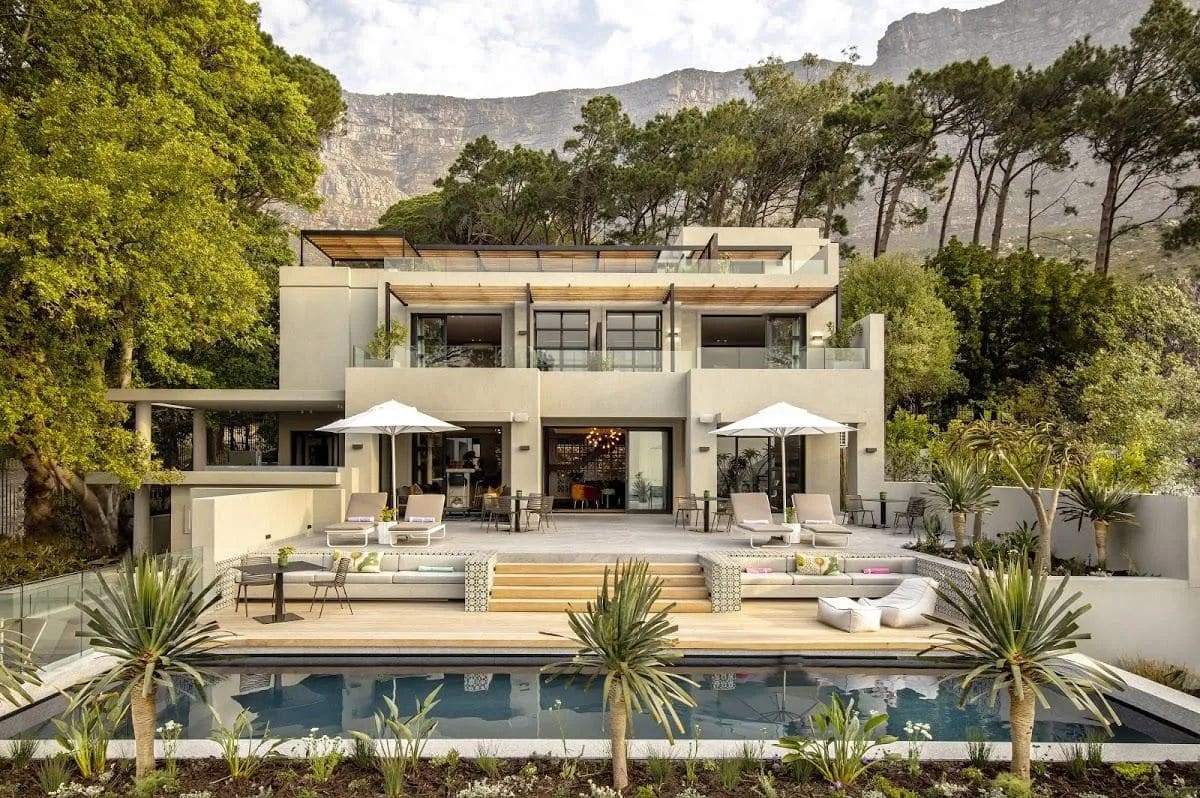
The Geography of Desire
Stand at the right window in Cape Town and you understand why certain cities claim the imagination. Below, the harbor glitters. Above, the flat summit of Table Mountain cuts the sky into geometry. Between these two poles, a city has arranged itself on slopes and beaches, and the hotels that matter most have learned to hold both in a single frame.
At Global Chic Voyage, we've watched Cape Town's hospitality landscape evolve from colonial-era politesse into something more textured, more rooted in the peninsula's own visual language. The best properties here do not simply occupy space; they interpret it. They know that a guest remembers not the pillow menu but the way light fell on stone at breakfast, the cold shock of Atlantic water after a steam, the taste of baba ganoush eaten within earshot of the surf.
What follows is not a checklist but a series of portraits, hotels that have mastered the difficult balance between comfort and character, between service and soul.
The Grande Dame in Pink
Some buildings carry their history lightly. Others wear it like a coat of arms. Mount Nelson, painted its signature pink since 1918, belongs firmly to the latter camp. The approach alone is a small theater: palms line the drive, lawns roll toward a porticoed entrance, and somewhere beyond the garden wall, Table Mountain presides.
Inside, the restoration work has been meticulous, layer upon layer of update that never erases the 1899 bones beneath. What keeps the property vital is not nostalgia but location, a perch between the mountain and Company's Garden that newer contenders cannot replicate. The service here understands the difference between formality and fussiness, a quality that takes decades to cultivate.
Cold Water and Lebanese Fire
On the Camps Bay beachfront, where the Twelve Apostles range provides a backdrop so dramatic it borders on the unfair, Morea House has staked its claim with an angular, contemporary facade that looks straight onto the sand. The palette inside is deliberate: timber, stone, bronze, textures that echo the mountain and sea without mimicking them.
What distinguishes the property is its embrace of the Atlantic's temperament. Guests receive hand-drawn maps on arrival, not of restaurants or galleries but of the best cold plunges in the area, tidal pools and lidos where the water cuts through jet lag and pretense alike. It is a gesture that signals intent, a wellness philosophy rooted in place rather than imported wholesale from Bali or Tulum.
The food, too, speaks to specificity. At Omri, chef Joe Estello channels Lebanese tradition through smoky grills and a dip repertoire that runs from muhammara to baba ganoush, each plate accompanied by pita so fresh it still holds heat. Locals book tables here, always a telling sign. Across 90 rooms, the design remains restrained: pale stone walls, blonde wood, marble baths that feel less like statements than quiet confirmations of taste.
Quayside Reimagining
For nearly thirty years, Cape Grace occupied a private quay on the V&A Waterfront, drawing a certain caliber of guest, politicians and actors among them, but showing the inevitable wear of age. When Accor stepped in with plans for a full reimagining, the question was whether a facelift could preserve what mattered while shedding what did not.
The answer, it turns out, involved gutting every surface. The property reopened with a new name, Cape Grace, A Fairmont Managed Hotel, and a fresh aesthetic anchored in contemporary South African art and design. The room count dropped from 121 to 112, a trade that bought space and breathing room. Executive chef Wesli Jacobs now oversees Heirloom, the successor to Signal, as well as the Library, long a gathering spot for book clubs and afternoon tea, and Bascule, a subterranean bar whose whiskey collection numbers over 420 expressions.
The location remains the draw: Table Mountain on one side, working harbor on the other, museums and shops within easy striking distance. It is the kind of staging that forgives a first-timer's navigational errors, a soft landing in a city that can overwhelm.
The Urban Resort Paradox
One&Only Cape Town calls itself an urban resort, a phrase that usually signals confusion of purpose. Here, though, the scale makes the claim credible. The property sprawls beside the Two Oceans Aquarium, within strolling distance of the Water Shed market and its roster of local designers. The lobby opens into Vista Bar and Lounge, a triple-volume space where glass frames the mountain and a distinctive woody fragrance layers the air.
The spa occupies its own island, twelve treatment rooms and private wet areas arranged around a garden yoga pavilion. Even guests who skip the massage menu can access the thermal suites, his-and-hers hydrotherapy facilities with vitality pools, aroma-steam rooms, saunas, ice fountains, and experience showers. It is the kind of amenity creep that works when the architecture can absorb it, when abundance does not tip into clutter.
Families gravitate here, drawn by space and proximity to the aquarium. The design accommodates children without capitulating to them, a balance harder to strike than it sounds.
Farm, Garden, Spa
An hour outside the city, in the Cape Winelands, Babylonstoren has been drawing day-trippers and overnight guests since 2010. The 1,070-hectare property holds edible gardens, cheese rooms, wine cellars, whitewashed Cape Dutch buildings, and a farm-to-table dining program that takes the phrase literally.
Across 33 sets of accommodations, the design vocabulary shifts, cottage to farmhouse to villa, but certain elements recur: thick stone walls, fireplaces, farm doors that have earned their patina. Romance here is not manufactured but structural, embedded in the architecture and the land itself.
The latest addition, Soetmelksvlei, is an 1890s Cape-style farmstead reimagined as an interactive experience. Guests can milk cows, churn butter, then sit down to a hearty lunch in the on-site restaurant. It is agritourism done with enough restraint to avoid theme-park energy, a delicate calibration.
The Beachfront Bolthole
Just off the Camps Bay main drag, Pod Camps Bay offers seventeen rooms and a hip, green-minded ethos. The building runs on its own water supply, a practical response to Cape Town's periodic droughts. From the street, the architecture reads as starkly modern, opening into a smart cocktail bar with a lap pool and sea view.
Toward the back, a Zen dining room provides a cool, tranquil counterpoint to the beach glare outside. The location is the real asset: set back from the busy beachfront but close enough to walk, on the bus route into the city and to the Waterfront. For guests who prefer not to hire a car, it solves the mobility problem without sacrificing the Camps Bay vibe.
The Edwardian on the Cliff
In 1906, shipping magnate Sir John Ellerman commissioned a mansion in Bantry Bay, one of Cape Town's most exclusive coastal enclaves. The site he chose offers prime views of boulder-strewn swimming coves and the kind of sunsets that stop conversation mid-sentence.
Today, Ellerman House holds eleven rooms, two suites, two villas, and one-and-a-half acres of hillside gardens, all verdant lawns and aromatic Cape fynbos. The staff operates on a houseguest model, pressing clothes, running bubble baths, delivering antique silver pots of just-picked mint for tea. The service is personalized to the point of clairvoyance: chefs prepare individual favorites, Cape Malay curries or fresh lobster salads, and a help-yourself pantry is restocked daily with treats.
Owner Paul Harris has filled the house and its adjoining gallery with one of South Africa's finest private art collections, from 19th-century landscapes by Thomas Bowler to contemporary portraits by Gerard Sekoto. The art is not roped off but integrated, hanging in bedrooms and hallways, a lived-in collection rather than a museum display.
For families, the two contemporary villas offer children their own pool, a separation that allows adults to indulge in formal English tea on the shaded verandas without the soundtrack of splashing. It is a clubby space, a grande dame that encourages lingering, the kind of property where guests extend their stay not because the itinerary demands it but because the alternative, leaving, feels premature.
What We Return To
The thread that runs through Cape Town's finest hotels is not a single aesthetic or price point but an understanding of context. They know that the mountain and the ocean are not backdrops but co-authors of the experience. They know that luxury, at this latitude, means cold water and warm service, fresh bread and old art, space enough to breathe and staff who remember how you take your tea.
In a city where geography is destiny, the best lodgings do not compete with the view. They frame it, hold it, make it part of the narrative you carry home. That is the reckoning Cape Town demands: not just beauty, which it has in surplus, but the wisdom to let beauty do its work.
Photo: Camissa House
Spot something wrong? Email editors@globalchicvoyage.com. We log every correction publicly.
RELATED
SEE ALL →
8 Aug 2026 / 5 min
18 Jul 2026 / 5 min
10 Jul 2026 / 5 min
22 Jun 2026 / 5 min