
Where Wild Meets Refined: A Costa Rican Journey Beyond the Guidebook
From cloud forest lodges to Pacific-facing kitchens, the Central American jewel reveals itself best to those who know where to look.
SI
18 Jul 2026 · 5 MIN READ · UPDATED 17 AUG 2026
The First Morning
You wake before dawn in a canopy suite, and the sound is not an alarm but the low-frequency call of howler monkeys somewhere in the mist. Through floor-to-ceiling glass, the forest is still blue-dark, but already alive. This is how Costa Rica greets you, not with a postcard but with a pulse. At Global Chic Voyage, we've watched this small Central American nation evolve from a backpacker haven into a destination where ecological rigor and quiet luxury have learned to coexist, where the word "sustainable" is not marketing but mandate.
The question is no longer whether to visit Costa Rica, but how to do so with intention, with curiosity, and without falling into the well-worn grooves of mass tourism. What follows is not an exhaustive inventory but a considered map, drawn from years of return visits, from meals that lingered past midnight, from mornings spent in conversation with hoteliers who have chosen this place not for its ease but for its challenge.
Where to Rest Your Head
The country's accommodation landscape has matured in recent years, shedding the false binary of rustic ecolodge versus sprawling resort. The properties we return to understand that luxury in Costa Rica is not about isolation from the environment but immersion within it.
In the cloud forests of Monteverde, a handful of lodges have mastered the art of disappearing into the canopy while offering the kind of service one expects in far more urban settings. Here, sustainability is structural: rainwater harvesting, solar arrays hidden beneath foliage, and kitchens that source from farms you can visit on foot. The architecture tends toward restraint, natural materials and large windows that frame rather than dominate. These are places where you might spot a resplendent quetzal from your private terrace before breakfast.
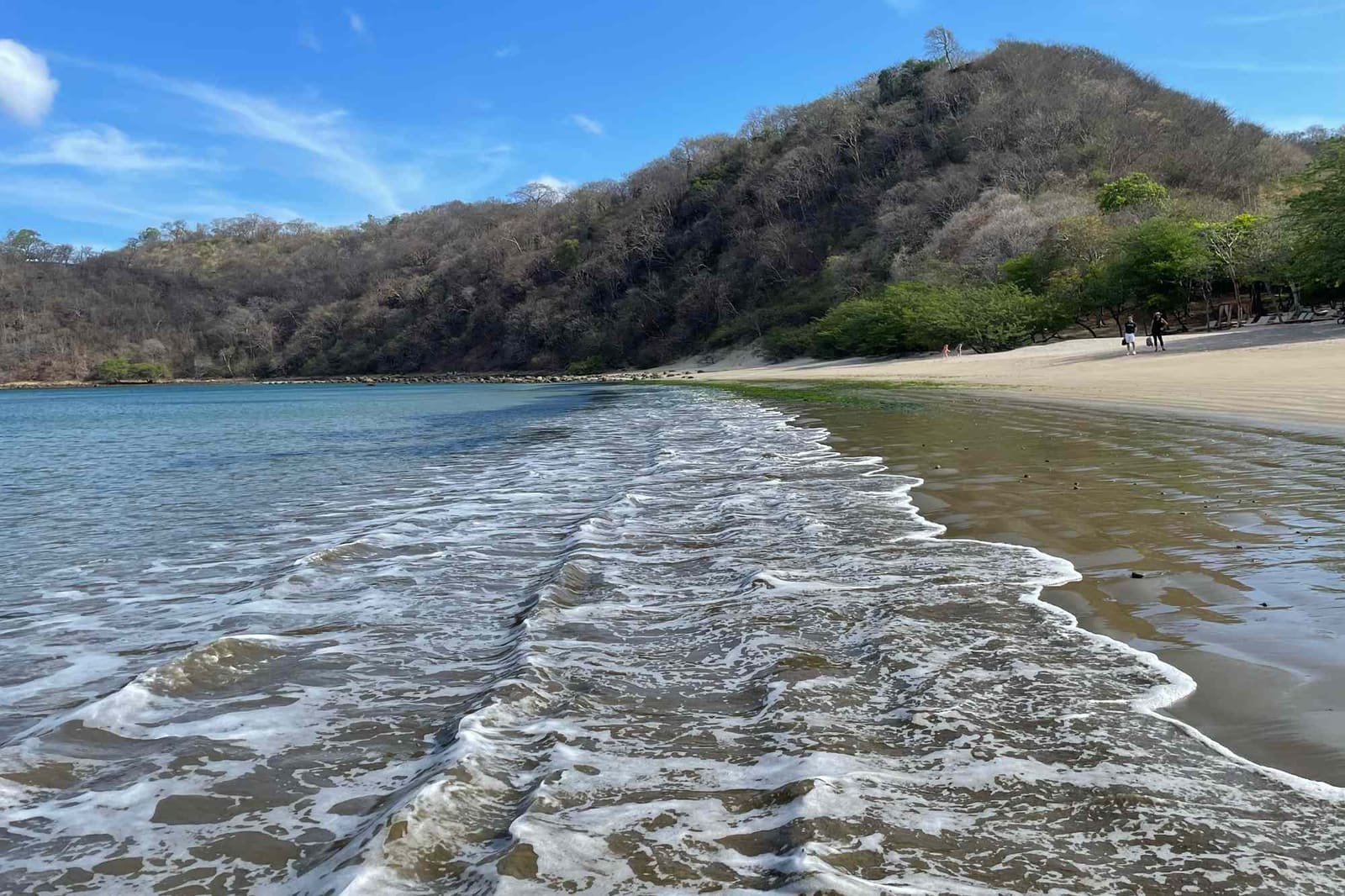
Along the Pacific coast, particularly in the Guanacaste and Nicoya regions, a new generation of boutique properties has emerged. Many are small, fewer than twenty rooms, designed by architects who understand the interplay of light, breeze, and sightline. The best among them feel less like hotels and more like private homes opened to a select few, with infinity pools that mirror the horizon and outdoor showers where you rinse off salt under open sky.
The Central Valley, often bypassed in favor of beaches and rainforests, holds its own quiet appeal. Colonial haciendas converted into intimate inns, surrounded by coffee plantations and volcano views, offer a different cadence. These are places for long conversations over slow dinners, for understanding that Costa Rica's story is agricultural as much as ecological.
Tables Worth the Journey
Costa Rican cuisine has historically been undersold, reduced to the comforting simplicity of gallo pinto and casado. But the country's culinary scene has deepened considerably, driven by chefs who have returned from training abroad and by a farm-to-table ethos that here is less trend than tradition.
In San José, the capital sheds its reputation as a mere transit point when you know where to dine. A cluster of restaurants in the Barrio Escalante neighborhood showcases what happens when classical technique meets tropical abundance. Menus shift with the seasons and the catch, and the wine lists increasingly feature natural and biodynamic bottles that suit the climate.
Outside the capital, the most memorable meals often unfold in the most unexpected settings. A beachfront kitchen in Santa Teresa where the chef, a transplant from Buenos Aires, grills octopus over driftwood and serves it with a salsa macha made from locally grown chilies. A mountaintop restaurant in the Talamanca range where every ingredient is foraged or grown within a ten-kilometer radius, and the tasting menu is as much education as indulgence.
The coastal towns, particularly along the southern Pacific, have become incubators for a new culinary vocabulary. Here, Japanese precision meets Caribbean spice, and ceviche is elevated to an art form. The best chefs are storytellers, and their plates narrate the complexity of Costa Rican identity, shaped by indigenous roots, Spanish colonialism, Afro-Caribbean migration, and contemporary global exchange.
What to Do With Your Days
Costa Rica's biodiversity is staggering, and the temptation is to try to see it all. Resist. The country rewards depth over breadth, presence over checklist.
The national parks remain the country's crown jewels, but how you experience them matters. Early morning excursions with naturalist guides who can distinguish bird calls and read animal tracks transform a hike from exercise into education. Corcovado National Park, often cited as one of the most biologically intense places on Earth, demands commitment: multi-day treks, river crossings, nights spent in ranger stations where the only light is your headlamp. It is not for everyone, but for those who go, it recalibrates what wilderness means.
For a gentler but no less profound encounter with nature, the Osa Peninsula and the waterways around Tortuguero offer kayaking and boat tours where the pace is slow and the rewards cumulative. You learn to watch not for the dramatic, the breaching whale or prowling jaguar, though those do appear, but for the subtle: the Jesus Christ lizard skittering across water, the three-toed sloth moving with glacial patience through the cecropia trees.
The Pacific coast is synonymous with surf, and the breaks around Tamarindo, Nosara, and Pavones draw devotees from around the world. But even if you have no interest in standing on a board, the rhythm of the ocean here is hypnotic. Sunset becomes a ritual, not because it is novel but because each evening the sky performs a different composition of color and cloud.
Adventure tourism, zip-lining and white-water rafting, has its place, particularly for those traveling with children or seeking adrenaline. But the experiences we find ourselves recommending more often are quieter: a guided walk through a cacao plantation, learning the alchemy of bean to bar; a visit to a women's cooperative producing organic coffee, where the conversation turns to land rights and climate adaptation; an afternoon in a tidal pool with a marine biologist who explains the symbiosis you are wading through.
The Invisible Infrastructure
What makes Costa Rica function as a destination is often invisible to the visitor but worth acknowledging. The country abolished its military in 1949 and redirected those funds toward education and environmental protection. Today, more than a quarter of its land is protected, and it has become a global leader in reforestation and renewable energy.
This commitment shapes the traveler's experience in tangible ways. The guides you meet are often university-educated in biology or environmental science. The hotels that claim sustainability can point to certifications, Rainforest Alliance or Certification for Sustainable Tourism, that carry actual weight. The roads, while not always smooth, lead to places that have been preserved rather than paved over.
Yet challenges remain. Overtourism in certain hotspots, particularly Arenal and Manuel Antonio, has strained infrastructure and diluted the experience. The tension between development and conservation is real and ongoing. The traveler who pays attention can see this, can choose to visit during shoulder seasons, can support locally owned businesses, can ask questions about how their presence impacts the place.
The Departure
On your last morning, perhaps back in that canopy suite, the howler monkeys call again. But this time you recognize the sound, can even distinguish it from the chatter of the white-faced capuchins that visit the fruiting tree nearby. You have learned a few words of Spanish beyond the basics, have tasted fruits you cannot name in English, have sat in silence long enough to watch a hummingbird visit a heliconia flower.
Costa Rica does not reveal itself quickly, and that is part of its gift. It asks you to slow down, to look closer, to understand that luxury is not always about thread count but about the quality of attention you bring to a place. The hotels, the restaurants, the activities, they are merely the framework. What you build within that framework is your own.
We have returned to this country more times than we can count, and each visit we discover something we missed before: a trail, a dish, a conversation. That, perhaps, is the ultimate guide: not a list of must-sees but an invitation to see differently, to let the place shape the journey rather than the other way around.
Photo: Alessandra Amodio / Travel+Leisure
Spot something wrong? Email editors@globalchicvoyage.com. We log every correction publicly.
RELATED
SEE ALL →
24 Jul 2026 / 5 min
10 Jul 2026 / 5 min
23 Jun 2026 / 5 min
18 Jun 2026 / 5 min