
Where the Caribbean Slows Down: Inside Panama's Bocas del Toro
Beyond the archipelago's overwater bungalows and glowing night waters lies a different rhythm - one shaped by cacao growers, boat captains, and the pull of island time.
SI
27 Jul 2026 · 5 MIN READ · UPDATED 17 AUG 2026
The Archipelago That Refuses to Rush
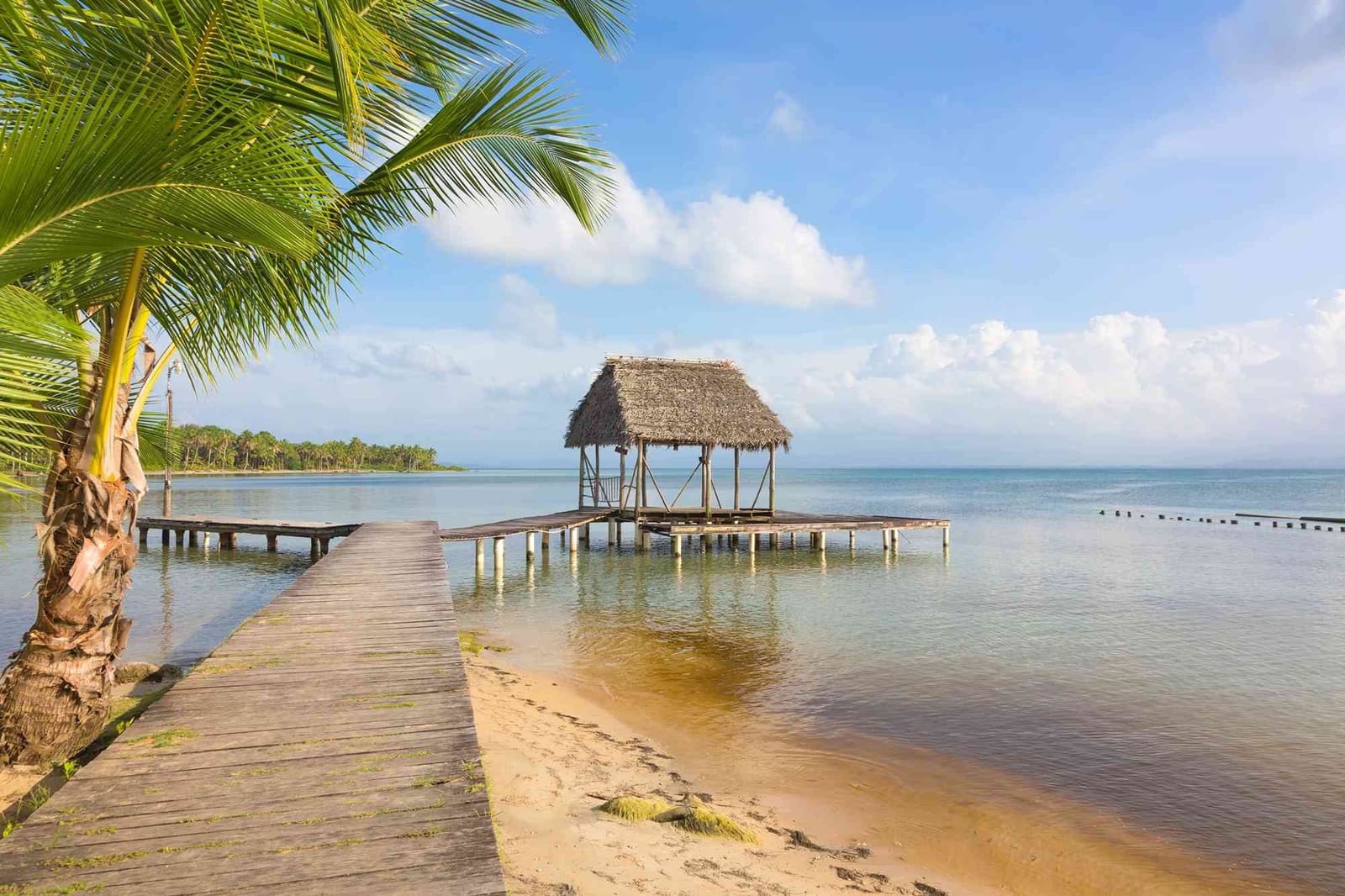
There's a particular quality to morning light in Bocas del Toro - the way it filters through salt-thickened air and catches on the stilts of wooden houses built over turquoise shallows. We arrived on the early water taxi from Almirante, watching the mainland's dense green fade behind us as the archipelago's scattered islands came into view. Here, at the northwestern edge of Panama where the Caribbean laps against jungle-covered shores, time operates on a different frequency.
At Global Chic Voyage, we've spent years tracking the ebb and flow of Caribbean destinations, watching certain islands tip into overdevelopment while others remain stubbornly, wonderfully themselves. Bocas del Toro - nine main islands and over two hundred smaller cayes spread across crystalline waters - has managed something increasingly rare: it has grown without losing its essential character. The overwater villas are here, yes, and the eco-lodges that draw a particular kind of traveler. But so are the Ngäbe-Buglé communities who've lived on these shores for generations, the cacao farmers tending heritage trees in the island interiors, and the boat captains who know every reef and sandbar by heart.
A Geography of Water and Green
The archipelago sits where Bocas del Drago meets the open Caribbean, a constellation of islands defined as much by what separates them as what connects them. Isla Colón, the largest and most developed, anchors the group. Its main town - also called Bocas del Toro, or simply Bocas - sprawls along the waterfront in a jumble of Afro-Caribbean architecture painted in fading pastels. Wooden buildings lean companionably against one another, their corrugated roofs patched and re-patched, balconies strung with laundry and hammocks.
Beyond Colón, the other islands fan out in varying states of wildness. Bastimentos, the second largest, protects much of its interior as national marine park. Carenero sits so close to Colón that locals paddle between them in kayaks, though the crossing feels like a passage into quieter waters. Solarte - once called Nancy's Cay - curves like a parenthesis around a protected bay. And then there are the smaller islands: Zapatilla Cays with their blinding white sand, Cayo Coral and its submerged gardens, Swan Cay where red-billed tropicbirds nest in the cliffs.
The water here holds every shade of blue and green the Caribbean knows how to make. Shallow seagrass beds glow lime in the sun. Deeper channels run cobalt. Where rivers empty from the jungle, the sea turns briefly amber with tannins before the tide pulls it clear again.
The Accommodations of Arrival
We've watched the lodging landscape in Bocas shift over the past decade, as a handful of developers recognized what adventurous travelers had known for years. The overwater bungalow - that hallmark of distant Pacific atolls - has found a Caribbean expression here, built from tropical hardwoods and palm thatch rather than imported materials. These structures perch above the shallows on pilings, connected to shore by narrow boardwalks that creak reassuringly underfoot.
The appeal is immediate and sensory: waking to water visible through gaps in the floorboards, the constant subtle movement beneath you, the ability to slip directly from bed into the sea. At night, the darkness under the bungalows becomes absolute, broken only by occasional flashes of bioluminescence when something moves through the water.
But Bocas offers alternatives for travelers who prefer their sleep on solid ground. Small hotels occupy restored wooden houses in town, their rooms opening onto shared verandas where guests gather at dusk. On Bastimentos, jungle lodges tuck into the forest edge, their open-air dining rooms looking out over mangrove channels. These properties tend toward simplicity - ceiling fans instead of air conditioning, solar panels and rainwater collection, composting toilets that guests learn to navigate with varying degrees of grace.
The accommodations reflect a broader philosophy we've noticed across the archipelago: comfort, certainly, but not insulation. The point is to remain permeable to the place, to hear the rain on the roof and the howler monkeys at dawn, to taste the salt in the air.
Cacao in the Forest Interior
Inland from the beaches and boat docks, a different Bocas exists - one rooted literally in the soil. The islands' volcanic earth and year-round rainfall create ideal conditions for Theobroma cacao, the tree that gives us chocolate. Small farms, many run by families who've worked this land for generations, cultivate heritage varieties of cacao beneath the forest canopy.
We visited one such farm on Isla Bastimentos, following a muddy path that climbed from the coast into dense secondary jungle. Our guide, whose grandfather had planted the original trees, explained the delicate ecology of cacao cultivation: the need for shade trees to protect the sensitive pods, the careful timing of harvest, the fermentation process that transforms bitter seeds into something aromatic and complex.
The cacao pods hung directly from the trunks and lower branches - an oddity of the species' biology - in shades of yellow, orange, and deep purple. When our guide split one open with his machete, the white pulp inside tasted nothing like chocolate: tropical, faintly citrus, slippery-sweet. The seeds themselves would require days of fermentation and drying before they developed their characteristic flavor.
These small farms represent an economic alternative to tourism, though the two increasingly overlap. Several operations now offer tours that end in chocolate-making workshops, where visitors grind roasted beans with sugar and spices, shaping the warm paste into bars to take home. It's agritourism of a modest scale, supplementing rather than replacing the primary work of cultivation.
When the Bay Lights Itself
Certain evenings, when conditions align - warm, moonless, still - the bioluminescent dinoflagellates bloom in such numbers that movement through the water becomes visible light. We joined a night kayak tour into one of the bays where this phenomenon occurs most reliably, paddling in darkness so complete that the glowing water beneath our hulls seemed impossibly bright by contrast.
Each stroke of the paddle ignited a cascade of blue-green sparks. Fish darting away left comet trails. When we stopped paddling and dipped our hands in, the water dripped light from our fingers. The effect was hallucinatory, almost mystical - though the explanation is straightforward biology. The dinoflagellates, stressed by disturbance, emit light as a defense mechanism. Multiply that response by millions of microscopic organisms, and the sea becomes briefly luminous.
The guides who lead these tours speak of the bioluminescence with a mix of scientific understanding and persistent wonder. They've seen it hundreds of times, yet still lean over the sides of kayaks to watch the light bloom and fade. That capacity for sustained amazement - for meeting the same marvel repeatedly without exhaustion - seems to us a marker of genuine connection to place.
The Reef and Its Rhythms
The islands sit within a larger marine ecosystem that extends along Panama's Caribbean coast, part of the Mesoamerican Barrier Reef system. While not as extensive as the reefs off Belize or Mexico's Yucatán, the underwater landscape here holds its own complexity: coral gardens in the shallows, walls dropping into blue depths, channels where currents concentrate marine life.
We spent several days diving and snorkeling the sites around Cayo Coral and the Zapatillas. The coral health varied - some patches showed bleaching stress, others thrived with dense polyp coverage and attendant fish populations. Sea turtles grazed the seagrass beds. Spotted eagle rays glided past in formation. In the shallows off Starfish Beach, we found the promised cushion stars - massive, rust-colored, scattered across the sand like abstract sculptures.
The dive operators we met shared a common concern: protecting these reefs while allowing access. Most have adopted strict no-touch policies and limit group sizes. Several participate in coral restoration projects, growing fragments in underwater nurseries before transplanting them to damaged areas. It's slow work, measured in decades rather than seasons, but the alternative is watching these ecosystems degrade further.
The Question of Scale
Bocas del Toro sits at an inflection point that many destinations reach eventually: developed enough to support infrastructure that makes travel comfortable, not yet so developed that the experience becomes generic. The archipelago has an airport with daily flights from Panama City, reliable ferry service, a range of accommodations and restaurants. But it lacks the cruise ship terminals and all-inclusive resorts that would fundamentally alter its character.
Whether this balance holds depends partly on decisions made far from the islands - investment patterns, marketing strategies, the whims of travel trends. But it also depends on choices made locally: how much development to permit, what kind of tourism to encourage, which aspects of island life to preserve even when change might be more profitable.
The travelers we encounter in Bocas tend toward a particular profile: comfortable with basic amenities, interested in nature and culture, willing to navigate Spanish menus and occasional logistical complications. They're not seeking luxury in the conventional sense - thread counts and Michelin stars - but rather the luxury of immersion, of slowing down enough to notice small things.
Where the Rhythm Changes
On our last morning, we sat on the deck of an overwater bungalow watching frigatebirds circle in the thermal currents above the bay. A water taxi puttered past, ferrying workers from the outer islands to jobs in town. Further out, a sailboat tacked slowly toward the open Caribbean. The scene felt both timeless and entirely contemporary - a place where traditional patterns of life persist alongside newer rhythms of tourism and global connection.
What makes Bocas del Toro compelling, we think, is not any single element - not the overwater villas or the bioluminescent bays or the cacao farms, remarkable as each may be. It's the way these pieces fit together, creating an experience that remains rough-edged and authentic even as it becomes more accessible. The archipelago hasn't been polished smooth for visitors. It still requires a certain flexibility, a willingness to work with island time rather than against it.
As the Caribbean continues its long negotiation between preservation and development, between local life and global tourism, Bocas offers one possible model: growth that doesn't erase, accommodation that doesn't insulate, comfort that doesn't require complete control. Whether that model holds - whether the islands can remain themselves while welcoming the world - remains an open question. For now, at least, the answer feels tentatively hopeful.
Credit: Dmitriy Burlakov / Getty Images
Spot something wrong? Email editors@globalchicvoyage.com. We log every correction publicly.
RELATED
SEE ALL →
29 Jul 2026 / 5 min
27 Jul 2026 / 5 min
24 Jul 2026 / 5 min
8 Jul 2026 / 5 min