
Where Alpine Trails Meet Floating Saunas on Lake Lucerne
Switzerland's most cinematic lake invites a rhythm of exertion and ease - hike the ridges, then drift into warmth on the water.
SI
8 Jul 2026 · 5 MIN READ · UPDATED 17 AUG 2026
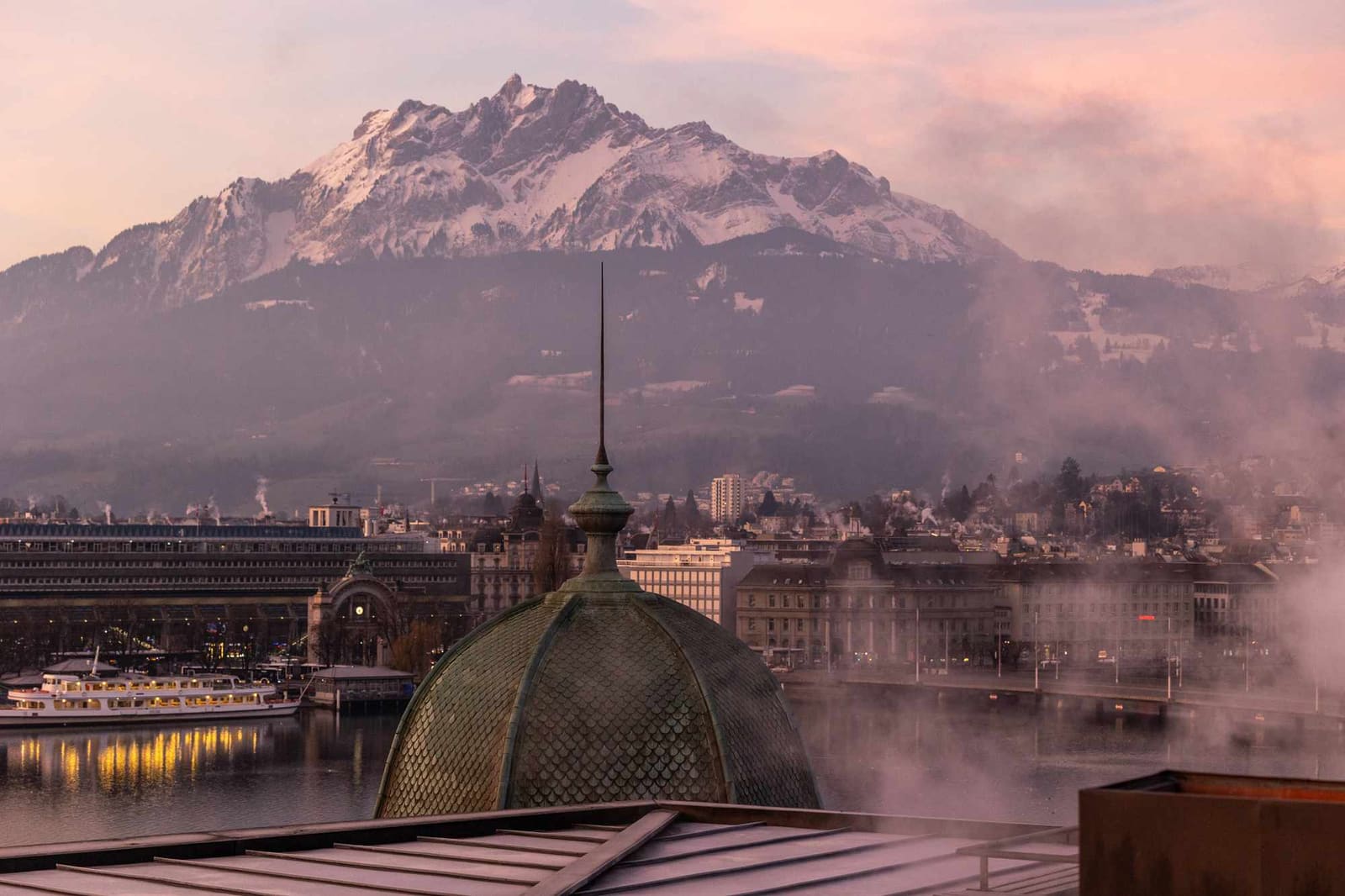
A Lake That Asks You to Slow Down
The first light on Lake Lucerne arrives not all at once but in stages: pewter water brightening to silver, then suddenly catching fire as the sun clears the Rigi massif. Stand on the Seebrücke early enough and you'll watch the whole performance in silence, save for the knock of moored boats and the occasional cry of a gull. This is not the Switzerland of duty-free watches and tour-bus itineraries. This is the Switzerland that invites you to linger, to hike until your legs ache, then to sink into warmth and water as the day dims.
At Global Chic Voyage, we've found few places that marry alpine vigor with aquatic stillness as gracefully as Lucerne. The city itself - compact, medieval, strung along the Reuss - serves as a handsome base. But the real draw lies in the mountains that cup the lake and the peculiar, deeply Swiss ritual of following exertion with immersion.
Trails That Climb Into Silence
Lucerne sits at the crossroads of several iconic hiking routes, each offering a different grade of difficulty and reward. The Rigi, often called the "Queen of the Mountains," is the most accessible: a cogwheel train lifts you partway, and from there a network of trails unfurls across meadows and ridgelines. In summer, wildflowers stipple the slopes; in autumn, the light turns honeyed and the air smells faintly of hay.
For those seeking a longer, more contemplative climb, the trail from Weggis to Rigi Kaltbad threads through forest and pasture, rising steadily but never punishingly. The views arrive in increments - first the lake, then the city, then the farther peaks of the Bernese Oberland. It's a hike that rewards patience, the kind where you stop often not because you're winded but because the landscape insists.
Pilatus, by contrast, is drama incarnate. The mountain rears up on the southern shore, its ridges serrated, its summit often wrapped in cloud. The hike from Kriens via the Fräkmüntegg cable car to the summit is steep and exposed in places, but the panorama - lake, Alps, and on clear days a sliver of the Jura - is worth the effort. We've returned to this trail more than once, always finding something new in the play of light on rock or the sudden appearance of a marmot on a sun-warmed boulder.
The Sauna Boat: A Ritual of Heat and Water
Here is where Lucerne diverges from the standard alpine script. After hours on your feet, legs tight and skin filmed with salt, the prospect of a floating sauna feels less like luxury and more like necessity. Several operators now offer sauna boats on Lake Lucerne - small, wood-fired cabins mounted on pontoons, designed to drift slowly across the water while you sweat and then plunge into the lake's bracingly cold embrace.
The ritual is simple but profound. You board in the early evening, still warm from the day's hike. The sauna heats slowly, the scent of birch and cedar mingling with the faint mineral tang of the lake. As the temperature climbs, conversation drops away. You sit, you breathe, you feel your muscles unknot. Then, when the heat becomes too much, you step out onto the deck and lower yourself into the lake. The cold is a shock, a full-body gasp, but it passes quickly, leaving behind a tingling clarity.
Afterward, wrapped in a towel, you drift. The boat moves almost imperceptibly, its small motor a gentle hum beneath your feet. The mountains darken, their peaks still catching the last light. Other boats pass, their passengers waving. It's a scene both intimate and communal, a shared understanding that this - this particular combination of effort and ease - is what travel should feel like.
The Architecture of Rest
Lucerne itself deserves more than a passing glance. The Chapel Bridge, with its painted gables and tragic history (much of it was lost to fire in 1993, then painstakingly rebuilt), remains the city's most photographed landmark. But we've always been drawn to the quieter corners: the cobbled lanes of the Altstadt, where guild houses lean companionably over narrow streets; the Jesuit Church, its interior a froth of stucco and gilt; the lakeside promenade, where locals walk their dogs and tourists lick gelato in companionable silence.
The city's hotels have evolved in recent years, shedding some of their Belle Époque formality in favor of a cleaner, more contemporary aesthetic. The best of them understand that luxury, in this context, means space and light and a balcony overlooking the water. After a day in the mountains, you want a deep bathtub, a soft bed, and windows that open wide to let in the night air.
Why It Still Matters
In an era when every destination seems to be chasing the same Instagram-friendly superlatives, Lucerne offers something quieter and more durable: a landscape that invites genuine physical engagement, followed by rituals of rest that feel earned rather than performative. The sauna boat is not a gimmick; it's a logical extension of the Swiss understanding that the body, properly used and properly cared for, is the best instrument we have for experiencing place.
The mountains here are neither the highest nor the most remote. The lake is not the bluest. But the combination - the way the trails rise and fall, the way the water reflects and absorbs, the way the city holds its history lightly - adds up to something rare. At Global Chic Voyage, we've watched Lucerne resist the worst impulses of overtourism, holding fast to a certain restraint, a refusal to oversell. It remains, against the odds, a place where you can still find solitude on a ridgeline and silence on the water.
Planning the Rhythm
A well-spent day in Lucerne follows a natural arc. Begin early, before the tour groups arrive, with coffee and a croissant at one of the Altstadt bakeries. Catch a morning train or cable car to your trailhead of choice - Rigi for ease, Pilatus for drama, or one of the lesser-known routes like the Bürgenstock cliff walk. Hike through midday, when the light is brightest and the trails quietest. Descend in the late afternoon, timing your arrival back in the city for early evening.
Book your sauna boat for sunset if you can. The operators typically offer two-hour slots, enough time to heat, plunge, drift, and heat again. Bring a swimsuit, a towel, and perhaps a thermos of tea. Afterward, walk back through the old town as the streets empty and the lights come on, the day's exertion still warm in your legs, your skin still tingling from the cold lake.
Dinner can be simple - fondue at a corner restaurant, or a plate of perch pulled fresh from the lake. The point is not to chase the next experience but to let the day settle, to feel the way movement and stillness have woven together into something whole.
The Deeper Current
What we've come to appreciate about Lucerne, over multiple visits, is the way it refuses to separate the aesthetic from the physical. The views are not something you consume passively from a tour bus; they're earned through hours of walking. The relaxation is not a spa treatment administered by strangers; it's a ritual you perform yourself, heating and plunging and drifting on your own terms.
This, we think, is the future of luxury travel - not more services, but better engagement. Not more amenities, but deeper immersion. Lucerne has understood this for decades, long before "wellness" became a marketing category. The sauna boats are simply the latest expression of an old truth: that the body in motion and the body at rest are two halves of the same experience, and that a place which honors both is worth returning to.
Photo: Stephanie Pollak / Travel + Leisure
Spot something wrong? Email editors@globalchicvoyage.com. We log every correction publicly.
RELATED
SEE ALL →
30 Jul 2026 / 5 min
27 Jul 2026 / 5 min
27 Jul 2026 / 5 min
27 Jul 2026 / 5 min