
Western Australia's Quiet Capital Rewards the Slow Traveler
Between Swan River sunsets and island quokkas, Perth offers a rare Australian rhythm: unhurried, light-drenched, and mercifully close to Singapore.
SI
27 Jul 2026 · 5 MIN READ · UPDATED 17 AUG 2026
The City That Doesn't Rush You
There's a particular quality of light in Perth that photographers chase and travelers stumble into by accident. It arrives in the late afternoon, gilding the Swan River until the water looks molten, turning the eucalyptus canopy in Kings Park into a cathedral of green and gold. At Global Chic Voyage, we've watched this city evolve over repeated visits, and what strikes us most is how it refuses to perform. Perth doesn't jostle for attention the way Sydney does, doesn't wrap itself in Melbourne's cultural mystique. It simply exists, confident in its own rhythms, waiting for travelers who understand that luxury sometimes means space to breathe.
The proximity helps. A five-hour flight from Singapore places you in Western Australia's capital without the marathon haul to the eastern seaboard. Multiple carriers operate direct routes, which means you can leave after breakfast and arrive in time to watch the sunset from Cottesloe Beach, still tasting the airplane coffee but already feeling the city's unhurried pulse.
The Waterfront Equation
Elizabeth Quay represents Perth's recent ambitions made concrete and steel. The revitalized waterfront district arranges itself around a man-made inlet, with pedestrian bridges arcing over calm water and restaurants claiming every angle that offers a view. It's unabashedly designed for visitors, which some might read as inauthentic, but there's honesty in that openness. The city wanted a gathering place, a postcard backdrop, a reason to linger after the office towers empty, and it built one.
The bridge itself, all white ribs and geometric confidence, photographs beautifully against blue sky or twilight. Water bikes paddle past in lazy circles. The Bell Tower, a peculiar copper-clad structure housing historic bells, offers vertical perspective for those willing to climb. At dusk, the restaurants fill with a mix of hotel guests and locals meeting friends, the kind of democratic crowd that suggests a space has found its footing.
Further along the coast, Fremantle operates on different principles entirely. This historic port precinct wears its 19th-century bones openly, sandstone warehouses converted into breweries, Victorian-era markets still drawing weekend crowds. The Markets themselves remain Perth's most democratic attraction: stalls overflow with stone fruit in summer, handmade soaps, vintage denim, crepes folded to order. Buskers claim corners, the scent of coffee mingles with sea salt, and the whole enterprise hums with the particular energy of a place that knows exactly what it is.
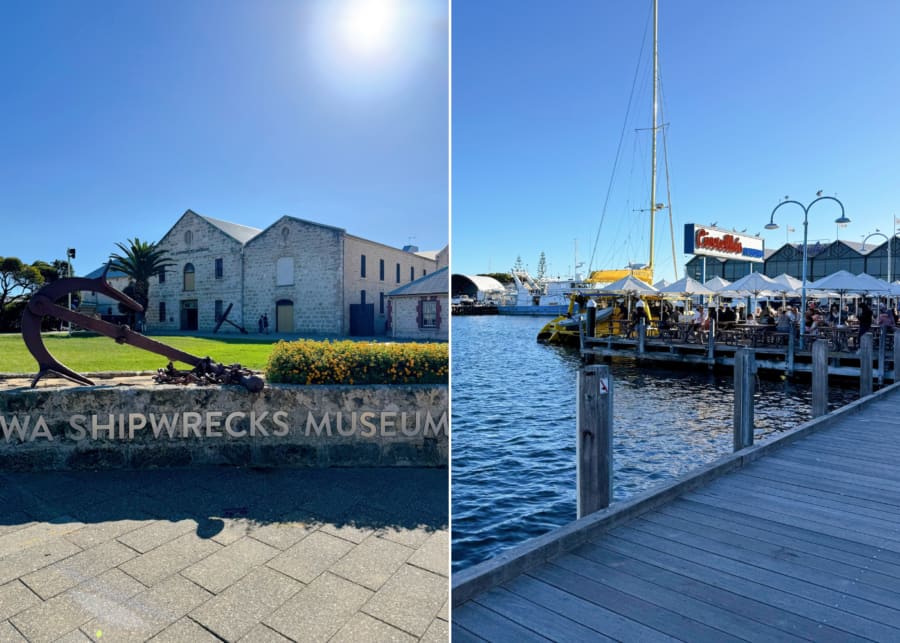
The Western Australian Shipwrecks Museum offers free entry and unexpected fascination. The coast here has claimed vessels for centuries, and the museum displays recovered artifacts with the reverence they deserve: barnacle-encrusted cannons, ship's bells, the reconstructed stern of a Dutch East India Company vessel. Next door, the Maritime Museum continues the narrative with larger exhibits, though the real draw might be Gage Roads Brewery, a sprawling operation with outdoor tables, sunset views, and the kind of casual sophistication Western Australia does particularly well.
Elevation and Perspective
Kings Park occupies 400 hectares on a bluff overlooking the city and river, one of the world's largest urban parks and a constant reminder of what Perth values. Locals claim it for morning runs and weekend picnics. Visitors arrive for the views, which deliver: the entire CBD arrayed below, the Swan River threading through suburbs toward the coast, the Darling Range sketched faintly on the eastern horizon.
The Botanic Garden within the park showcases Western Australian flora, much of it found nowhere else on Earth. The Lotterywest Federation Walkway, a 620-meter elevated path through the canopy, offers perspective at tree level. Climb the DNA Tower's 101 steps for another vantage point, though the real reward here is simply being present in a space that balances cultivation and wildness, accessibility and scale.
The Wildlife Equation
Thirty minutes by ferry from Fremantle, Rottnest Island solves a problem most travelers don't realize they have: the need to encounter something genuinely joyful. Quokkas, small marsupials endemic to this island and a few mainland pockets, have become Instagram celebrities for good reason. They possess round faces, dark eyes, and a jaw structure that creates the appearance of a permanent smile. They're habituated to human presence without being tame, curious without being aggressive, and they photograph with the ease of natural performers.
The island itself rewards exploration beyond the quokka selfie. Rent a bicycle or board the hop-on-hop-off bus to access secluded beaches, rocky coves, and snorkeling sites where the water clarity approaches the unreal. Between September and November, humpback whales pass close enough to shore that patient observers can spot them from coastal vantage points. Accommodation ranges from beachfront hotels to glamping tents, though most visitors arrive on the morning ferry and depart by late afternoon, which means the island empties out beautifully after four o'clock.
Wine Country Without the Crowds
Swan Valley lies twenty-five minutes northeast of the city center, close enough for an afternoon excursion but distant enough to feel like a proper escape. Western Australia's oldest wine region unfolds in a series of family-owned estates, cellar doors, and roadside farm shops, the landscape more gentle than dramatic but possessed of its own charm.
Sandalford and Mandoon Estate anchor the premium end, offering restaurant meals that pair regional produce with estate wines in settings designed for lingering. Smaller operations like Bailey Brewing Co and Funk Brewshed cater to beer enthusiasts, while chocolate shops offer tastings that quickly become purchases. The House of Honey sells varieties distinguished by the wildflowers that fed the bees. Yahava KoffeeWorks roasts beans on-site, the scent alone worth the visit.
Caversham Wildlife Park, located within Swan Valley, provides the animal encounters Rottnest can't: hand-feeding kangaroos, meeting wombats, watching sheepdog demonstrations. It's unashamedly tourist-oriented, which in this context means accessible, well-organized, and reliably delightful for families.
The Southern Pull
Margaret River, three hours south of Perth, represents a different scale of commitment. The region has built an international reputation for wine, surf, and a particular brand of relaxed sophistication. Vineyards here produce Cabernet Sauvignon and Chardonnay that command serious attention from critics. The coastline delivers world-class waves and limestone caves accessible by guided tour. Farm-gate cheese makers, chocolate producers, and restaurants sourcing from kitchen gardens create an ecosystem where provenance isn't a marketing term but simply how things work.
At Global Chic Voyage, we've found that Margaret River rewards those who allocate at least two full days, ideally three. The distances between wineries, beaches, and forest walks make rushing counterproductive. Better to claim a villa or boutique hotel as base camp and move through the region at the pace it deserves.
Seasonal Considerations
Spring arrives in September with wildflower blooms that carpet the bushland in yellow, pink, and purple. Temperatures hover in the pleasant zone, crowds remain manageable, and the light takes on particular clarity. Autumn, March through May, offers similar advantages: warm days, cool evenings, fewer tourists competing for restaurant reservations.
Summer, December to February, brings heat that can push past 35 degrees Celsius and beaches filled to capacity. It's Perth at its most animated, festivals proliferating, outdoor dining at peak appeal, but also at its most expensive and crowded. Winter, June through August, sees temperatures drop and rain arrive with regularity. Budget travelers appreciate the reduced accommodation rates; those chasing sunshine should look elsewhere.
The Unhurried Advantage
Perth's greatest luxury might be what it doesn't demand of you. There's no exhausting checklist of must-see monuments, no cultural guilt about missing the museum everyone says you have to visit. The city offers options, then steps back. You can fill days with wine tastings and wildlife encounters, or you can claim a stretch of Cottesloe Beach and simply exist for an afternoon, watching Indian Ocean swells roll in under that particular Western Australian light.
We've returned to this city repeatedly because it doesn't exhaust us. Five to seven days feels about right for experiencing the city proper, Swan Valley, Fremantle, and either Rottnest or Margaret River. More time allows for both, plus margin for the spontaneous cafe discovered on a side street, the gallery stumbled into between appointments, the second bottle of wine at sunset because there's nowhere else you need to be.
In an era when travel often means accumulating experiences at speed, Perth offers a different proposition: arrive, slow down, pay attention. The city will be there when you're ready, patient as the light on the river, certain of what it has to offer.
Credit: Benita Lee
Spot something wrong? Email editors@globalchicvoyage.com. We log every correction publicly.
RELATED
SEE ALL →
8 Jul 2026 / 5 min
27 Jul 2026 / 5 min
27 Jul 2026 / 5 min
24 Jul 2026 / 5 min