
When a Home Becomes a Longevity Machine
The wealthiest buyers are no longer chasing square footage or gilded finishes. Instead, they're commissioning residences engineered to keep them thriving at eighty, ninety, and beyond.
CG
16 Jun 2026 · 5 MIN READ · UPDATED 17 AUG 2026
The Trophy Home, Reconsidered
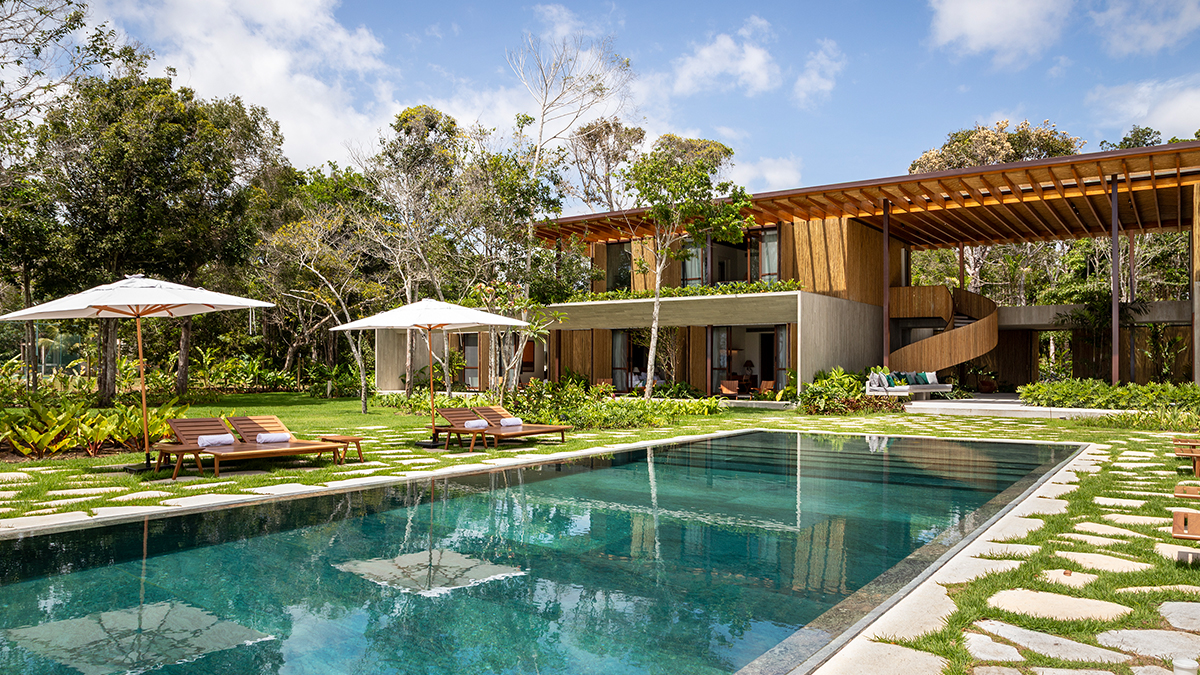
There's a quiet revolution underway in the world of ultra-luxury real estate, and it has nothing to do with gold-plated faucets or Carrara marble. Walk through the newest estates being commissioned in Aspen, the Hamptons, and the hills above Los Angeles, and you'll find something unexpected: homes that read less like showpieces and more like instruments of longevity. Elevators glide between floors designed for wheelchairs that may never be needed. Bathrooms are fitted with curbless showers and grab bars disguised as sculptural fixtures. Entire wings are devoted to recovery - infrared saunas, cold plunge pools, Pilates studios outfitted with reformers that cost as much as a sedan.
At Global Chic Voyage, we've watched this shift gather momentum over the past several years, but it has accelerated with remarkable speed. The question wealthy buyers are asking has changed. It's no longer How impressive is this house? but rather How long can this house keep me independent, vital, and thriving?
The answer is reshaping architecture itself.
The Economics of Living Longer
Behind this transformation lies a market exploding in size and ambition. UBS Global Wealth Management projects that the global longevity economy will expand from $5.3 trillion in 2023 to $8 trillion by 2030. Wellness real estate, a category that barely existed a decade ago, has more than doubled in the past five years alone and is expected to surpass $1.1 trillion by 2029.
These aren't abstract figures. They represent a fundamental reordering of priorities among the world's wealthiest individuals, who have come to view health span - not just lifespan - as the ultimate luxury. Nearly 38 percent of real estate professionals working in the $10 million-plus market now report that aging in place has become a vital consideration for their clients, according to Sotheby's International Realty.
What's driving this? Partly, it's demographics. The affluent baby boomer generation, now in their seventies and eighties, has both the resources and the desire to remain in their homes rather than transition to assisted living or move in with family. But it's also a cultural shift. Longevity is no longer a medical concern relegated to later years; it's a lifestyle ethos embraced by buyers in their forties and fifties, who are already thinking about the bodies they'll inhabit at ninety.
Designing for Decades, Not Display
The architectural implications are profound. Where once luxury homes prioritized grand staircases and soaring two-story foyers, today's most sought-after estates are often organized around single-floor living. Master suites, kitchens, living spaces, and wellness areas are clustered on one level, eliminating the need to navigate stairs as mobility changes. Elevators, once an afterthought, are now integral to the design - and they're being specified with wider cabs and more refined finishes, no longer hidden away like service equipment.
Bathrooms are being reimagined entirely. Curbless showers with integrated seating and handheld fixtures have become standard in high-end homes, their clean lines and minimalist aesthetic indistinguishable from any other luxury detail. Walk-in tubs, once associated with medical catalogs, are now being fabricated in stone and brushed bronze, their therapeutic function disguised within sculptural forms.
The layout itself has changed. Doorways are wider. Hallways are more generous. Light switches and outlets are positioned at heights accessible from a seated position. These aren't concessions to age; they're design choices that anticipate a future where independence is maintained through thoughtful architecture rather than surrendered to circumstance.
Wellness as the Organizing Principle
But the longevity home extends far beyond accessibility. What distinguishes these residences is their embrace of wellness as the central organizing principle - not an add-on, but the foundation upon which everything else is built.
Dedicated wellness suites have become as expected as wine cellars once were. These aren't simply home gyms relocated from the basement. They're multi-room sanctuaries that might include a Pilates studio with wall-mounted equipment and ballet barres, a strength-training area with custom rigs and Olympic platforms, and recovery zones featuring infrared saunas, steam rooms, and cold plunge pools kept at precise temperatures. The equipment itself has evolved. High-design fitness machines - Technogym's mirrored Kinesis stations, Peloton's sleek bikes, Tonal's wall-mounted digital weight systems - have transformed exercise spaces into rooms worthy of display, no longer hidden behind closed doors.
Air and water quality, once afterthoughts, are now primary considerations. Advanced filtration systems are being integrated into HVAC infrastructure, removing particulates, allergens, and volatile organic compounds. Water filtration extends beyond drinking taps to entire-home systems that address everything from shower water to irrigation. These technologies are invisible, their presence known only through their absence - the air feels cleaner, the water tastes purer, the environment supports health at a cellular level.
Access to nature, too, has become non-negotiable. Buyers are prioritizing properties with direct connections to outdoor space, whether that's a walled garden in an urban townhouse or acreage in the countryside. The connection isn't purely aesthetic. Research into biophilia - the human need for contact with nature - has influenced everything from window placement to the integration of interior courtyards and living walls. Light, air, greenery: these are no longer luxuries but necessities for the longevity-focused buyer.
The Millennial Factor
Interestingly, this shift isn't being driven solely by older buyers. Sotheby's International Realty found that 66 percent of agents have observed a rise in millennial luxury homebuyers, many of whom view real estate not as a status symbol but as a vehicle for the lifestyle they want to cultivate over decades.
These younger buyers are thinking in longer time horizons than previous generations. They're commissioning homes in their forties with an eye toward their eighties, embedding wellness infrastructure from the outset rather than retrofitting it later. For them, longevity isn't a concern for old age - it's a practice that begins now. The cold plunge isn't a medical device; it's part of a daily routine informed by performance optimization and preventative health.
This convergence of generations has created a market where age-in-place design no longer carries the stigma of decline. Instead, it's reframed as forward-thinking architecture, a way of building that acknowledges the reality of how bodies change while refusing to compromise on beauty, comfort, or sophistication.
A New Definition of Luxury
What emerges from all this is a redefinition of what luxury real estate means in the twenty-first century. The modern trophy home isn't necessarily the largest or most extravagant property on the block. It's the one that extends its owner's independence, vitality, and quality of life for decades beyond what might otherwise be possible.
This isn't downsizing. It's not a retreat or a compromise. It's an entirely different way of thinking about the relationship between architecture and human life - one that views the home not as a backdrop for living but as an active participant in it, a space engineered to support the body's needs as they evolve, to foster health rather than merely shelter it.
The homes being built today by the world's wealthiest buyers are, in a sense, longevity machines - residences designed with the same attention to performance and optimization that might once have been reserved for a high-performance vehicle or a finely tuned instrument. Every detail, from the height of a countertop to the placement of a window, is calibrated not for display but for decades of use.
What This Means for the Future of Design
As this ethos spreads, it's beginning to influence residential architecture more broadly. Design strategies developed for ultra-luxury longevity homes - universal design principles, biophilic integration, wellness infrastructure - are trickling down into more accessible markets. Architects and developers are recognizing that building for longevity isn't a niche concern but a fundamental shift in how we should approach residential design at every price point.
At Global Chic Voyage, we've long believed that the most enduring luxury is the kind that improves life rather than simply ornamenting it. The longevity movement in real estate represents that philosophy made tangible. It's a recognition that the ultimate status symbol isn't a possession you can show off but a life you can continue living - fully, independently, and on your own terms - for as long as possible.
In the end, the homes being built today aren't just residences. They're infrastructures of vitality, spaces that extend not just shelter but the possibility of a longer, richer, more autonomous future. And for those with the means to commission them, that's a luxury worth far more than any fleeting display of wealth.
Spot something wrong? Email editors@globalchicvoyage.com. We log every correction publicly.
RELATED
SEE ALL →
8 Aug 2026 / 5 min
8 Aug 2026 / 5 min
7 Aug 2026 / 5 min

31 Jul 2026 / 5 min