
When the Temperature Rises: Finding a Fragrance That Breathes
Five perfumers reveal the scents they turn to when summer demands something lighter, cleaner, and infinitely more forgiving than winter's heavy notes.
SI
8 Aug 2026 · 5 MIN READ · UPDATED 17 AUG 2026
A Question of Lightness
There is a moment, somewhere between late spring and true summer, when your usual fragrance begins to betray you. The amber you loved in February feels cloying. The oud that carried you through autumn now sits heavy on the skin, amplified by heat, announcing itself before you enter a room. At Global Chic Voyage, we've watched this seasonal reckoning play out in wardrobes and vanities across latitudes: the search for a scent that doesn't compete with sunlight but rather moves alongside it.
The pursuit is more delicate than it sounds. Summer asks for brightness without sharpness, for presence that doesn't weigh. It requires perfumes that can survive a Mediterranean afternoon without turning sour, that layer well with salt air and linen, that feel as considered at breakfast as they do at an evening aperitivo. The bottles we return to year after year share a particular quality: transparency. They breathe.
This year, we spoke with perfumers and creative directors who have spent decades thinking about this balance. What emerged was not a list of trends but a set of principles, each fragrance a study in restraint and luminosity. These are scents built for movement, for open windows, for the weeks when heavy florals and resins retreat to the back of the shelf.
Iris and Pepper: The Spanish Approach
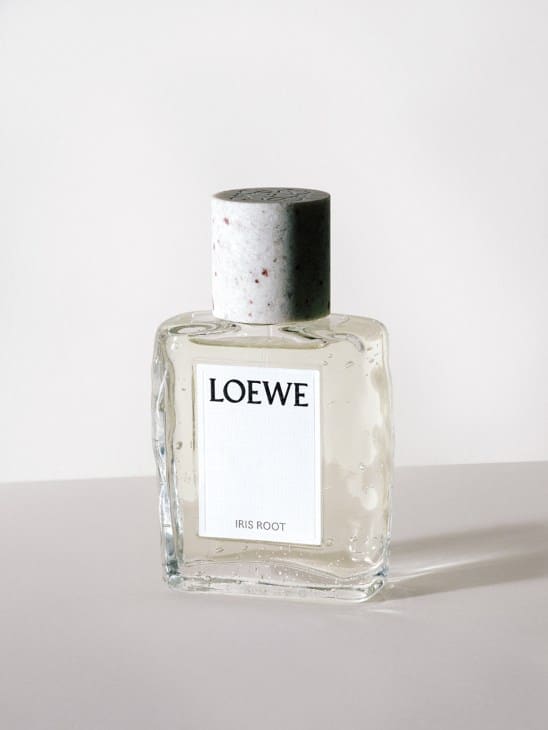
Loewe's Iris Root represents a study in contrasts, the kind of perfume that reads differently in shade versus full sun. Núria Cruelles, the perfumer behind the scent, describes it as a marriage between the soft, powdery elegance of iris and the fresh, citrus-edged bite of timut pepper. The result is a fragrance that carries the formality of iris, a note historically associated with tailoring and restraint, but lifts it with a brightness that feels almost effortless.
The Spanish luxury house has housed the scent in a glass flask marked by trapped bubbles, a nod to the bullicante technique used in traditional Italian glassblowing. The granite cap feels cool to the touch, a small sensory detail that mirrors the perfume's own temperature: neither warm nor cold, but somewhere in between. It's the kind of fragrance that works as well in a hotel lobby in Seville as it does on a ferry crossing the Aegean.
Italian Fig Meets American Wood
Bottega Veneta's new Alta collection this season comprises ten fragrances, each built around a geographic pairing. The concept is straightforward: take an ingredient rooted in Italian tradition and set it against something from farther afield. Blood orange with North African neroli. Plum with Spanish labdanum. The exercise is less about novelty than about tension, the way two familiar notes can create something unexpected when placed side by side.
We found ourselves drawn to Balliamo, a combination of Italian white fig and American cedarwood. Fig is a tricky note in perfume. Done poorly, it skews either too green or too sweet, evoking more of a scented candle than something you'd want to wear. Here, the cedarwood grounds it, adding a dry, almost architectural quality that keeps the fig from drifting into dessert territory. It's a scent that feels at home near water, the kind of fragrance you might wear to an afternoon drink overlooking the Amalfi Coast, where the line between indoor and outdoor blurs.
Orange Blossom with Salt
Deborah Royer, global brand president and creative director at Le Labo, speaks about Neroli 36 in terms of light. The fragrance centers on orange blossom, but it's the mineral quality underneath, slightly salty and solar, that defines it. White florals in summer can be polarizing. They risk feeling too bridal, too dense, too much. Neroli 36 avoids this by layering the orange blossom and mandarin top notes with a musky, tonka-bean base that reads as skin-warmed rather than applied.
Royer describes it as a scent that feels intimate, as if the fragrance has been worn in rather than sprayed on. There's a softness to it, a lack of sharp edges, that makes it particularly suited to the kind of travel where you're moving between climates and contexts. It transitions well from a morning walk along a boardwalk to an evening dinner without needing to be reapplied or adjusted. The bottle is spare, clinical even, which mirrors the fragrance's own restraint.
Transparency and Breath
For Natalia Outeda, the Argentine founder of Frassaï, the key to summer fragrance is transparency. A Sigh of Dawn combines green mandarin, fig, and cedarwood in a composition that feels crisp without being astringent. Outeda's philosophy is that a good warm-weather scent should have presence without weight, something that breathes throughout the day rather than announcing itself in the first hour and fading by the third.
Her advice for wearing fragrance in heat is practical: spray it on clothes and hair rather than skin. The logic is sound. Skin temperature rises in summer, which can distort a perfume's composition, pushing certain notes forward and muting others. Fabric and hair hold scent differently, releasing it more slowly and evenly. A Sigh of Dawn, with its balance of citrus and wood, benefits from this approach. It becomes a background hum rather than a statement, the olfactory equivalent of a well-cut linen shirt.
Bergamot and Memory
Lyn Harris, the British perfumer and founder of Perfumer H, has always been drawn to the freshness of old Italian colognes. Bergamot, her summer choice, is an attempt to capture that feeling in a way that feels natural rather than nostalgic. She's added clove, frankincense, and lavender to the bergamot, creating a scent that nods to tradition without feeling dated.
Harris describes it as reminiscent of swimming in the sea, which is a useful frame for understanding the fragrance. It's clean but not sterile, bright but not sharp. There's a softness to it, a sense of movement, as if the scent itself is in gentle motion rather than sitting static on the skin. Bergamot is a note that can read as too cologne-like, too purely functional, but here the added layers give it depth without weight. It's the kind of fragrance you forget you're wearing until someone leans in and asks what it is.
The Principle Beneath the Bottles
What ties these five fragrances together is not a shared ingredient or a common origin but an underlying philosophy. Each perfumer has approached summer not as a season that demands louder, sweeter, or more tropical notes but as a period that requires editing. The best warm-weather scents are not about addition but subtraction, about knowing what to leave out.
At Global Chic Voyage, we've noticed this shift over the past few seasons. The fragrances that travel well, that layer well with heat and humidity, that don't overpower a small room or a long flight, are the ones built on restraint. They are scents that suggest rather than declare, that work with the body's own chemistry rather than trying to mask it. They are, in short, fragrances that breathe.
As temperatures continue to climb and the calendar tilts toward the longest days, the bottles we reach for will be the ones that understand this principle. Light without being weightless. Present without being loud. Transparent enough to let the season, and the wearer, show through.
Credit: GBP
Spot something wrong? Email editors@globalchicvoyage.com. We log every correction publicly.
RELATED
SEE ALL →
8 Aug 2026 / 5 min

7 Aug 2026 / 5 min

31 Jul 2026 / 5 min

31 Jul 2026 / 5 min