
Vietnam's Pavement Dining And The Art Of Everyday Community
c
VT
10 Feb 2026 · 5 MIN READ · UPDATED 17 AUG 2026
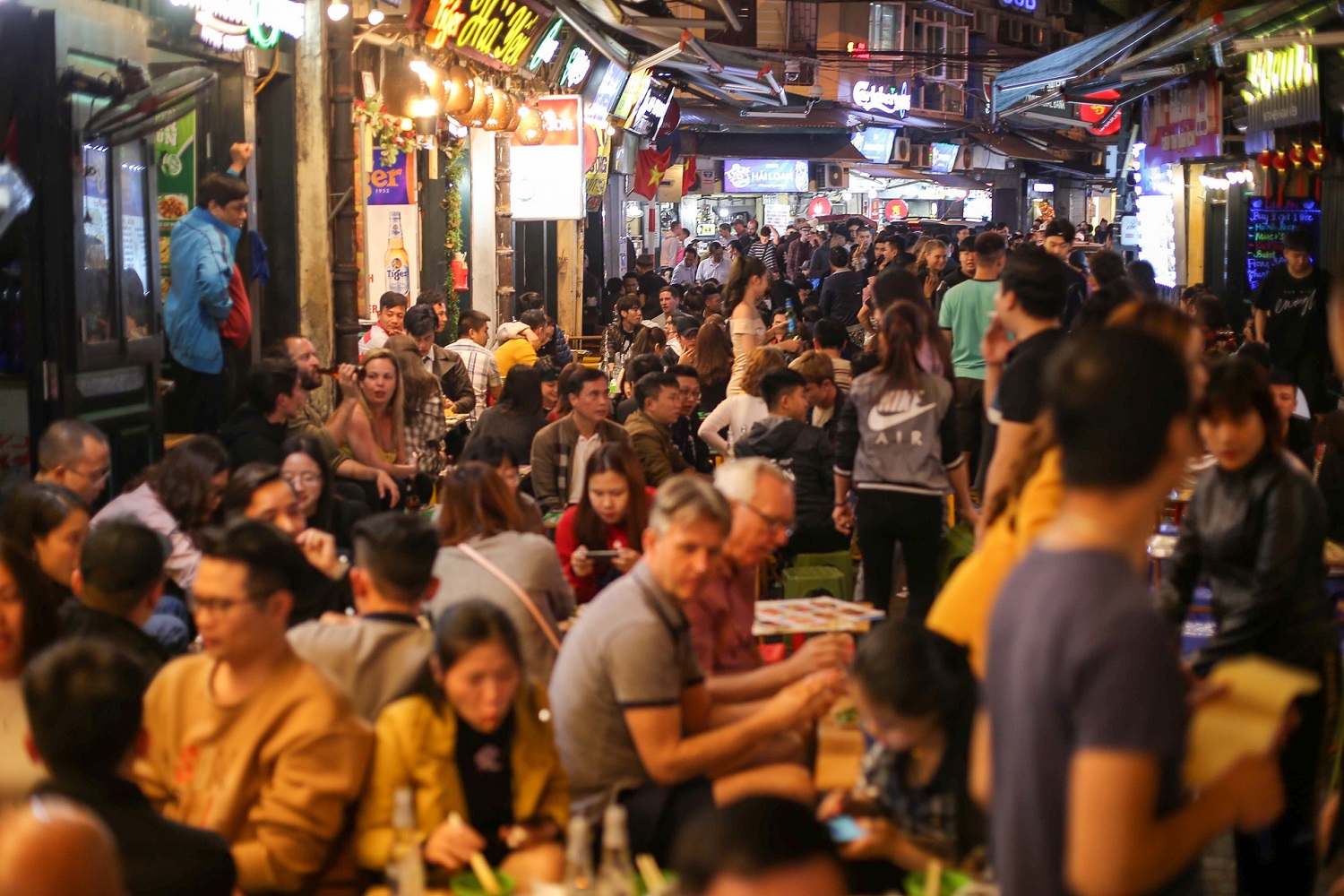
At dawn in Hanoi, the city wakes up on plastic stools. A woman in a conical hat ladles steaming phở into chipped porcelain bowls. Motorbikes hum past inches from diners’ knees. Someone folds out a low table, another sets down a basket of herbs still dewy from the market. This is pavement dining - “ăn vỉa hè” - and it’s not just about eating cheaply and well. It’s a choreography of everyday community, a social glue that turns sidewalks into living rooms.
The sidewalk as a shared room
In Vietnam’s cities, the boundary between private and public blurs. Pavement dining turns transit space into a shared room where strangers become temporary neighbors. Take Hanoi’s bún chả (grilled pork with rice vermicelli), a narrow storefront that spills onto the pavement. Office workers, tourists, and delivery drivers perch shoulder-to-shoulder, dipping smoky pork into sweet - sour broth. There’s no reservation system, no hushed reverence - just an easygoing proximity that makes small talk feel natural. You borrow chili sauce, swap stool positions when a scooter needs to squeeze through, and laugh when someone misjudges the stool height.

Shoulder-to-shoulder at a bún chả stall in Hanoi’s Old Quarter
Photo Credit: Viet Center Tourist
A few blocks away, a late-night cháo sườn (pork rib rice porridge) stand on Lý Quốc Sư becomes a refuge for night-shift workers and insomniacs. Conversations are softer here. People linger over bowls, steam fogging their glasses, the city temporarily slowed to the pace of spoons against porcelain.

Low stools, warm bowls, and the feeling of being briefly looked after
Photo Credit: Jaclynn Seah
The morning ritual
Pavement dining is most tender in the early hours. In Ho Chi Minh City’s District 1, vendors set up coffee stands with metal drip filters balanced on condensed milk. Regulars know the rhythm: nod to the vendor, point to the ice, wait for the slow bloom of coffee. The same faces appear every morning - an elderly man who reads the sports pages aloud, a seamstress who counts coins carefully, a student revising flashcards. No one needs to explain themselves. The routine becomes a quiet pact: we’ll show up for each other’s ordinariness.
In Da Nang City, sunrise phở (beef noodle soup) stalls near the beach attract fishermen rinsing salt from their hands, joggers cooling down, and aunties carrying baskets of morning greens. The vendor asks who wants extra marrow bones today, and a quick chorus of raised fingers decides the pot’s fate. Breakfast feels like a neighborhood vote.

Morning coffee on a Saigon pavement: drip filters, condensed milk, and familiar faces
Photo Credit: 1 phút Sài Gòn
Food as a social equalizer
The stools are low, the prices are lower, and the hierarchy is flatter. At Bánh mì Huynh Hoa in Ho Chi Minh City, the sandwich is legendary, but the pavement line is the real scene. A CEO in crisp white shirt waits behind a construction worker dusted with cement. When the vendor runs out of cilantro, the front of the line collectively negotiates who can spare a sprig. The sidewalk collapses status into appetite. You’re not your job here, you’re just hungry.
Nearby, a humble bánh xèo (crispy Vietnamese pancake) cart draws a mixed crowd every evening. The sizzling batter is loud enough to drown out awkwardness. People lean in to watch the flip, cheer when the pancake lands intact, and pass plates down the row when space runs out. The performance belongs to everyone watching.

A sandwich so famous it reorganizes the pavement around it
Photo Credit: Bánh mì Huynh Hoa
Neighborhood kitchens
Some pavements function like open kitchens for the block. In Hoi An’s riverside lanes, families grill skewers in the evening, smoke curling into lantern light. Kids do homework on overturned crates while grandparents fan the coals. Tourists wander in, ask for “one of whatever that is”, and leave with sticky fingers and a story. The vendor might remember your face the next night, asking if you want it “less sweet today?” That recognition - small, earned - feels like belonging.
In Hue City, a cluster of bánh bèo and bánh nậm (flat steamed rice dumplings) sellers sets up near a temple gate at dusk. Plates move between stalls, sauces are shared, and vendors keep an eye on each other’s kettles when someone runs to fetch more banana leaves. Competition exists, but so does caretaking.

Hue’s specialties served low to the ground, high on togetherness
Photo Credit: Foody
Care in public
Community shows up in how people look out for each other. On Hanoi’s Ta Hien beer corner, plastic stools cluster like confetti. When a sudden downpour hits, strangers lift stools so water can pass, someone offers a poncho, another shifts bags to keep them dry. Vendors cover grills with tarp in practiced unison. The rain becomes a shared interruption rather than an inconvenience. You wait it out together, clinking glasses under awnings, the city breathing with you.

Cold beer, low stools, and a street that hosts the night
Photo Credit: Foody
A classroom of manners
Pavement dining quietly teaches social literacy. You learn to order quickly when the queue grows, to stack bowls for the vendor, to tip stools back when a bike needs through. At a local Bún Bò Huế (Hue beef noodle soup), the broth arrives blazing hot. Newcomers watch how locals cool noodles with chopsticks and lime, copying the move. Etiquette is absorbed, not instructed. The sidewalk is a classroom with no blackboard, only example.

Where the sidewalk becomes a dining room and strangers become tablemates
Photo Credit: Soha
The tension with modernity
Of course, pavement dining lives in tension with traffic laws, sanitation campaigns, and the push for “clean sidewalks”. Cities periodically sweep vendors away, only to see them return because the demand - and the culture - won’t vanish. When Hanoi temporarily cleared parts of the Old Quarter, residents mourned more than convenience; they missed the feeling of the street having a pulse. Pavement dining isn’t chaos for chaos’s sake. It’s a calibrated mess that people know how to navigate together.
Why it matters
In a world nudging us toward delivery apps and private bubbles, Vietnam’s pavement dining insists on friction - the good kind. It asks you to sit close, share space, negotiate passage, and accept interruption. It makes room for the elderly vendor who knows your order and the passerby who becomes your tablemate for ten minutes. The food is fantastic, sure. But the real nourishment is the reminder that community can be as simple as a stool on a sidewalk and a bowl passed hand to hand.
Next time you find yourself in Vietnam, skip the white tablecloth for a night. Pull up a plastic stool. Let the city brush past your knees. You’ll leave fed, and oddly, gently connected.
Spot something wrong? Email editors@globalchicvoyage.com. We log every correction publicly.
RELATED
SEE ALL →
29 May 2026 / 5 min
25 Apr 2026 / 5 min
24 Apr 2026 / 5 min

20 Apr 2026 / 5 min