
The Quiet Ambition of Ho Tram: How Vietnam's Coastal Frontier Is Evolving Beyond the Beach
A phased expansion at Meliá Ho Tram signals the region's maturation from shoreline resort to integrated wellness destination — and what it means for southern Vietnam's tourism trajectory
SI
29 May 2026 · 5 MIN READ · UPDATED 17 AUG 2026
A Stretch of Coast, Waiting
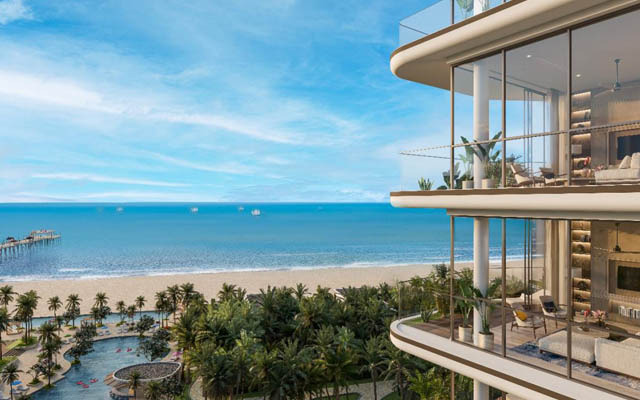
There's a particular quality to coastlines that haven't yet been fully claimed by mass tourism — a sense of provisional calm, of infrastructure arriving in phases rather than all at once. Ho Tram, strung along the southeastern edge of Ba Ria-Vung Tau Province, has held that quality for the better part of a decade. Not remote, but not overrun. Close enough to Ho Chi Minh City to feel accessible, far enough to retain a kind of breathing room. At Global Chic Voyage, we've watched this stretch evolve from a scattering of villas and a single marquee resort into something more deliberate: a destination with ambitions that extend beyond the beach umbrella.
The latest signal of that ambition arrives in the form of a significant expansion at Meliá Ho Tram Beach Resort, a project announced by Meliá Hotels International and development partner Tanzanite International. By the third quarter of 2028, the resort will add 191 suites and rooms, alongside an array of wellness, leisure and lifestyle facilities designed to deepen the property's appeal to families, wellness travelers and longer-stay guests. It's a move that reflects not only confidence in Ho Tram's trajectory, but also a broader recalibration in how southern Vietnam's coastal assets are being positioned — less as pure leisure escapes, more as integrated lifestyle destinations with programming to match.
The Architecture of Expansion
The expansion itself is layered. Five new swimming pools will span 2,500 square meters, including a rooftop addition that suggests a shift toward vertical leisure space — a response, perhaps, to the growing density of coastal resorts across Southeast Asia. Fitness and wellness facilities will be expanded, and dining options will multiply. These are the expected contours of resort growth. What's more telling is the phased rollout of experiences that precede the built expansion, as if testing the market's appetite before committing capital to concrete.
Beginning in August 2026, the resort will introduce an onsen experience and a Wellness Inclusive Package that weaves together yoga, meditation, tai chi, spa therapies and nature-based activities. The programming extends into the vernacular: cacao and coconut oil workshops, forest bathing trails, sauna and steam access. It's wellness as immersion rather than adjacency — an acknowledgment that the contemporary traveler increasingly expects holistic programming, not just a spa menu and a fitness center.
For families, enhancements are equally deliberate. An upgraded kids club will feature a treehouse and expanded activity roster. A professional football pitch is slated to open in June 2026. A dedicated outdoor zone for teenagers — a demographic often overlooked in resort design — will provide space for older children who have aged out of the kids club but aren't yet interested in the spa. These details matter. They suggest a property evolving toward longer stays, toward multi-generational bookings, toward the kind of programming density that allows a resort to function as a self-contained ecosystem rather than a beachfront waystation.
The Residences Question
Alongside the hotel expansion, Meliá and Tanzanite International will introduce The Indochine Residences at Meliá Ho Tram — serviced two- and three-bedroom residences, duplexes and penthouses linked to the resort's hospitality and rental program. It's a model we've seen proliferate across Asia's resort markets: part real estate play, part lifestyle product, part hedge against occupancy volatility. The residences allow the developer to monetize inventory upfront while maintaining operational control through rental pools and management agreements.
For Ho Tram, the residences also signal a maturation of the market. Early-stage resort destinations tend to focus on transient leisure guests. As infrastructure improves and familiarity grows, the market deepens to include second-home buyers, expatriates seeking weekend retreats, and investors looking for rental yield in emerging markets. The residences are both a product and a bet: that Ho Tram can sustain demand not just for hotel rooms, but for longer-term engagement.
Infrastructure as Catalyst
The expansion is unfolding against a backdrop of significant infrastructure development. Long Thanh International Airport, located approximately 66 kilometers from Ho Tram, is expected to open in phases beginning in the late 2020s. When fully operational, it will serve as southern Vietnam's primary international gateway, alleviating pressure on Tan Son Nhat and dramatically shortening travel times to coastal destinations like Ho Tram. The airport's arrival is the kind of infrastructural catalyst that can redefine a region's tourism trajectory — not overnight, but steadily, as connectivity improves and international arrivals diversify.
Road infrastructure has also improved. The journey from Ho Chi Minh City to Ho Tram, once a sluggish two-and-a-half-hour drive, has been compressed by highway upgrades. The calculus of accessibility shifts: what was once a weekend-only proposition becomes viable for shorter escapes. For developers and operators, that shift translates into higher occupancy potential and a broader guest mix.
Why It Matters for Vietnam's Coastal Narrative
Vietnam's coastal tourism has long been concentrated in a handful of nodes: Phu Quoc, Nha Trang, Da Nang, Hoi An. Ho Tram represents a different model — a destination emerging not from historical charm or island geography, but from deliberate investment and infrastructural alignment. It's a test case for whether Vietnam can cultivate new coastal hubs without replicating the overdevelopment that has strained some of its more established beach towns.
The Meliá expansion, in this context, is more than a single project. It's a signal of confidence in Ho Tram's ability to compete for a share of the region's wellness and family leisure travel — segments that have shown resilience even as broader tourism patterns shift. The emphasis on wellness programming, in particular, aligns with a regional trend: travelers increasingly seek destinations that offer not just relaxation, but intentional programming around health, mindfulness and connection to place.
According to André P. Gerondeau, chief operating officer of Meliá Hotels International, Vietnam represents one of the company's most strategic growth markets in Asia-Pacific, with Ho Tram positioned as a premier leisure and lifestyle destination within the region. Nguyen Nam Son, chairman of Tanzanite International, noted that the project is expected to generate more than 1,000 construction jobs and approximately 500 operational roles once completed — a meaningful employment footprint for a region still building its tourism labor force.
The Long View
What remains to be seen is whether Ho Tram can sustain momentum through the construction cycle and beyond. The 2028 completion timeline places the expansion in a post-pandemic recovery phase, at a moment when regional travel patterns will have settled into new configurations. International arrivals to Vietnam have rebounded unevenly; domestic tourism has surged but remains price-sensitive. The success of the Meliá expansion will depend not only on the quality of the built product, but on the broader ecosystem: flight connectivity, visa policies, regional competition, the ability of Ho Tram to differentiate itself from Phu Quoc's island appeal or Da Nang's urban-beach blend.
For now, the expansion represents a bet on the long view — on the idea that Ho Tram's provisional calm is not a limitation but an asset, that the region's relative underdevelopment can be leveraged into a more curated, intentional form of coastal tourism. It's a narrative we've seen play out elsewhere in Southeast Asia, with varying degrees of success. The difference, perhaps, is in the details: the onsen and the football pitch, the forest bathing trails and the teenage zone, the residences and the rooftop pool. These are the components of a destination being built not just for the next season, but for the next decade.
At Global Chic Voyage, we'll be watching to see if Ho Tram's quiet ambition translates into the kind of place that rewards return visits — not because it's the next big thing, but because it offers something more enduring: a coastline that evolves without losing its breath.
Spot something wrong? Email editors@globalchicvoyage.com. We log every correction publicly.
RELATED
SEE ALL →
25 Apr 2026 / 5 min
16 Apr 2026 / 5 min

17 Mar 2026 / 5 min
5 Mar 2026 / 5 min