
The Visual Economy Of Travel: How Instagram And TikTok Reshape Destination Aesthetics
c
JÉ
9 Feb 2026 · 5 MIN READ · UPDATED 17 AUG 2026
From Postcards to Platforms
Travel has always been visual. Postcards, travel brochures, glossy magazine spreads, and later television shows shaped how people imagined faraway places. But the rise of Instagram and TikTok has transformed not just how destinations are seen, but how they are designed, marketed, and even physically altered. In today’s visual economy of travel, destinations compete for attention in algorithm-driven feeds, where beauty is compressed into seconds-long clips and square frames. What counts as “beautiful” is no longer only cultural or historical, it is increasingly what performs well on screens.
This shift has profound implications for how places look, how travelers behave, and how local communities experience tourism.
The Algorithm as Aesthetic Gatekeeper
Algorithms don’t just display content, they prioritize what gets visibility. Bright, dramatic, easily digestible visuals tend to perform best, encouraging creators and travelers alike to capture and share the same kinds of scenes. This effect can be seen in places like:
Lake Bled (Slovenia) - Viral videos of people rowing to its small island have made this once-relatively quiet Alpine lake a TikTok favorite, significantly boosting interest and travel bookings.
Chefchaouen (Morocco) - The “Blue Pearl” town’s distinctive blue-painted streets and alleys have become a global Instagram favorite, drawing visitors who want to recreate its iconic shots.
These viral moments show how visual templates - not depth of cultural discovery - increasingly drive destination appeal.

The lake as template - thousands arrive chasing the same frame
Photo Credit: Nova on the Road

When a color becomes a brand: how “the Blue City” was optimized for the feed
Photo Credit: Naturally Morocco
Designing for the Camera
The pressure to create Instagram-worthy experiences has led many hotels and resorts to redesign their interiors and common areas with social media visibility top of mind, treating rooms and public spaces as stages for shareable content.
SLS Barcelona, part of the global SLS lifestyle brand, opened in 2026 with interiors that double as art installations. Elements like a neon-lit tunnel entrance, plush seating clusters, and playful décor in public spaces are designed to serve as visually compelling backdrops for photos and videos, making the hotel itself a destination for content creators.

A dining room built to be photographed before it’s experienced
Photo Credit: SLS
W Hotels, a globally recognized lifestyle brand, has been renovating many of its properties - such as the redesigned W New York - Union Square - to blend local influences with striking interiors that invite photos and social sharing. The updated spaces emphasize texture, color, and atmosphere in ways that not only appeal to guests in person but photograph well for platforms like Instagram.

The W New York - Union Square lounge as a designed backdrop for the feed
Photo Credit: W New York - Union Square
Across these examples, hotels are shifting how they think about design: not just for comfort or luxury, but with a clear eye toward how environments appear in digital content. Whether it’s neon accents, art-forward lobbies, or Instagram teasers with designers themselves, the visual economy of travel hospitality now includes intentional design for the screen.
Standardization and “Duplicate” Destinations
A striking side effect of visual travel culture is the emergence of “destination dupes” - places that become popular because they look like some more famous locale:
Anafiotika, a small neighborhood in Athens, was nicknamed the “Santorini dupe” and saw a surge of visitors after TikTok viral videos spotlighted its whitewashed beauty.
Social media has also popularized lesser-known coastal spots like Ksamil in Albania, often likened to European beach paradises because of its crystal-clear water clips.
This imitates and spreads a visual standard that prioritizes beauty over context, sometimes at the expense of local experience.

The era of the “destination dupe”: when places go viral for looking like somewhere else
Photo Credit: Kids love Greece

A beach made famous by TikTok - beauty travels faster than context
Photo Credit: Visit Albania
Performance, Presence, and the Tourist Gaze
Travelers now often visit places not just to see them, but to be seen there. Viral spots become check-list items:
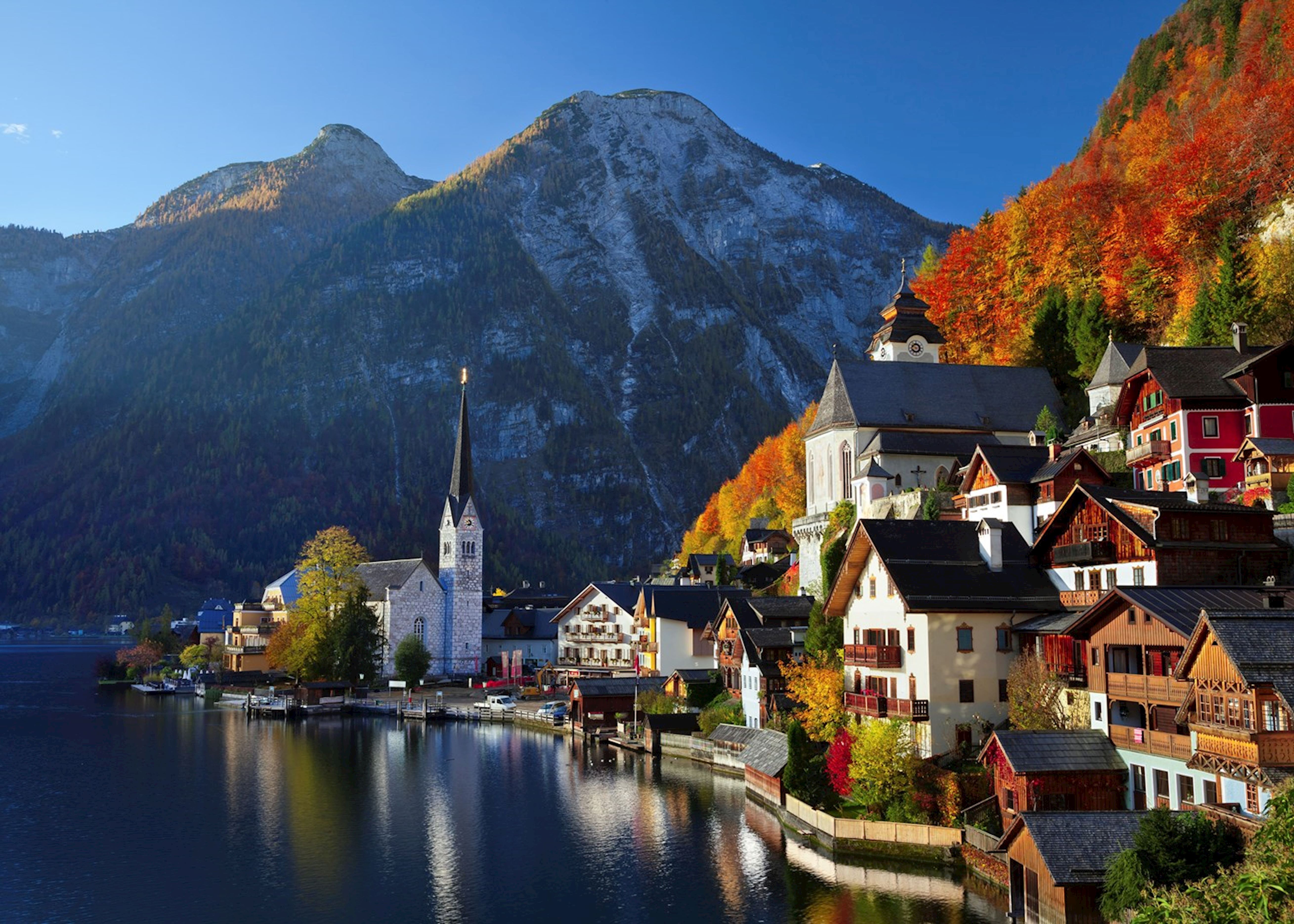
Hallstatt (Austria), an Alpine village, was dubbed “the most Instagrammable town in the world” and has struggled with overtourism to the point where residents protested and authorities considered visitor limits due to massive influxes.
Viral social posts have caused everyday spots like Chez Alain Miam Miam in Paris to draw long queues purely because they went viral, despite the owner having no marketing strategy.
The result: travel gets reduced to iconic frames, and authentic experiences are sometimes secondary to the perfect snapshot.

The “most Instagrammable town” problem: beauty, crowds, and the limits of visibility
Photo Credit: Audley Travel
Economic Benefits and Cultural Costs
The visual economy of travel brings real economic benefits. Small towns can become global destinations overnight; local businesses can thrive by leveraging platform visibility; lesser-known places can bypass traditional tourism gatekeepers like guidebooks and tour operators. For many communities, social media offers new opportunities for growth and storytelling.
Yet the costs are significant. Viral popularity can lead to overcrowding, environmental strain, and rising prices that displace local residents. Cultural practices may be simplified or staged to fit platform-friendly narratives. Communities risk becoming backdrops for global consumption rather than places with their own rhythms and meanings.
Toward More Responsible Visual Cultures of Travel
The challenge is not to reject social media, but to rethink how it frames travel aesthetics. Travelers can seek images that go beyond the obvious postcard shot: everyday streets, local markets, quiet moments. Creators can foreground context, history, and community rather than only spectacle. Destinations can design spaces that balance visual appeal with sustainability and local use.
Ultimately, the visual economy of travel reminds us that images do not merely represent places, they actively shape them. As platforms continue to mediate how destinations are seen, the question is not whether travel will be visual, but whose vision will define what is worth seeing.
Seeing Places, Shaping Places
Instagram and TikTok have turned travel into a circulating visual currency, where destinations gain value through likes, shares, and algorithmic visibility. This reshapes aesthetics, standardizes beauty, and transforms how places are built and experienced. The images travelers chase today become the landscapes that are constructed tomorrow. In the visual economy of travel, to look is to participate in shaping the world.
Spot something wrong? Email editors@globalchicvoyage.com. We log every correction publicly.
RELATED
SEE ALL →
27 Apr 2026 / 5 min
25 Mar 2026 / 5 min
11 Mar 2026 / 5 min
25 Feb 2026 / 5 min