
Free Diving As A Wellness Retreat: Where Breath Meets The Blue
c
ZE
11 Mar 2026 · 5 MIN READ · UPDATED 17 AUG 2026
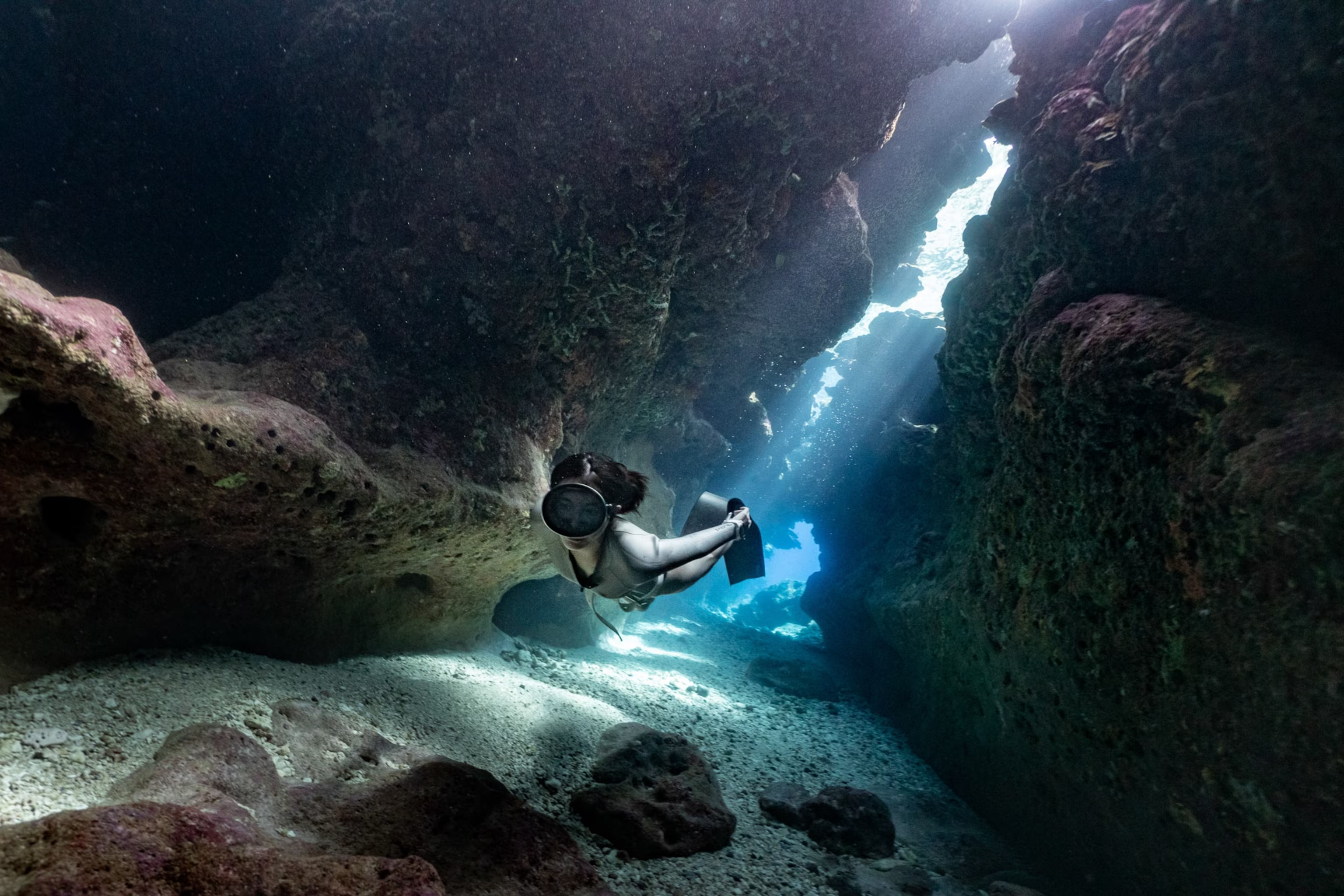
Wellness travel is evolving beyond traditional spa rituals and yoga pavilions. Today’s travelers are increasingly drawn to experiences that cultivate deeper awareness and connection with nature. Among these emerging retreats, free diving stands out as a practice that blends adventure, meditation, and ocean immersion into a powerful form of mindful travel.
Unlike scuba diving, free diving relies solely on a single breath. The act of descending quietly beneath the surface demands calmness, controlled breathing, and mental focus. As the body relaxes and the heartbeat slows, divers often enter a meditative state where the surrounding silence of the ocean encourages clarity and inner stillness. Many wellness retreats now integrate breathwork training, mindfulness sessions, and ocean therapy into free diving programs, creating journeys that are as restorative as they are exhilarating.
The Wellness Benefits of Free Diving
Beyond the thrill of exploring underwater landscapes, free diving offers a range of physical and mental health benefits that align closely with the principles of holistic wellness travel.
Deep mental relaxation
Breath-hold diving requires calmness and presence. Controlled breathing techniques help regulate the nervous system, reducing stress and encouraging a meditative state similar to mindfulness practices.
Improved breath control and lung capacity
Through consistent training, divers learn diaphragmatic breathing and oxygen conservation techniques that can enhance lung efficiency and respiratory strength.
Enhanced body awareness
Free diving trains the body to move slowly and efficiently. Divers become more aware of their posture, muscle tension, and movement in water, encouraging better overall physical awareness.
Emotional clarity and focus
Descending into the quiet of the ocean often creates a sense of mental clarity. Many practitioners describe free diving as a moving meditation that helps improve focus and emotional balance.
A stronger connection with nature
Floating weightlessly among reefs, marine life, and underwater landscapes fosters a powerful sense of environmental appreciation and mindfulness toward the ocean.
The World’s Most Inspiring Free Diving Destinations
Certain coastlines and islands have become legendary among free diving enthusiasts, thanks to their exceptional underwater visibility, unique marine landscapes, and calm waters.
Dahab, Egypt
Home to the iconic Blue Hole, Dahab is one of the world’s most famous free diving destinations. Its deep vertical drop, clear waters, and tranquil desert surroundings create a unique atmosphere where divers train and retreat alike. Yoga studios and seaside cafés line the coastline, making the destination feel like a laid-back spiritual hub for ocean lovers.

Sunlit reefs and vibrant marine life define the crystal-clear seascape of Dahab, Egypt, one of the Red Sea’s most captivating free diving environments
Photo Credit: Al Jazeera
Amed, Indonesia
Along Bali’s quieter eastern coast, Amed offers volcanic beaches, gentle currents, and thriving coral reefs. The calm conditions make it ideal for beginners, while the surrounding mountains and temples contribute to the retreat-like ambiance many travelers seek.

Amed’s calm waters and vibrant coral reefs create an ideal setting for serene free diving experiences
Photo Credit: Bali Bubbles
Palawan, Philippines
With limestone cliffs, turquoise lagoons, and extraordinary biodiversity, Palawan delivers one of Southeast Asia’s most visually stunning underwater landscapes. Areas around El Nido and Coron provide dramatic drop-offs and marine sanctuaries perfect for relaxed, scenic dives.

Towering limestone cliffs and luminous lagoons in El Nido reveal a spectacular underwater world
Photo Credit: Getty Images
Santorini, Greece
The volcanic caldera surrounding Santorini forms a dramatic underwater topography with caves, cliffs, and lava formations. Free diving here offers a striking contrast between the iconic whitewashed villages above and the mysterious volcanic seascapes below.

Santorini’s volcanic seabed offers dramatic underwater cliffs and lava formations beneath the island’s iconic white villages
Photo Credit: Viktoria Pilz
Tulum, Mexico
Beyond its Caribbean beaches, Tulum is famous for its mystical freshwater sinkholes known as Cenotes. Free diving in these crystal-clear caverns feels almost otherworldly, with beams of light illuminating vast limestone chambers.

Tulum’s crystal-clear cenotes reveal mystical limestone caverns where beams of light illuminate an otherworldly diving experience
Photo Credit: Xico Dive Center
Tips for Experiencing Free Diving as a Wellness Retreat
Start with guided breathwork
Controlled breathing is the foundation of free diving. Many retreats incorporate techniques inspired by yoga pranayama and meditation to help calm the mind and prepare the body.
Choose calm and clear locations
Beginners benefit greatly from destinations with gentle conditions, warm waters, and strong underwater visibility.
Dive slowly and mindfully
Free diving is not about reaching extreme depths. The focus is on relaxation, body awareness, and a smooth, energy-efficient descent.
Combine diving with other wellness practices
Many retreats integrate yoga, meditation, sound healing, and ocean conservation programs, transforming the experience into a holistic journey.
The Quiet Luxury of a Single Breath
Perhaps the greatest appeal of free diving lies in its simplicity. No heavy equipment, no mechanical noise, just the diver, the ocean, and a single breath. Suspended in the vast blue silence, time seems to slow and awareness deepens.
For travelers seeking both adventure and restoration, free diving offers a rare kind of retreat where wellness is discovered not only through stillness, but through the profound calm of the underwater world.
Spot something wrong? Email editors@globalchicvoyage.com. We log every correction publicly.
RELATED
SEE ALL →
24 Feb 2026 / 5 min

28 Jul 2026 / 5 min
25 Jul 2026 / 5 min
21 May 2026 / 5 min