
The Quiet Resurgence of the Extended Stay
As demand climbs to a four-year peak and new construction slows, a sector once dismissed as purely utilitarian is poised to rewrite the economics of American hospitality.
ML
7 Jul 2026 · 5 MIN READ · UPDATED 17 AUG 2026
A Sector Finding Its Moment
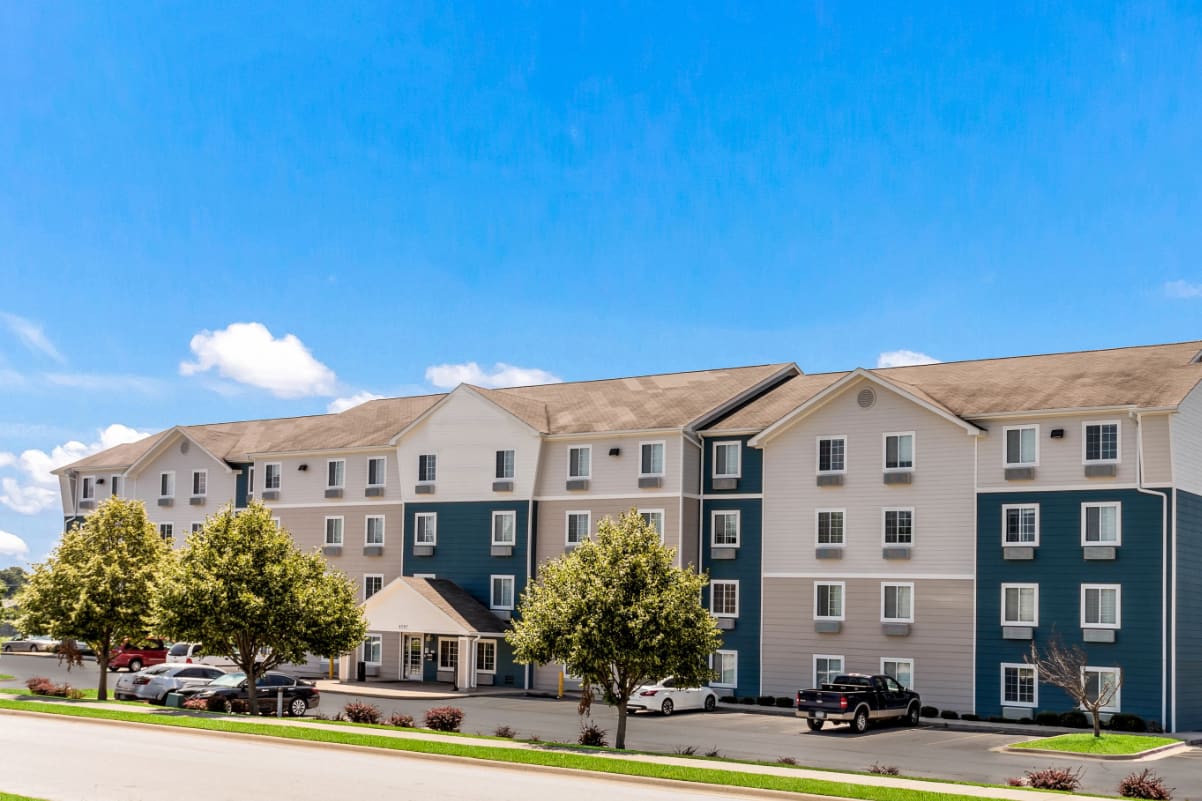
There is a certain kind of hotel room that has always existed at the margins of glamour: modest, functional, equipped with a kitchenette and a pull-out sofa, designed for stays measured in weeks rather than nights. For decades, the extended-stay segment occupied a utilitarian niche, catering to corporate relocations, construction crews, and families in transition. Yet this May, something shifted. Demand climbed at a velocity not seen since early 2022, while the flow of new properties entering the market began to slow. The gap between the two curves is widening, and for those who watch hotel economics closely, it suggests a window is opening.
At Global Chic Voyage, we have long observed that the most interesting movements in hospitality often happen not in the marquee luxury launches or the flagship urban openings, but in the segments that respond most directly to how people actually live and work. The extended-stay hotel, with its blurred boundary between temporary and semi-permanent, between travel and dwelling, is one such barometer. And right now, it is registering a notable shift.
The Numbers Behind the Momentum
In May, demand for extended-stay accommodations in the United States grew by more than six percent compared to the same month a year earlier, according to data from The Highland Group. It was the strongest monthly increase in over four years. Occupancy rates hovered around seventy-seven percent, a figure that would be enviable in many full-service categories. Meanwhile, the pipeline of new properties under construction has begun to contract, a reversal from the steady expansion that characterized the years immediately following the pandemic.
The divergence is instructive. While the broader hotel industry has enjoyed a post-pandemic rebound, extended-stay properties have consistently outpaced their peers in recent months. But May's margin was unusually pronounced, suggesting not a temporary blip but a structural realignment in how Americans are choosing to stay.
Why Now, and Why Here
Several forces are converging. The nature of work itself has become more fluid. Remote arrangements and hybrid schedules have loosened the tether between employment and fixed geography, creating a class of workers who move more frequently but stay longer in each place. Corporate travel has not returned to its pre-pandemic rhythms, but when it does occur, it often involves extended projects rather than quick site visits. Construction booms in secondary and tertiary markets have generated sustained demand for workforce housing. And then there are the less visible populations: families displaced by natural disasters, individuals navigating housing shortages in expensive metros, students and interns seeking affordable alternatives to short-term rentals.
What distinguishes the current moment is not the existence of these demand drivers, but their simultaneous intensification. At the same time, the supply side has cooled. Rising construction costs, tighter lending standards, and a more cautious investment climate have slowed the pace at which new extended-stay properties are breaking ground. The result is a classic setup for pricing power: growing demand meeting constrained supply.
The Architecture of Extended Stay
There is an aesthetic question embedded in all of this, one that the industry has only begun to reckon with. For years, extended-stay properties were designed with a certain anonymity, a deliberate blandness meant to offend no one and appeal to the widest possible audience. But as the demographic mix shifts, as younger professionals and digital nomads join the traditional base of corporate relocators, the expectations around design and amenity are evolving.
We have seen this in the proliferation of co-living concepts and boutique extended-stay brands that borrow vocabulary from residential design: warm textures, local art, communal kitchens, workspaces that feel less like hotel business centers and more like neighborhood cafes. The line between hospitality and housing is blurring, and the extended-stay segment sits precisely at that intersection. The properties that thrive in the coming years will likely be those that understand they are not merely providing a bed and a kitchenette, but a sense of place, however temporary.
A Window Opening in 2027
For developers and brand operators, the implications are clear. The gap between demand and supply is not infinite. If occupancy remains elevated and construction pipelines stay lean, pricing power will emerge, likely within the next eighteen to twenty-four months. That window represents an opportunity to recalibrate rate structures, to invest in property upgrades, and to reposition brands within a market that is demonstrating both resilience and appetite.
But the window will not stay open indefinitely. If returns become attractive enough, capital will flow back into new development. Lending conditions may ease. Construction costs may stabilize. The cycle will turn, as it always does. For now, though, the sector is experiencing a rare alignment: strong fundamentals, constrained competition, and a demographic tailwind that shows little sign of reversing.
What It Means for the Traveler
For those of us who move through the world with some frequency, the resurgence of the extended-stay segment is more than an investment story. It is a recognition that the old categories, the rigid distinctions between business and leisure, between hotel and home, no longer capture the texture of contemporary mobility. We work from places we once only visited. We stay long enough to develop routines, to find a favorite coffee shop, to feel, briefly, like residents rather than guests.
The extended-stay hotel, at its best, accommodates this ambiguity. It offers enough structure to feel secure and enough flexibility to feel free. It is not glamorous in the traditional sense, but it is increasingly indispensable. And as the data now suggest, it is also increasingly in demand. The sector's quiet resurgence is, in its own way, a measure of how we live now: more mobile, more fluid, and more willing to blur the lines between the temporary and the enduring.
Photo Credit: Extended Stay America
Spot something wrong? Email editors@globalchicvoyage.com. We log every correction publicly.
RELATED
SEE ALL →
8 Aug 2026 / 5 min
8 Aug 2026 / 5 min

7 Aug 2026 / 5 min
31 Jul 2026 / 5 min