
The Coral Nurseries: How Seven Island Retreats Are Rebuilding the Reefs They Depend On
From Zanzibar to French Polynesia, a quiet network of luxury properties is turning guests into guardians of ecosystems that house a quarter of marine life—and doing it before World Oceans Day makes headlines.
SI
9 Jun 2026 · 5 MIN READ · UPDATED 17 AUG 2026
The Morning the Stars Went Down
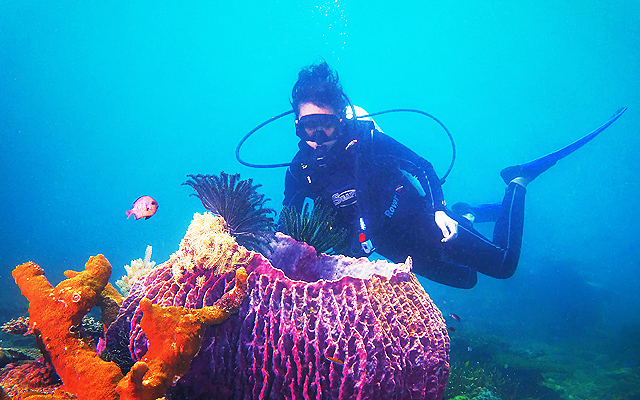
Off the northeastern coast of Zanzibar, divers from andBeyond Mnemba Island began lowering hexagonal steel frames—each one hand-welded on the mainland, each one christened a "reef star"—onto patches of seafloor that had turned bone-white eighteen months earlier. The structures, no larger than bicycle wheels, are designed to do what broken reefs cannot: hold still long enough for coral fragments to reattach, settle, and begin the decades-long work of rebuilding. It is painstaking, tactile labor, the kind that requires more patience than capital, more presence than press coverage. And it is multiplying.
Ahead of World Oceans Day on June 8, a collection of island retreats spanning Tanzania, Costa Rica, Dominica, Malaysia, Colombia, and French Polynesia has drawn attention not for ribbon-cuttings or celebrity endorsements, but for the quieter mechanics of marine stewardship. These properties—members of Beyond Green, a network oriented around verifiable sustainability—have embedded coral restoration into their operational DNA, turning lodges into field stations and guests into participants in projects that will outlive their stays by generations.
At Global Chic Voyage, we have watched luxury hospitality's environmental commitments evolve from token gestures—a bamboo straw here, a mangrove walk there—into something more structural. What distinguishes the current wave of coral initiatives is not ambition but accountability: publicly trackable metrics, partnerships with research institutions, and a willingness to let science, not marketing, set the pace.
Why Reefs, Why Now
Coral reefs occupy less than one percent of the ocean floor, yet they support roughly a quarter of all marine species—a ratio that makes them among the most biodiverse and simultaneously most vulnerable ecosystems on the planet. Climate-driven coral bleaching, compounded by overfishing, agricultural runoff, and unregulated coastal development, has degraded reefs at a pace that now outstrips natural recovery in many regions. The 2024 bleaching event that prompted the reef star deployment off Mnemba Island was neither isolated nor unprecedented; it was part of a global pattern that has turned restoration from aspiration into emergency protocol.
The properties now anchoring coral projects occupy a peculiar position: they are economic beneficiaries of reef health—healthy reefs attract divers, snorkelers, and the high-yield traveler willing to pay premium rates for proximity to marine biodiversity—and they are also among the few private-sector actors with the capital, real estate, and guest engagement infrastructure to support long-term restoration work. That alignment of interest and capacity is rare in conservation, and it is being tested in real time across three oceans.
From Monitoring to Maintenance: The Guest as Field Assistant
At Corcovado Wilderness Lodge in Costa Rica's Osa Peninsula, the Adopt a Coral program allows guests to participate in coral monitoring and transplantation work alongside researchers from Innoceana and Restor Laboratories. Participants receive GPS coordinates for "their" coral fragments, which are tracked over months and years as part of a broader dataset on survival rates and growth patterns. The program is not theatrical—there are no plaques, no naming ceremonies—but it is persistent, and the data it generates feeds into peer-reviewed research on Costa Rican reef resilience.
A similar model operates at Gayana Marine Resort in Sabah, Malaysia, where the Marine Ecology Research Centre has shifted focus from passive observation to active propagation, particularly of giant clams—filter feeders that improve water clarity and indirectly support coral health. Guests are invited to assist in clam seeding and reef surveys, but the work is scaffolded by full-time marine biologists whose tenure at the property spans years, not seasons. That continuity matters: coral restoration is not a project with a ribbon-cutting and a completion date. It is a process measured in decades, and it requires institutional memory.
The Inland Nursery: Coulibri Ridge and Controlled Propagation
Not all coral restoration happens underwater. At Coulibri Ridge in Dominica, the property supports the Daniel Langlois Coral Rescue Center, which maintains coral nursery tanks in a climate-controlled indoor facility. The nursery serves as a genetic bank and a testing ground for stress-resistant coral strains that may prove more resilient as ocean temperatures continue to rise. Fragments are cultivated in tanks that simulate reef conditions—temperature, salinity, light cycles—before being transplanted to degraded sites along Dominica's western coast.
The model reflects a broader shift in restoration science: from opportunistic transplantation of whatever coral survives in the wild, to deliberate propagation of strains selected for thermal tolerance and growth rate. It is horticulture applied to marine biology, and it requires infrastructure—pumps, filtration systems, backup generators—that few properties are willing or able to maintain. Coulibri Ridge's investment in the nursery signals a long-term commitment that extends beyond guest experience into research infrastructure.
Scale and Community: Hotel Las Islas and the Barú Partnership
In Colombia, Hotel Las Islas has planted 90,000 coral fragments in partnership with the local Barú community, a scale that shifts the project from boutique experiment to landscape-level intervention. The partnership is structured around employment: community members are trained as coral gardeners and paid for ongoing maintenance work, creating a livelihood stream tied directly to reef health. The model addresses one of the chronic failures of conservation tourism—the tendency to extract value from ecosystems without redistributing it to the people who live adjacent to them.
The Barú partnership also illustrates the logistical complexity of scaling coral restoration. Ninety thousand fragments require thousands of hours of underwater labor: cutting, transplanting, monitoring, clearing algae, replacing dead fragments, documenting growth. The work is repetitive, physically demanding, and largely invisible to the guests who fund it. But it is also the kind of work that builds local expertise and creates economic incentives for stewardship—a feedback loop that outlasts any single property's tenure.
The Atoll Laboratory: The Brando and Tetiaroa's Closed-Loop Ecosystem
In French Polynesia, The Brando supports marine conservation through the Tetiaroa Society and its Tetiaroa Atoll Restoration Program, which treats the atoll as a closed-loop laboratory. The program focuses not only on coral health but on the reintroduction of native species—seabirds, crabs, vegetation—whose presence or absence affects nutrient cycling and, indirectly, reef resilience. The approach is systemic rather than reductionist: it assumes that coral health cannot be isolated from the terrestrial and avian ecosystems that surround it.
Tetiaroa's isolation—accessible only by private plane—makes it both an ideal research site and a challenging one. The atoll is insulated from some anthropogenic pressures (industrial fishing, coastal runoff) but vulnerable to others (climate-driven bleaching, invasive species introduced via air and sea traffic). The Brando's financial support has allowed the Tetiaroa Society to maintain year-round research staff and long-term monitoring plots, creating a dataset that now spans more than a decade.
Why It Matters: The Infrastructure Behind the Commitment
What separates these projects from greenwashing is infrastructure: full-time marine biologists, multi-year funding commitments, partnerships with accredited research institutions, and publicly available data on coral survival and growth. These are not amenities; they are operational expenses that most properties cannot or will not absorb. The properties that do absorb them are making a calculated bet that reef health is not an externality but a precondition for their own long-term viability.
That calculation is increasingly sound. As coral reefs degrade, the destinations that depend on them lose their competitive advantage in the luxury travel market. A bleached reef is not a selling point; it is a write-down. The properties now investing in restoration are, in effect, insuring their own asset base—and in doing so, they are creating models that smaller operators and public agencies can study, adapt, and scale.
The timing of these announcements—clustered around World Oceans Day—is strategic, but the work itself is not seasonal. The reef stars off Mnemba Island will remain in place for years, accumulating coral cover at a rate measured in millimeters per month. The coral nursery tanks in Dominica will continue to hum through hurricane season and high season alike. The Barú community will continue to dive, transplant, and monitor long after the last guest has checked out. That continuity, more than any single day of awareness, is what restoration requires.
The Long View
Coral restoration is not a narrative with a satisfying arc. It does not resolve; it accumulates. The projects now underway across seven properties in five countries are not solutions but interventions—incremental, expensive, and uncertain. They will take decades to show results, and those results will be measured not in press coverage but in biodiversity indices, fish counts, and the structural complexity of the reef itself.
What these properties are demonstrating, however, is that luxury hospitality can absorb the cost and timescale of ecological repair without abandoning the economic model that funds it. The guest who plants a coral fragment at Corcovado or monitors a reef star off Mnemba is not saving the ocean; they are participating in a process that may, over decades and with sustained institutional support, contribute to the resilience of a single reef system. That is a modest claim, and it is also an honest one. In an industry prone to overpromising and underdelivering on environmental commitments, modesty is its own form of rigor.
Spot something wrong? Email editors@globalchicvoyage.com. We log every correction publicly.
RELATED
SEE ALL →
31 Jul 2026 / 5 min
29 Jul 2026 / 5 min
9 Jul 2026 / 5 min
8 Jul 2026 / 5 min