
The Cellar Door Opens: Why Collectors Now Crave the Vineyard, Not Just the Vintage
As the wine market cools from its speculative peak, a new ritual is emerging among high-end buyers - one measured not in bottles, but in access, storytelling, and the tactile pull of terroir itself.
VJ
10 Jul 2026 · 5 MIN READ · UPDATED 17 AUG 2026
A Heatwave Evening in Burgundy
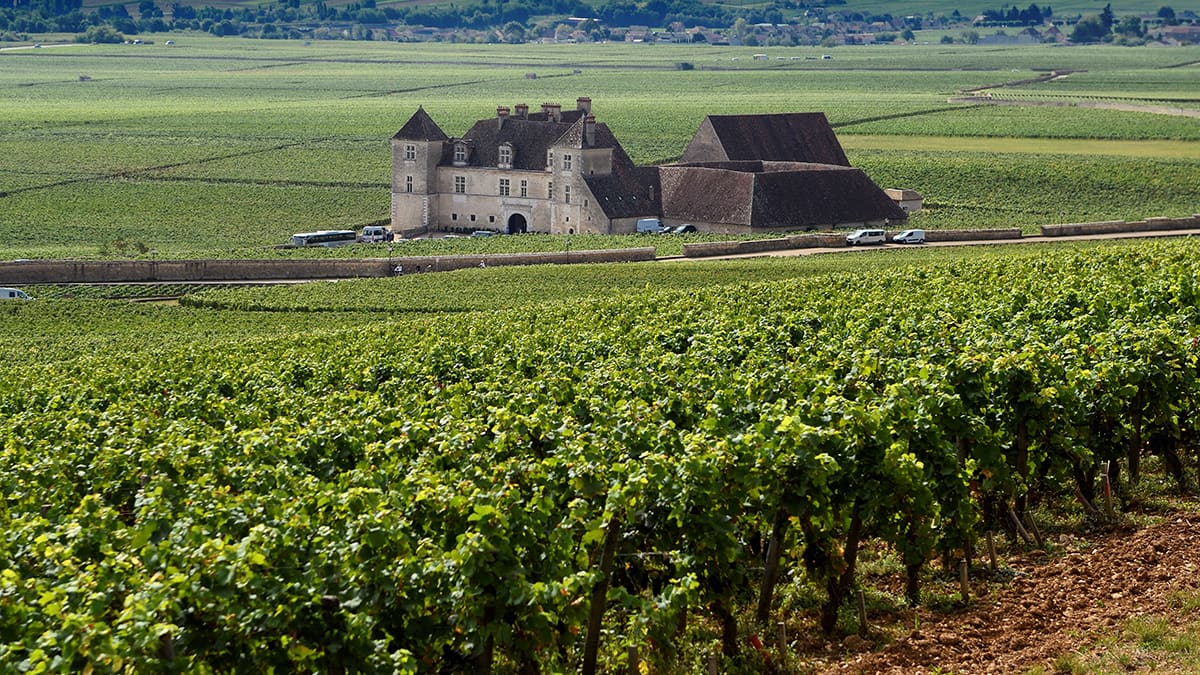
The concert hall in Beaune had turned into a furnace by the time Brahms's Symphony No. 2 reached its final movement. Outside, a convoy of sleek black sedans idled in formation, air conditioning humming, ready to ferry guests through the vines toward dinner. We climbed in gratefully, leaving behind the swelter and the echoes of strings, bound for the 12th-century Château du Clos de Vougeot. Through the windows, the Grand Cru vineyards of Burgundy rolled past, row after row of vines baking under a heatwave that had winemakers across the region checking soil moisture levels with increasing anxiety.
Inside the château, nearly 400 collectors, vignerons, and oenophiles from three continents gathered for a five-course dinner and charity auction. The crowd skewed younger than one might expect at such an affair, a mix of tech wealth from California and finance money from New York, alongside blue-blooded Burgundian families and Chinese collectors who had flown in for the week. Several guests queued for photographs with the local winemakers, who moved through the stone-walled hall with the understated practicality of people who work the soil for a living, now finding themselves treated like minor celebrities.
At Global Chic Voyage, we have long tracked the rituals of luxury collecting. But what unfolded that evening in Burgundy was something subtly different - a glimpse of a market in transformation, where the object of desire is no longer solely the bottle itself, but the story, the place, and the person behind it.
When the Frenzy Fades
The wine market's recent trajectory mirrors that of contemporary art: a speculative surge followed by a measured retreat. In 2021, Sotheby's wine and spirits division recorded its highest-ever sales figure, reaching $132 million amid the pandemic-era rush into tangible assets. Christie's posted similar records. Low interest rates, global demand, and the psychological pull of collectible goods combined to push auction estimates - and hammer prices - to dizzying heights.
That fever has broken. Bottles that once commanded aggressive bidding now linger at auction, their estimates quietly adjusted downward. The broader market has softened, even as trophy lots and exceptional cellars continue to draw competition. Collectors who once bought aggressively are now taking their time, weighing provenance and story as carefully as vintage and appellation.
Yet the passion has not disappeared. What has shifted is the nature of engagement. Younger buyers, in particular, are less inclined to lock away cases for decades of patient aging. They want wines they can drink now, and they want the experience of connection that comes with understanding where and how those wines were made. The cellar, in other words, is giving way to the vineyard tour.
The New Currency of Access
Burgundy has always understood patronage. Centuries ago, local families donated vineyard parcels to the Hospices de Beaune, whose annual November auction still funds the regional hospital. The charity sale at Clos de Vougeot, part of the Musique & Vin festival, carried forward that tradition, raising close to 300,000 euros from just 14 live lots and another 200,000 from an online component. One magnum of Domaine Leflaive Bâtard-Montrachet 2013, paired with a private tasting for four, went for 46,000 euros. The bidders, well-fed and generously served with Grand Cru after Grand Cru, were in a charitable mood. Sotheby's had also reduced its fees for the evening to benefit the cause.
But the real value of the event, from the auction house's perspective, lay elsewhere. By embedding itself within the fabric of Burgundy's wine culture - partnering with festivals, hosting dinners, facilitating introductions between collectors and producers - Sotheby's positions itself not merely as a marketplace, but as a curator of access. The clients who attend these gatherings are the same ultra-high-net-worth individuals who buy art, real estate, and other luxury assets. The auction house becomes the connective tissue between worlds.
According to Sotheby's global wine leadership, the firm now organizes bespoke vineyard tours, private tastings, and even connections that allow collectors to age barrels purchased at auction in collaboration with renowned winemakers. These are not listed services. They are off-menu gestures, tailored to individual clients and designed to deepen relationships that extend well beyond a single transaction.
Christie's has observed the same shift. Between 2020 and 2025, the house saw the number of wine bidders and buyers climb by 43 percent, while total revenue rose from $50.2 million to $88.8 million - a 76.9 percent increase. Those figures, of course, include the pandemic boom years, but they also point to an enduring appetite for fine wine at the top tier, even as the middle market recalibrates.
The difference now is that collectors are not simply acquiring bottles. They are seeking entry into a culture - one that values terroir, craft, and the slow accumulation of knowledge that comes from standing in a vineyard at harvest and tasting must from the barrel.
The Pressure on Primary Markets
Not all corners of the wine world are thriving. The primary market, particularly the en primeur system - where wines are sold years before bottling - has faced mounting pressure. Collectors are increasingly reluctant to commit capital to wines they cannot drink for a decade or more. Storage costs, space constraints, and a general impatience with delayed gratification have all contributed to a cooling of enthusiasm for futures.
Pricing in the primary market remains high, and producers are reluctant to lower it, creating a tension that has yet to fully resolve. Meanwhile, auction results at the top end continue to exceed expectations. Sotheby's "Immortal Vintages | 200 Years of Bordeaux" sale in May achieved $2.1 million, more than doubling its low estimate. The house's first Wine & Spirits Festival Week in Hong Kong generated $13 million, with lots averaging 130 percent of their low estimates.
The pattern is clear: exceptional provenance, compelling narratives, and direct château sourcing command premiums. Everything else waits for a more patient buyer.
Stories Over Speculation
The day after the charity auction, a small group of us toured the Hospices de Beaune vineyards with Ludivine Griveau, the estate's winemaker. She spoke candidly about the challenges posed by recent heatwaves, describing how climate shifts have forced adjustments to centuries-old practices. Her responsibility is to produce wine of sufficient quality and volume to fund the local hospital - a burden that carries both historical weight and very modern anxiety.
Climate change is not an abstract concern in Burgundy. It is a present reality, visible in earlier harvests, altered phenolic development, and the need to rethink assumptions about ripeness and balance. Yet even amid these challenges, the human story remains central. Griveau's role, her connection to the land, and the institutional history of the Hospices all contribute to the allure of the wines she produces.
This is the story collectors now seek. Not simply the vintage chart or the critic's score, but the narrative that ties a bottle to a person, a place, and a moment in time. It is a shift from wine as financial instrument to wine as cultural artifact - a change that favors auction houses capable of facilitating not just transactions, but introductions.
Drinking Better, Not More
Across the luxury market, consumption patterns are evolving. Younger generations drink less alcohol overall, but when they do, they gravitate toward quality over quantity. The Friday-night bottle replaces the nightly glass. The weekend dinner becomes an occasion, and the wine is chosen accordingly.
This shift may, paradoxically, benefit the high end of the market. If collectors are buying fewer bottles but seeking better ones - and if they are willing to pay for the experience and access that accompany those bottles - then the auction houses and estates that can deliver both product and proximity stand to gain.
Sotheby's latest offering underscores this strategy. In October, the house will present nearly 700 lots sourced directly from the cellars of Château Haut-Brion in Paris, celebrating 90 years of Dillon family ownership. The sale will include not only rare vintages but also bespoke experiences designed to give buyers access to the estate, its archives, and the winemakers who shape its identity.
Provenance has always mattered in fine wine. But now, the provenance extends beyond the bottle to encompass the relationship between collector and producer. The vineyard visit, the barrel tasting, the dinner with the winemaker - these are not ancillary perks. They are, increasingly, the point.
The Oasis Built by Wine
Burgundy's landscape bears the marks of centuries of wine wealth. Villages are immaculate, infrastructure is modern, and the aesthetic coherence of the region - stone walls, terracotta roofs, manicured vines - speaks to generations of reinvestment. It is an agri-luxury oasis, polished by the same economic forces that have transformed other resource-rich regions into hubs of refined living.
The collectors who fly in for festivals like Musique & Vin au Clos de Vougeot are drawn not only by the wines but by the world those wines have built. They want to walk the rows, meet the vignerons, understand the soil composition, and taste the difference that a few meters of elevation or a shift in microclimate can make. They want, in short, to be insiders - or at least to feel like ones.
Auction houses have become the gatekeepers to that insider status. By curating experiences, facilitating introductions, and embedding themselves within the social fabric of wine regions, they offer something that cannot be purchased at retail: access to a culture that values knowledge, tradition, and the slow unfolding of seasons.
What Endures
The speculative boom in fine wine has faded, but the underlying appetite remains. Collectors still chase exceptional bottles, still pay premiums for impeccable provenance, and still gather in places like Burgundy to celebrate the craft and culture of winemaking. What has changed is the emphasis - from acquisition to experience, from cellar to vineyard, from bottle to story.
In this new landscape, the auction house that succeeds is not simply the one with the best inventory. It is the one that can open doors, broker introductions, and offer clients a sense of belonging within a world they admire. The wine itself is still the foundation, but the relationship built around it is what keeps collectors engaged.
As we left the château that night, the air had finally begun to cool. The vines stretched away into the darkness, their leaves rustling softly in the breeze. Somewhere in those rows, the next vintage was ripening, and somewhere in the world, a collector was planning their next visit.
Photo: Eric Feferberg / Getty Images
Spot something wrong? Email editors@globalchicvoyage.com. We log every correction publicly.
RELATED
SEE ALL →
8 Aug 2026 / 5 min
8 Aug 2026 / 5 min
7 Aug 2026 / 5 min
31 Jul 2026 / 5 min