
The Borneo Island Where the Jetty Is Still Empty at Dusk
In Malaysia's easternmost state, the romance of colonial-era travel writing collides with a new generation of eco-conscious exploration—from cloud-forest summits to coral atolls that time forgot.
SI
14 Jun 2026 · 5 MIN READ · UPDATED 17 AUG 2026
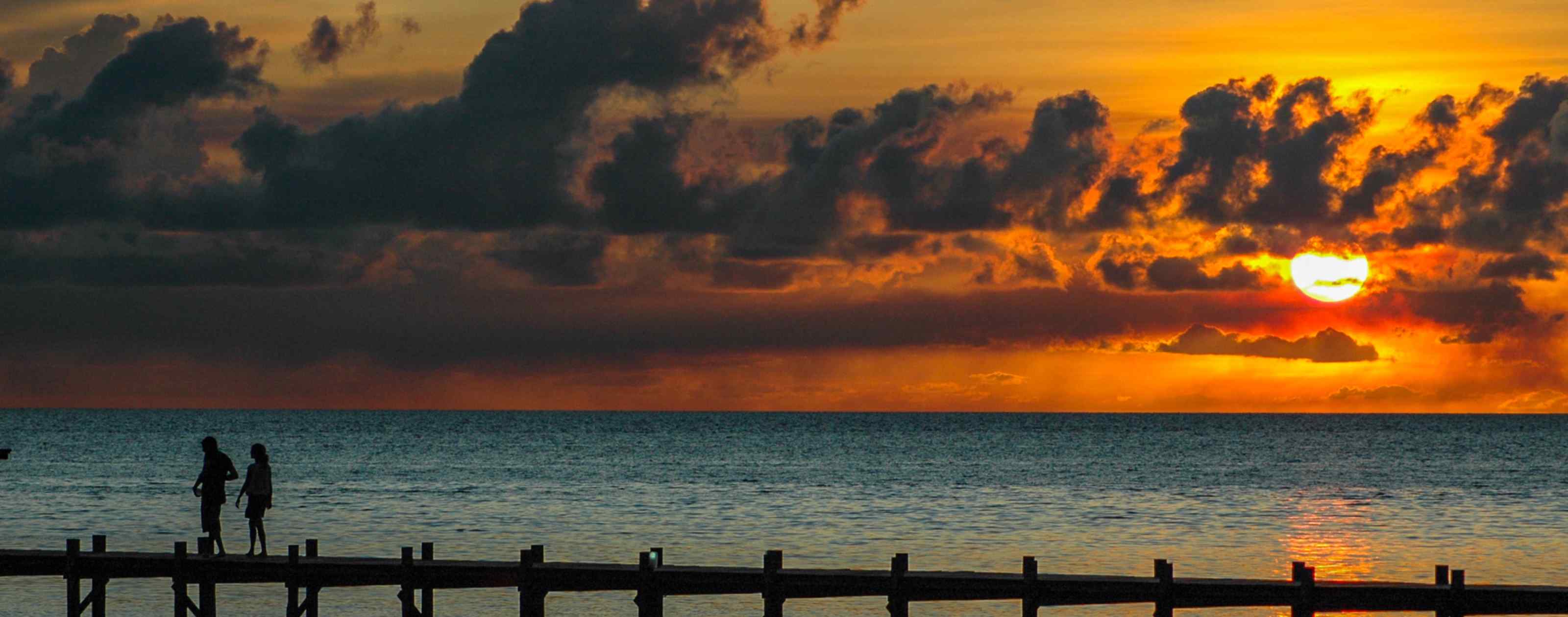
The Jetty at Dusk
The sun drops fast this close to the equator. On Lankayan Island, a narrow wooden jetty stretches into the Sulu Sea like a question mark, its weathered planks warm underfoot even as the sky bleeds coral and violet. A school of needlefish darts beneath the surface; overhead, fruit bats begin their nightly commute from roost to feeding ground. There are no tiki torches, no sunset DJ set—just the creak of wood, the lap of tide, and the faint rustle of casuarina pines along the shore. This is Sabah at its most elemental: a place where the infrastructure of leisure dissolves into something older and quieter.
At Global Chic Voyage, we've watched Borneo's eastern flank—the Malaysian state of Sabah—emerge from the long shadow of its more famous neighbor, Sarawak, and its better-marketed cousin, Indonesian Kalimantan. But Sabah has always possessed a gravitational pull for those willing to look past the brochure. Its Malay name, tanah di bawah bayu—land below the wind—refers to its position south of the typhoon belt, a geographic accident that has made it a refuge for centuries: for Bajau sea nomads, for colonial administrators seeking malaria-free highlands, and now for travelers weary of overtourism's glare.
A Literary Inheritance
The American writer Agnes Keith arrived in Sandakan in 1934, trailing her husband, a British forestry officer. Her memoirs—Land Below the Wind chief among them—captured a Borneo that was equal parts Eden and anachronism: orangutans in the canopy, formal teas on the verandah, Murut tribespeople and English memsahibs sharing the same humid afternoons. Keith's描述 of a 1937 coronation party for King George VI reads like magical realism: "pagan tribes of Borneo and the ladies of [the colonial town], drinking tea and eating cakes together," she wrote, marveling at what she called "the real heart of a non-racial empire."
The empire, of course, did not last. But Keith's prose lingers—a reminder that Sabah has always been a place where categories blur. Today, that fluidity manifests differently: in dive resorts staffed by former fishermen who've pivoted to marine conservation, in oil palm estates reimagined as wildlife corridors, in Kadazan-Dusun chefs mining ancestral fermentation techniques for Kota Kinabalu's nascent fine-dining scene. The land below the wind remains a laboratory for coexistence, even as the terms of that coexistence shift.
Cloud Forest and Coral Triangle
Sabah's topography is a study in extremes. Inland, Mount Kinabalu—at 4,095 meters, Southeast Asia's highest peak—dominates the horizon, its granite summit frequently wreathed in mist. The two-day climb via the Timpohon Gate is less technical than it is relentless: a vertical march through lowland dipterocarp forest, montane oak, and finally alpine scrub so sparse that sunrise from the summit feels like standing on the roof of the world. We've recommended it for years, not for the Instagram moment (though the view across the South China Sea is undeniable), but for the ecosystems stacked like layers of a cake—each altitudinal band hosting species found nowhere else.
Descend to sea level, and the narrative inverts. Sabah's northeastern coast—the Sulu and Celebes seas—sits at the apex of the Coral Triangle, the planet's most biodiverse marine region. Islands like Lankayan, Sipadan, and Mabul function as aquatic game parks: hawksbill turtles cruise the drop-offs, schools of barracuda wheel in the blue, and if you're patient during a night dive, you might catch a flamboyant cuttlefish flashing neon warnings across the sand. The diving here isn't about ticking off charismatic megafauna; it's about sitting still long enough to notice the nudibranchs, the ghost pipefish, the incremental drama of the reef.
The Infrastructure of Immersion
Sabah has never courted mass tourism with the same fervor as Bali or Phuket, and that restraint—part policy, part geography—has preserved a certain texture. Accommodations skew small: family-run guesthouses in Semporna, stilted lodges along the Kinabatangan River where you wake to the grunts of proboscis monkeys, eco-resorts on Gaya Island that limit guest numbers to protect nesting sites. Even Kota Kinabalu, the state capital, retains a manageable scale—its waterfront night markets and pre-war shophouses coexisting with new glass towers without the usual urban vertigo.
What's shifting now is intent. A decade ago, Sabah's visitors were largely divers and climbers, single-mission travelers. Today, we're seeing a broader demographic: families seeking wildlife encounters that don't feel staged, solo travelers chasing narrative over checklist, even corporate retreats drawn to the metaphor of cross-pollination that Keith once described. The state's tourism board has leaned into certification schemes—Travelife, Green Destinations—signaling that growth, when it comes, will be curated rather than runaway.
Why It Matters Now
Sabah occupies a peculiar position in the Southeast Asian travel landscape. It lacks the brand recognition of Thailand's islands or Vietnam's heritage sites, yet it offers something those destinations increasingly struggle to provide: the sensation of discovery. Not discovery in the colonial sense—Sabah's indigenous communities, its trade routes, its ecological knowledge are ancient—but the traveler's private discovery, the feeling that you've arrived somewhere before the crowds have.
That window won't stay open indefinitely. Direct flights from Seoul and Taipei are increasing; Airbnb listings in Kota Kinabalu have tripled since 2023. But for now, Sabah remains a place where you can walk a jetty at sunset and have it to yourself, where the infrastructure exists but doesn't dominate, where the land below the wind still feels like a refuge rather than a stage set. Agnes Keith saw an empire in a tea party; we see, in Sabah's restraint, a different kind of possibility—one where tourism doesn't erase the very qualities it came to experience.
Epilogue: The Long View
On my last evening on Lankayan, I watched a Bajau boatman mend his net on the beach, his hands moving with the rhythm of muscle memory. Behind him, the dive shop glowed with the blue light of underwater footage being uploaded to Instagram. The two scenes didn't clash—they simply coexisted, like Keith's tribespeople and memsahibs, like the orangutans and the oil palms. Sabah has always been a place of adjacencies, of things that shouldn't fit but somehow do. The question now is whether that balance can hold as the rest of the world takes notice. The jetty is still empty at dusk. But the tide, as always, is turning.
Spot something wrong? Email editors@globalchicvoyage.com. We log every correction publicly.
RELATED
SEE ALL →
8 Jul 2026 / 5 min
24 Jul 2026 / 5 min
6 Jul 2026 / 5 min
31 Jul 2026 / 5 min