
TRENDS & INSPIRATIONTHE VOYAGE ESSAY
Quiet Luxury - The New Language Of Hospitality Design
c
CS
3 Feb 2026 · 5 MIN READ · UPDATED 17 AUG 2026
In a world drowning in noise, the most powerful statement is silence. The global hospitality industry is undergoing a profound transformation, moving away from ostentatious displays of wealth toward something far more compelling: the art of restraint. This shift, known as quiet luxury, is not merely an aesthetic trend. It represents a fundamental reimagining of what high-end travelers seek, and architects and designers worldwide are responding with spaces that whisper rather than shout.
The numbers tell a compelling story. The global luxury hotel market, valued at $140.28 billion in 2023, continues its upward trajectory with strong growth projected through 2032. Yet within this expansion lies a striking paradox: the fastest-growing segment of luxury travelers now pays a premium for less - less noise, less stimulation, less visual clutter. Hilton has coined this phenomenon "hushpitality," while Accor frames its new ultra-luxury brand around "quiet luxury."
This article explores how this philosophy is reshaping hospitality architecture across the globe, from the desert canyons of Utah to the historic streets of Kyoto, and examines what this means for the future of hotel and resort design.
The Psychology Behind the Shift
Understanding quiet luxury requires understanding the psychology of today's affluent traveler. According to a 2024 Virtuoso report, 75% of luxury travelers now prioritize unique and rare experiences over traditional luxury amenities. This data supports the idea that hospitality focused on emotional resonance rather than material displays is gaining real traction.
The shift reflects a broader change in consumer behavior among what researchers call "old money" and "new money" individuals. As EHL Hospitality Business School notes, Ultra-High-Net-Worth Individuals (UHNWIs) are increasingly choosing luxury brands that are less well-known and absent of overt symbols to communicate their status in a more understated manner. These sophisticated travelers, often seasoned by years of business and leisure travel, value self-awareness and refined tastes. They no longer seek accommodations that reflect their status or inflate their egos.
This psychological shift has profound implications for architecture. As one industry analysis puts it: "Luxury in hotels isn't about gold trim or over-the-top extras anymore. Today, the trend is quiet luxury: great materials, thoughtful service, and a calm, exclusive feel".

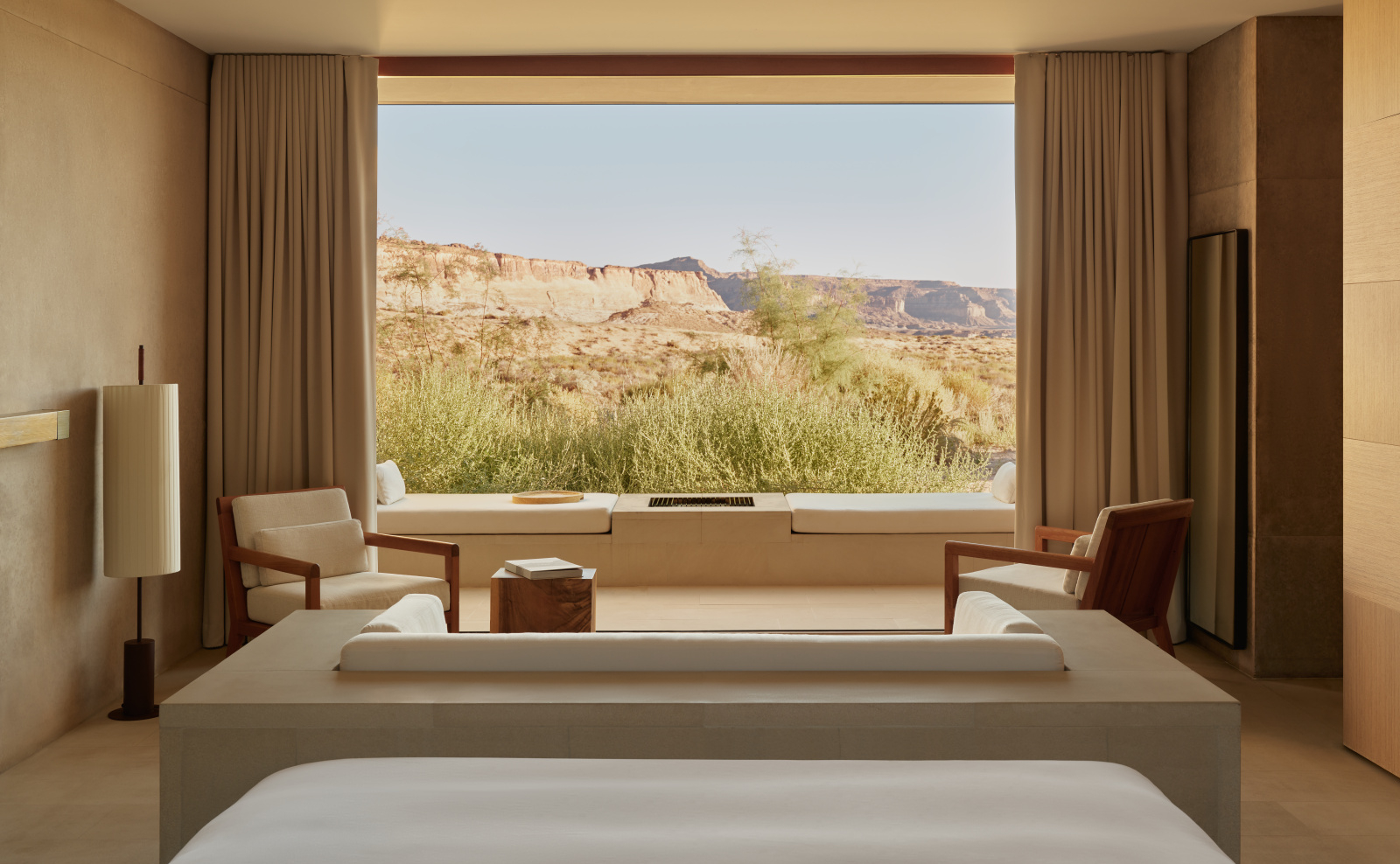
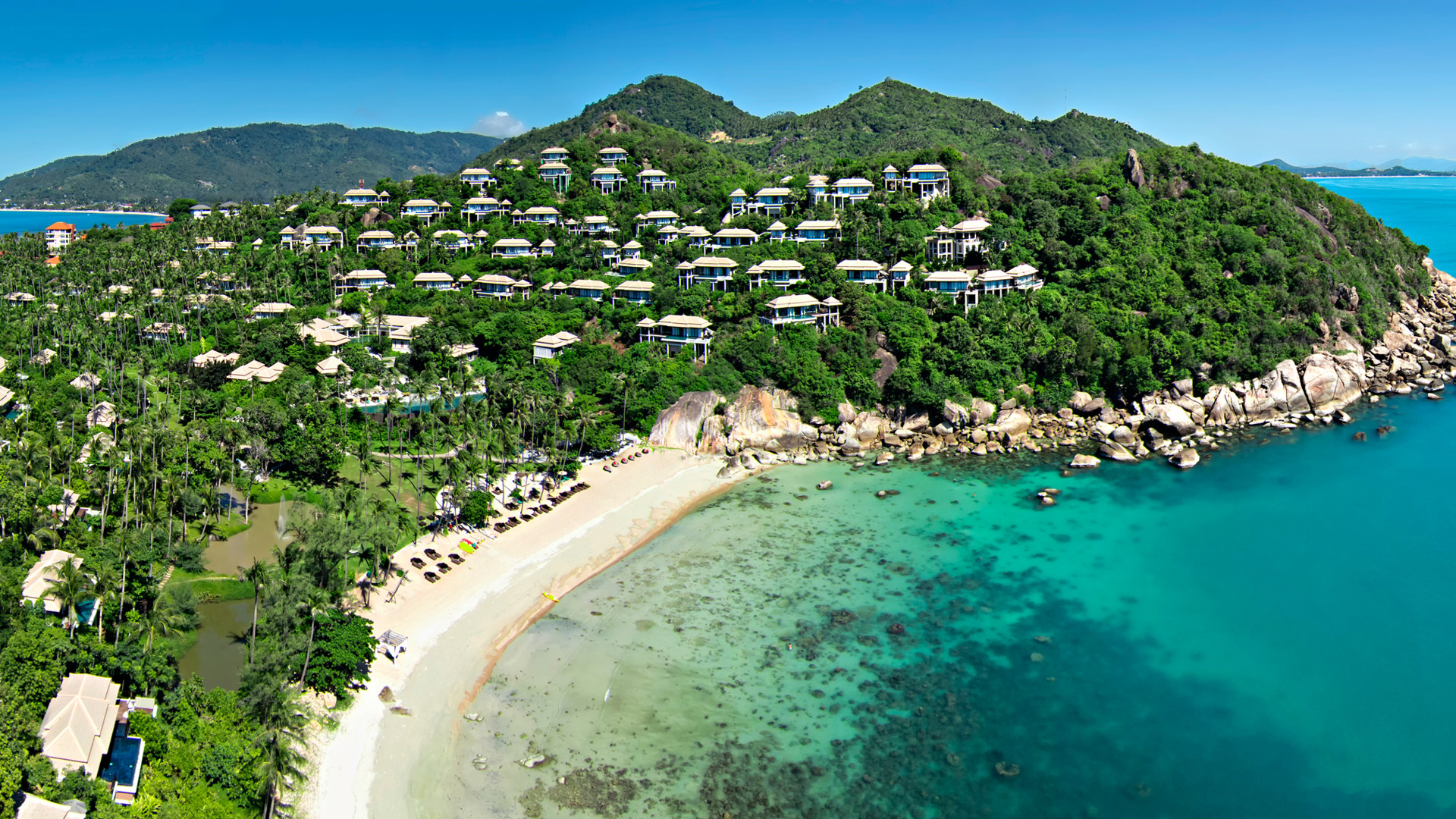
An architecture of restraint, where clean lines, natural materials, and a seamless relationship with landscape create a sense of calm, balance, and unspoken sophistication
Aman Resorts
The Architectural Language of Less
What does quiet luxury look like in built form? The answer lies in a careful orchestration of space, light, material, and proportion. Rather than relying on ornate decoration or expensive finishes to signal luxury, architects are turning to more subtle tools: the quality of natural light, the texture of handcrafted materials, the generous proportions of a room, and the seamless integration of indoor and outdoor spaces.
Several key principles define this architectural language:
Material Honesty and Authenticity
Quiet luxury favors materials that age gracefully rather than those that need constant maintenance to look perfect. Natural stone with visible veining, hand-finished wood that develops patina over time, lime-washed walls that breathe with humidity - these choices tell a story of authenticity that manufactured perfection cannot match. As Wimberly Interiors notes in their 2025 design forecast, there is "a renewed focus on layering textures and incorporating bold, jewel-toned palettes" complemented by natural materials that "introduce a tactile richness."
Spatial Generosity Without Excess
The revolution that Aman Resorts sparked in the late 1980s continues to influence hospitality design today. As legendary designer Bill Bensley recalls, architect Ed Tuttle "made the bathroom the same size as the bedroom and with natural light from four sides, when the rest of us were cramming tiny bathrooms into dark corners." This generosity of space, not filled with furniture or decoration, but allowed to breathe, remains central to quiet luxury.
Connection to Place
Perhaps the most important principle is site-specificity. Quiet luxury properties are designed not as brands that could exist anywhere, but as responses to specific landscapes and cultures. As Stonehill Taylor principal Sara Duffy observes, "There is a movement in the direction of quiet luxury. As a reaction to the maximalism that has dominated the design space for several seasons, a more refined, simplified design narrative is being embraced, with the idea of creating beautiful, comfortable spaces that are not overly designed but emphasize subtle details."
Case Studies: The New Paradigm in Practice
Examining recently opened and forthcoming properties reveals how these principles translate into built reality across diverse contexts.
Aman: The Blueprint of Restraint
No discussion of quiet luxury in hospitality can begin without acknowledging Aman Resorts, the brand that essentially invented the genre. When founder Adrian Zecha opened Amanpuri in Phuket on New Year's Day 1988, it stunned a world of jaded travelers who were convinced they had seen it all. Tuttle's minimalist design, anchored by sharp silhouettes and a discreet but palpable sleekness, became as much of a draw as the surroundings and service.
The brand's influence on modern resort design cannot be overstated. As designer Richard Hassell of WOHA notes: "It's hard to remember that these two properties invented the genre of the top-tier boutique villa resort. Before them, resorts were made of room blocks, decorated with token ethnic touches. These rooms took a Palladian attitude towards the vernacular pavilion, making them more pure and geometrically resolved, better proportioned, and invisibly serviced."
Aman's upcoming Amanvari (opening Q2/2026) on Mexico's Baja Peninsula exemplifies the continued evolution of this philosophy. Located where desert meets sea, the 18-key retreat designed by Heah & Co. features pavilions that rise from the surrounding landscape, commanding views over the Sea of Cortés. An organic, contemporary design aesthetic permeates the property, with spaces that flow seamlessly from indoors to out. Floor-to-ceiling glass walls and playful screening allow guests to enjoy Baja's blue skies while maintaining the privacy that is central to the Aman experience.

Amanvari’s low-slung pavilions dissolve into desert terrain, where glass, shadow, and horizon blur the line between architecture and landscape
Aman Resorts
Capella Kyoto: Cultural Dialogue Through Architecture
Set to open in 2026, Capella Kyoto demonstrates how quiet luxury can honor deep cultural traditions while creating contemporary comfort. Designed by Kengo Kuma and Associates alongside Singapore-based Brewin Design Office, the property transforms a former elementary school site in Kyoto's historic Miyagawa-chō district.
The 89-room hotel draws its design cues from the city's traditional wooden townhouses, known as machiya, unfolding as a series of inner courtyards and carefully composed spaces. Guests arrive through a quiet alleyway lined with shoji screens, immediately transported from the bustling city into a realm of contemplative calm. The design reflects Capella's "quiet sophistication" ethos - a blend of traditional Japanese craft and architecture paired with contemporary comfort that appeals strongly to travelers seeking culture, calm, and understated luxury.

A serene guest room where warm timber, soft textiles, and framed city views create a quiet dialogue between contemporary comfort and Kyoto’s layered rooftops
Capella Hotels & Resorts
Imperial Hotel Kyoto: Heritage Reimagined
Also opening in March 2026, the Imperial Hotel Kyoto marks the brand's first new hotel in three decades. Housed inside the restored Yasaka Kaikan, the 55-room boutique property blends traditional craftsmanship, historic materials, and contemporary detailing that reflect the cultural heartbeat of Gion. The result is described as "a refined, quietly luxurious retreat that bridges Kyoto's storied past with its elegant modern identity."
This approach to heritage properties - restoration rather than renovation, subtraction rather than addition - represents a growing trend in quiet luxury. Rather than imposing a brand aesthetic on historic structures, the design allows the building's own history to speak.

A restored landmark where layered rooflines, brick façades, and measured proportions express continuity between Kyoto’s architectural heritage and refined modern hospitality
The Imperial Hotel
Hoshinoya Nara Prison: The Ultimate Adaptive Reuse
Perhaps the most audacious quiet luxury project of 2026, Hoshinoya Nara Prison transforms Japan's oldest remaining prison, constructed in 1908, into a luxury hospitality destination. The Meiji-era landmark, officially recognized as an Important Cultural Property of Japan, will undergo a sensitive restoration that fuses its original architecture with contemporary interiors.
Guest rooms are integrated within the existing structure, reinterpreting former cells into refined accommodations that balance privacy with spatial clarity. The interiors combine minimalist design with traditional Japanese craftsmanship, using natural materials and muted tones. Public spaces include libraries, courtyards, and dining areas adapted from original institutional layouts, maintaining a strong sense of place.
The project demonstrates adaptive reuse at a highly considered level, where historical context, contemporary hospitality, and architectural conservation coexist within a single, cohesive environment. It represents the ultimate expression of quiet luxury: finding beauty and meaning in constraint.

Monastic geometry and measured light transform a former institution into a place of reflection, restraint, and spatial clarity
Hoshino Resorts
Zannier Île de Bendor: Mediterranean Discretion
On a private island off the French Riviera, Zannier Île de Bendor (opening 2026) will transform a piece of Mediterranean history into one of Europe's most discreet luxury destinations. Formerly owned by pastis magnate Paul Ricard, the island is being carefully restored under Zannier Hotels' minimalist and sustainability-led philosophy.
The architecture is designed to respect the natural topography and historical character of the site. Stone structures integrate into terraced gardens overlooking the sea, while 93 villas and suites are arranged to resemble a secluded Provençal village rather than a conventional resort. Interiors emphasize handcrafted furniture, raw textures, lime-washed walls, and a palette inspired by stone, salt, and sun. Access is primarily by private boat, reinforcing the emphasis on privacy, calm, and understated Riviera elegance.

A restrained interior of sun-washed textures, muted earth tones, and softened light opening gently toward the sea in a gesture of Mediterranean calm
Zannier Hotels
Black Sand Hotel, Iceland: Nordic Minimalism
Opening in January 2026, Black Sand Hotel will become Iceland's first and only beachfront boutique hotel. Sitting on a peninsula in the Ölfus region, the property offers uninterrupted ocean views and interiors shaped by the country's raw, elemental landscape.
The 70 minimalist guest rooms and nine suites feature a restrained palette and layers of natural materials, with large windows framing sweeping views of the black volcanic beach, nearby mountains, and the North Atlantic. An expansive spa shares the same outlook across the black sands, while the signature restaurant celebrates seasonal Nordic cuisine. The design demonstrates how quiet luxury can emerge from dialogue with extreme landscapes - the architecture doesn't compete with nature but frames it.

Warm light, raw concrete, and softened textures create a cocooned interior that contrasts the harsh Icelandic landscape beyond, letting atmosphere and elemental restraint take center stage
Black Sand Hotel
Vestige Can Jordi, Formentera: The Essence of Simplicity
Set to open in 2026 as one of Formentera's most intimate luxury retreats, Vestige Can Jordi comprises just 25 suites within a restored rural estate surrounded by olive groves and Mediterranean vegetation. Architecture and interiors reflect the island's understated aesthetic, combining whitewashed walls, natural wood, stone floors, and handcrafted furnishings.
The focus is on privacy, space, and slow living, with suites designed to feel like individual residences rather than hotel rooms. Communal areas are minimal and refined, centered around a pool, gardens, and relaxed dining spaces emphasizing local produce. The experience is tailored for travelers seeking seclusion, authenticity, and quiet luxury away from overt resort environments.

Stone volumes and shaded terraces settle gently into the island landscape, where architecture privileges openness, material honesty, and a slower Mediterranean rhythm
Vestige Collection
Miraval The Red Sea: Wellness Architecture
Opening in April 2026, Miraval The Red Sea will become the brand's first international property and the only dedicated wellness retreat on Saudi Arabia's Shura Island. The 180-room resort is shaped by a calming architectural language of natural materials, earth-toned palettes, and serene, light-filled spaces that flow toward the coastline, creating an atmosphere rooted in stillness and quiet.
This represents another facet of quiet luxury: the integration of wellness not as an amenity but as an architectural principle. Every design decision, from the orientation of buildings to the quality of light to the materials underfoot, serves the goal of promoting wellbeing.

Softly contoured buildings orient toward light and water, translating wellness into spatial rhythm and material calm
Miraval Resorts
The Business Case for Restraint
Beyond aesthetics, quiet luxury makes compelling business sense. Properties known for subtlety and consistency often see the highest guest return and referral rates. As industry analysts note, for top hotel brands, quiet luxury is a long-term investment in reputation. The focus shifts from advertising to word-of-mouth, from chasing awards to cultivating loyal repeat guests.
The global luxury hospitality market is projected to more than double to $369 billion by 2032, according to Skift research. Rising wealth in key regions, along with a strong appetite for quiet luxury, cultural connection, and wellness-focused stays, continues to accelerate this momentum. Independent properties are gaining favor with guests who value authenticity.
According to WATG's research, the affluent travel market is worth $219 billion and growing faster than any other luxury segment. A massive $84 trillion intergenerational wealth transfer is underway in the U.S. alone, shifting influence from Baby Boomers to Gen X, Millennials, and Gen Z. These younger generations place sustainability, authenticity, and emotional resonance at the heart of what makes an experience luxurious - values that align perfectly with quiet luxury principles.
Nearly 40% of affluent travelers are willing to pay 30-50% more for sustainable features. This isn't a fringe demand but a mainstream expectation that positions sustainability as a new marker of status. High-net-worth Millennials and Gen Z travelers are more likely to book extended stays, seek out unique architectural or cultural experiences, and choose hospitality providers that align with their social and environmental values.
Design Principles for the Quiet Luxury Era
For architects and designers working in hospitality, the quiet luxury movement offers both challenge and opportunity. The following principles emerge from studying successful projects:
Lead with site, not style. The most compelling quiet luxury properties begin with deep understanding of place - its geology, climate, light, culture, and history. The architecture should feel inevitable, as if it could exist nowhere else.
Invest in craft, not decoration. Budget that might once have gone to ornament now goes to exceptional craftsmanship - hand-finished joinery, locally sourced stone, custom hardware that will outlast trends.
Design for all senses. As Wimberly Interiors notes, evocative design "treats every material, texture, sound and scent as an instrument in a carefully orchestrated composition." Quiet luxury engages touch, smell, and sound as much as sight.
Create space for emptiness. Resist the urge to fill every corner. The Japanese concept of “ma” - the meaningful void - is central to quiet luxury. Space itself becomes a luxury in an overcrowded world.
Make sustainability invisible. The most sophisticated sustainability is woven so deeply into design that guests don't notice it, they simply feel better in the space without knowing why.
Design for discovery, not display. Quiet luxury reveals itself gradually. Rather than overwhelming guests on arrival, it rewards attention over time with details that might be missed on first glance.
Looking Forward: What Comes After Quiet?
As with any aesthetic movement, quiet luxury will eventually evolve. Some designers are already exploring a hybrid aesthetic where tactile materials, subtle colors, and conscious sourcing coexist with moments of bold expression. Interior design trends for 2026 suggest both quiet luxury and a revival of maximalism can coexist, neither canceling the other but offering different registers for different moments.
Yet the fundamental values underlying quiet luxury - authenticity, craft, connection to place, and restraint - seem likely to endure. These values reflect deeper cultural currents: growing skepticism toward consumption for its own sake, renewed appreciation for the handmade and local, and recognition that in an age of information overload, the greatest luxury may be simplicity itself.
For architects and designers, this represents an opportunity to do more with less - to prove that constraint can be a creative catalyst rather than a limitation. The quiet luxury properties opening in 2026 and beyond will serve as laboratories for this proposition, testing whether the world's most discerning travelers really do prefer substance over spectacle.
Early indications suggest they do. As Robin Stangroom, CEO of The Set collection of independent luxury hotels, observes: "Today's luxury travelers expect more from their trips. They want experiences that enrich them emotionally, spiritually, and physically. At its best, travel allows us to become the best version of ourselves."
In the architecture of restraint, less really is more. And for a growing number of the world's most sophisticated travelers, that equation defines the new luxury.
Spot something wrong? Email editors@globalchicvoyage.com. We log every correction publicly.
RELATED
SEE ALL →
8 Aug 2026 / 5 min
21 May 2026 / 5 min
20 May 2026 / 5 min
6 May 2026 / 5 min