
Louis Vuitton Revives Its Classic Car Rally Through the Dolomites
After a twelve-year hiatus, the French house returns to the road with an intimate four-day run from Venice to Monza, blending heritage motoring with Alpine drama.
VJ
7 Jul 2026 · 5 MIN READ · UPDATED 17 AUG 2026
A Tradition Finds New Road
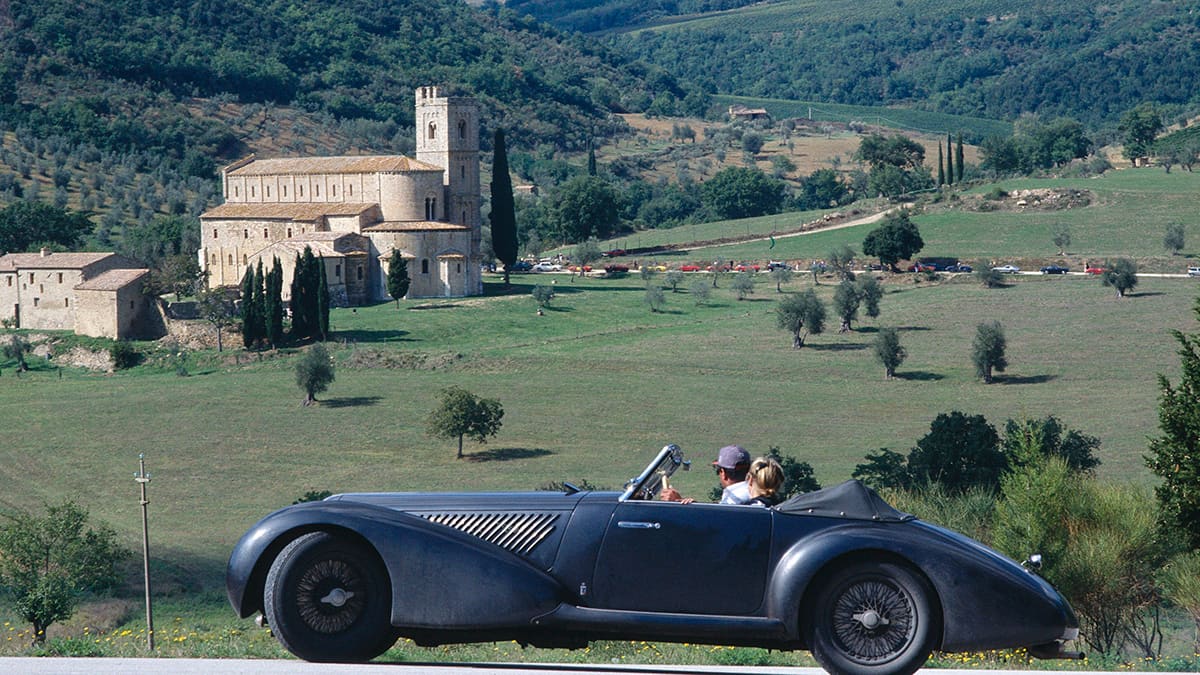
There is something about mountain passes at dawn, when the air still holds the night's chill and the first switchback reveals itself like a promise. Louis Vuitton understands this. The French house is reinstating its classic car rally this September after more than a decade away, choosing the Dolomites as the stage for a four-day journey that will thread vintage automobiles through some of Europe's most dramatic alpine terrain.
The event, known as the Dolomites Run, will unfold from September 1 to 4, beginning at Villa Pisani near Venice and concluding at the Monza racetrack. It marks the return of a tradition that began in 1993 with a challenging drive through the Malaysian jungle and continued across China, France, Italy, and Central Europe before concluding in 2012 with a route from Monaco through the Swiss Alps to Venice.
At Global Chic Voyage, we've watched the resurgence of heritage motoring events with interest. They occupy a curious space between sport and pilgrimage, drawing collectors who value the journey as much as the destination. Louis Vuitton's decision to revive its rally speaks to a broader appetite for experiences that marry craftsmanship, landscape, and a certain unhurried elegance.
The Architecture of the Route
The rally will cover approximately 373 miles over two days of driving, with the route deliberately designed to showcase the Dolomites' geological theater. Participants will navigate dramatic mountain passes and leisurely winding roads, maintaining an average speed of roughly 31 miles per hour. This is not a race in the conventional sense; it is a test of regularity, precision, and mechanical sympathy.
Drivers will face time controls, passage checks, average speed trials, and regularity trials, elements that reward consistency rather than outright pace. The format demands a particular kind of attention, one that aligns the driver's rhythm with the road itself. For collectors piloting pre-1970 automobiles, many without modern conveniences like power steering or anti-lock brakes, this becomes an exercise in reading terrain and machine in equal measure.
The route's culmination at Monza is deliberate. LVMH, Louis Vuitton's parent company, recently secured a ten-year sponsorship arrangement with Formula 1, and the timing of the Dolomites Run serves as a prelude to the Italian Grand Prix. On the final day, participating vehicles and their drivers will take part in the race weekend's opening, before the cars are displayed at Villa Reale in Monza on September 5 and 6, open to the public.
A Curated Field
Louis Vuitton is extending invitations to the owners of 25 classic cars, a deliberately intimate roster. The lineup is expected to include automobiles from Bugatti, Maserati, and Ferrari, all manufactured up to 1970. This era represents a particular zenith in automotive design, when form and function were negotiated by hand rather than algorithm, and when driving required a kind of dialogue between person and machine.
The house has waived participation fees for this inaugural return, though future runs will require a contribution from collectors. The gesture underscores the event's positioning: this is not merely a rally but a reintroduction, an invitation to re-establish a ritual that once defined Louis Vuitton's engagement with the motoring world.
Pietro Beccari, who was appointed chairman and chief executive officer of Louis Vuitton in 2023, participated in the 2006 Boheme Run from Budapest to Prague via Vienna. That experience, it seems, planted the seed for the tradition's revival. There is a personal dimension to this decision, a recognition that some experiences leave an imprint deep enough to warrant their continuation.
Objects and Gestures
The winner of the Dolomites Run will receive a trophy designed by Dutch artist Sabine Marcelis and produced by Murano glassmaker Venini. The piece will be presented in a bespoke Louis Vuitton trophy trunk, a detail that underscores the house's philosophy: that the vessel matters as much as the prize.
This attention to the ceremonial aspects of motoring culture is where Louis Vuitton distinguishes itself. The rally is not simply about cars moving through space; it is about the rituals that surround them, the trunks that carry their tools, the trophies that commemorate their journeys. In an era when so much of luxury travel has been compressed into convenience and speed, there is something quietly radical about an event that asks participants to slow down, to navigate by average rather than maximum, to value the passage itself.
Why the Dolomites
The choice of the Dolomites as the setting for this revival is worth considering. The mountain range, a UNESCO World Heritage site, offers a landscape of pale limestone peaks and sweeping valleys, a topography that has long attracted drivers seeking roads that challenge and reward in equal measure. The passes here, Passo Giau, Passo Pordoi, Tre Cime, are not merely routes but destinations in themselves, each one a study in elevation and exposure.
For vintage automobiles, these roads present a particular kind of test. The gradients demand mechanical reliability, the switchbacks require precise handling, and the altitude can affect both engine performance and driver stamina. It is a landscape that reveals a car's character, and by extension, the skill and commitment of the person behind the wheel.
The Broader Context
Louis Vuitton's return to classic car rallying arrives at a moment when the luxury sector is navigating its relationship with heritage and sustainability. Vintage automobiles occupy a complex position in this conversation. They are, by definition, objects of the past, yet their continued use and celebration can be framed as a form of preservation, an alternative to the cycle of production and disposal that defines contemporary consumption.
The house's decision to revive the rally also reflects a broader trend among luxury brands to create experiences that extend beyond product. In travel and lifestyle, we are seeing a shift toward events that offer narrative and immersion, that position the brand not as vendor but as curator of a particular worldview. Louis Vuitton has long understood this; its history of commissioning bespoke trunks for explorers, aviators, and adventurers is a testament to its role as enabler of journeys rather than merely maker of luggage.
What Lies Ahead
As the Dolomites Run unfolds this September, it will be worth watching how the event evolves. Will it remain an intimate gathering of 25 cars, or will it expand in scale and ambition? Will future routes explore other regions, other mountain ranges, other tests of driver and machine? And how will Louis Vuitton balance the exclusivity that defines such events with the public-facing elements, like the display at Villa Reale, that invite broader engagement?
For now, the revival itself is the story. A tradition paused in 2012 finds new road in 2026, carrying with it the memory of past runs through jungles and alps, and the promise of future journeys yet to be mapped. In the Dolomites this fall, 25 vintage cars will trace a route that is both homage and reinvention, a reminder that some roads are worth returning to.
Photo: Louis Vuitton
Spot something wrong? Email editors@globalchicvoyage.com. We log every correction publicly.
RELATED
SEE ALL →
30 Jul 2026 / 5 min

27 Jul 2026 / 5 min
27 Jul 2026 / 5 min
25 Jul 2026 / 5 min