
Learning to Taste Memory in the Cellars of Champagne
A honeymoon in France's most famous wine region becomes an unexpected lesson in how flavor unlocks the past
SI
20 Jul 2026 · 5 MIN READ · UPDATED 17 AUG 2026
The Question That Changes Everything
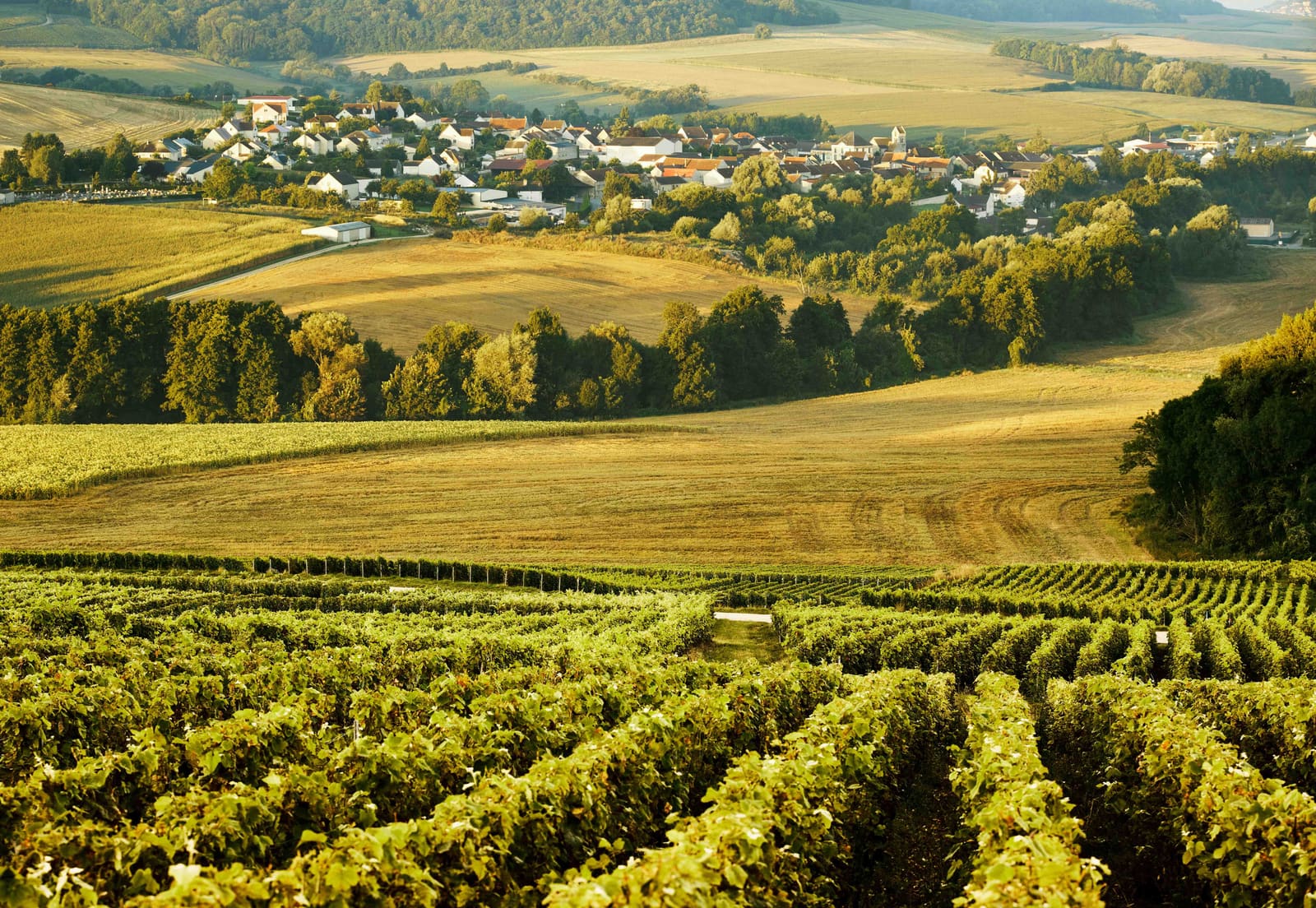
Rain fell softly on the hillside as someone handed her a glass. The slope was steep enough that children, not adults, once climbed it during harvest, or so the story went. She swirled the liquid, watched the bubbles rise, and waited for her husband to ask the question he always asked: What does it remind you of?
Not what do you taste. Not what notes do you detect. What does it remind you of. The difference, she would learn, mattered more than she imagined.
At Global Chic Voyage, we've long believed that the deepest travel experiences aren't the ones that simply catalog sights and tastes, but those that crack open something interior, something you didn't know you carried. Champagne, that manicured realm of terroir and tradition, turns out to be as good a place as any for that kind of excavation.
A Palate Shaped by Boldness, Not Subtlety
Her background was restaurants. Late shifts in New York City kitchens, glasses of wine and steak tartare in the West Village after closing. She grew up with a father who loved dining out, who taught her to chase the electric buzz of Szechuan peppercorns, the sharp tang of vinegar in adobo. Her palate formed around intensity, flavors pushed to their outer edges.
Her husband, a sommelier, tasted differently. He could detect the ghost of Froot Loops in milk at the bottom of a cocktail. He'd sip wine and conjure sun-warmed cherries, ripe peach flesh. It was poetic, yes, but also exhausting if you couldn't follow him there. Sometimes, she thought, wine just tasted like wine.
Still, she had dragged him to Flannery O'Connor's childhood home in Savannah, to Edith Wharton's estate in Massachusetts. Fair was fair. So when they planned their honeymoon to the south of France and Paris, she agreed without hesitation to carve out days for the Champagne region, less than two hours by train from the capital.
Descending Into the Caves
The tours followed a rhythm. First came history: miniature models of estates, founder biographies, vintage label designs displayed under glass. At one house, in operation since the mid-eighteenth century, menus from legendary Parisian restaurants lined the walls, including one from 1954. Then the descent. Stone steps leading down into caves where the temperature dropped and the air turned damp and mineral. Hundreds, sometimes thousands, of bottles resting in the dark.
Champagne's rolling vineyards stretch across gentle slopes in a region uniquely suited to producing the world's only sparkling wine legally permitted to bear that name. The chalk soil, the climate, the elevation work together in ways that cannot be replicated elsewhere. The tours emphasized this again and again: the particularity of place, the irreplaceability of tradition.
Barrels became a recurring character. Many of the finest wines mature in oak casks sourced from Burgundy, some more than a century old. Several houses employ a dedicated cooper, someone whose sole job is to replace worn slats and maintain the integrity of wood that has been absorbing and releasing wine for generations. She heard more about barrel construction than she ever thought possible.
The Cellar That Smelled of Dough
At a family-owned grower, harvest had finished only two weeks earlier. The cellar smelled ripe with yeast, like fruit and unbaked bread. When a stopper was lifted from a barrel, they could hear the bubbles fermenting inside, a faint, living hiss. Leaning too close was dangerous; carbon dioxide pooled at the surface. Instead, they blew gently across the opening and inhaled the displaced air.
Afterward came the tasting. Five glasses lined up. Five different expressions of the same region, the same method, subtle variations in vineyard and vintage. The host pointed out salinity in one, creaminess in another. Someone mentioned hazelnut. The writer tried to follow along, but the distinctions blurred. What she could say with certainty was that it was some of the best Champagne she'd ever tasted. What she couldn't do was articulate why.
Her husband, meanwhile, was in his element. He could parse the layers, trace the ghost of one flavor into another. But even his enthusiasm began to wear thin after the third or fourth tour. The facts piled up. The vocabulary became repetitive. By the time they returned to Paris, she had a headache from too much wine and too much effort. She told him, gently, that she couldn't talk about wine anymore.
White Flowers and Stonefruit
They spent their remaining days in the city as they'd originally imagined: vintage shops along Canal Saint-Martin, mornings at the Musée d'Orsay, pastries eaten in cushioned window seats. At dinner one evening, her husband held up a glass of Viognier and said it reminded him of white flowers. He offered it to her. She shook her head.
She thought the wine chapter of the trip was closed. But on their final day, they wandered into a Taiwanese coffee shop with industrial stone walls and cream-colored light. The barista explained the menu: the Taipei blend would be floral, the Tainan blend fermented, almost wine-like. Curious, she ordered the latter.
The first sip stopped her. A clear, unmistakable sensation of stinky tofu filled her mouth. Not the taste of coffee that vaguely resembled something else, but a direct, visceral memory. Her father, born in Taiwan, had loved that fermented dish. She had always felt slightly ashamed that she didn't share his affection for it. But here, filtered through coffee, she found herself drawn to whatever trace of it lingered on her tongue.
She handed the cup to her husband. "Do you taste that?"
He tried it, thoughtful, but shook his head. He'd eaten stinky tofu before, but couldn't locate what she had found. "It means there's something on your palate that I don't have," he said. "It reminded you of something I don't know the same way."
What the Cellars Taught Her
The revelation wasn't about coffee or wine. It was about the architecture of memory. All those hours in Champagne's caves, listening to sommeliers parse hazelnut from strawberry, she had felt like an imposter. She couldn't pull peach from cherry. She couldn't conjure the precise image her husband saw when he swirled a glass.
But she had learned something else: that tasting is an act of reaching backward. The question wasn't what do you taste but what does it remind you of. Memory isn't static. It can be sparked, layered, built over time. Her palate, shaped by boldness and intensity, by her father's love of dining out and her years in New York kitchens, held things her husband's didn't. And his held things hers couldn't access.
The point of tasting, she realized, wasn't to arrive at the correct answer. It was to locate yourself within the flavor, to trace the thread back to something personal and irreplaceable.
The Aftertaste
Months later, when someone asks what Champagne reminds her of, she doesn't mention the names of houses or the technical details of méthode champenoise. She thinks of the basement chill of the caves, the way cool air rose from stone. The delicate electricity of bubbles on her tongue. The two of them standing on a rain-slicked hillside, holding glasses, just a few months into marriage, vineyards rolling away in every direction.
And she thinks of that coffee shop in Paris, the way a single sip could unlock her father's face, his delight in a dish she never learned to love the way he did. Tasting, she understands now, is a form of time travel. Not backward to some fixed point, but into a living archive that shifts and grows with every new experience.
Champagne didn't teach her to identify stonefruit. It taught her that what you taste is inseparable from who you are, where you've been, and who taught you to pay attention in the first place. The cellars beneath those rolling hills hold more than wine. They hold the patience required to let meaning ferment, to trust that flavor will eventually find its way to language, or to something beyond it.
Photo: Bérêche et Fils
Spot something wrong? Email editors@globalchicvoyage.com. We log every correction publicly.
RELATED
SEE ALL →
13 Jul 2026 / 5 min
13 Jul 2026 / 5 min
3 Jul 2026 / 5 min
4 Feb 2026 / 5 min