
How Malaysia Is Quietly Reclaiming Its Position as Southeast Asia's Understated Gateway
Beyond the headlines of Visit Malaysia Year, a deeper story of connectivity, shifting source markets, and the subtle art of sustained momentum
ML
30 May 2026 · 5 MIN READ · UPDATED 17 AUG 2026
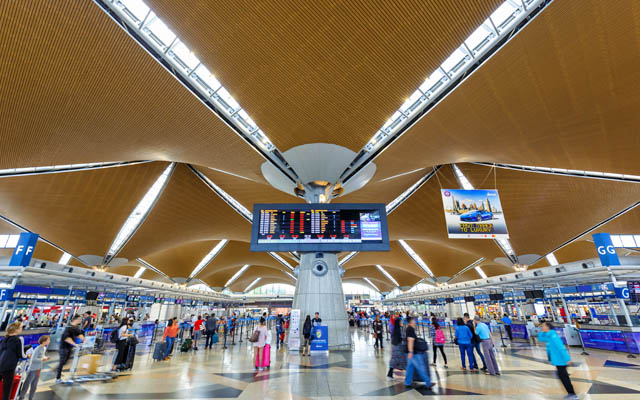
The Morning Flight Into Kuala Lumpur
There is a particular quality to arrival at Kuala Lumpur International Airport in the early hours—the hum of Mandarin and Bahasa mingling in the transit lounges, the scent of kopi and kaya toast drifting from pre-dawn cafés, the quiet efficiency of a hub that has learned to absorb waves of travelers without fanfare. It is here, in these unglamorous rhythms, that one begins to understand Malaysia's Q1 2026 performance: 10.64 million international visitors, a 5.4 per cent increase over the same period in 2025, and the second consecutive year the country has crossed the 10 million threshold in the first quarter alone.
This is not a story of sudden reinvention. It is, rather, the culmination of incremental choices—expanded air routes, targeted market engagement, and a strategic patience that has allowed Malaysia to position itself not as the loudest voice in Southeast Asian tourism, but as the most accessible.
The Infrastructure of Momentum
At Global Chic Voyage, we've watched Malaysia's tourism apparatus evolve over the past decade—not through grand gestures, but through the accretion of small, calculated moves. The first quarter of 2026 alone saw the addition of 20 new scheduled air routes and six charter services, translating to 95 weekly international flights. These are not vanity routes; they are lifelines connecting secondary European cities, underserved Australian markets, and the burgeoning middle-class hubs of East Asia to Kuala Lumpur, Penang, and Langkawi.
The significance lies in the multiplier effect. Improved connectivity does not merely increase arrivals; it shifts the composition of the visitor base. February 2026 recorded a historic high of 3.47 million international arrivals, driven largely by Chinese New Year travel. China, which contributed 1.41 million visitors in Q1—a 25.2 per cent year-on-year increase—has become a key growth engine, overtaking traditional European markets in volume if not yet in spending.
But the real revelation is Europe. For the first time, European arrivals in the first quarter exceeded 500,000—a threshold that reflects not just pent-up demand, but the success of Malaysia's engagement with carriers and distribution networks. The country's tourism ministry met with Lufthansa Group, Expedia, Airbnb, and Marriott International at ITB Berlin earlier this year, and the results are beginning to register in booking patterns.
The Quiet Diversification of Source Markets
Singapore remains Malaysia's largest source market, with over 5.14 million arrivals in Q1—a figure that speaks to geographic proximity and the enduring appeal of weekend escapes to Johor Bahru, Malacca, and the Cameron Highlands. But the more telling shifts are occurring further afield. Australia recorded an 11.4 per cent increase, while Thailand, Brunei, and the United Kingdom all posted gains.
What we are witnessing is a recalibration of Malaysia's tourism identity. For decades, the country was positioned—sometimes awkwardly—as a cultural crossroads, a place of mosques and markets and multicultural harmony. The messaging was earnest but diffuse. Now, the focus has shifted to something more pragmatic: Malaysia as a functional, affordable, and well-connected base for exploring Southeast Asia. It is a less romantic pitch, perhaps, but one that resonates with the evolving priorities of contemporary travelers—those who value efficiency, value, and the ability to layer experiences across multiple destinations within a single trip.
The Strategic Extension of Visit Malaysia Year
The Malaysian government has extended its tourism campaign through December 31, 2027—a decision that underscores the shift from event-driven marketing to sustained presence-building. Visit Malaysia Year, originally conceived as a 12-month push, has become a multi-year platform for engagement with high-growth markets. The emphasis is no longer on arrival numbers alone, but on length of stay and visitor spending—metrics that better reflect the sector's contribution to the national economy.
This is where Malaysia's strategy diverges from the more spectacle-driven campaigns of neighboring countries. There are no mega-events, no celebrity endorsements, no attempts to engineer viral moments. Instead, the approach is cumulative: strengthen partnerships with global distribution networks, expand connectivity, and allow the infrastructure to do the work of attracting longer, deeper visits.
It is a philosophy rooted in the recognition that tourism, at scale, is a logistics challenge as much as a branding one. The traveler who spends seven days in Malaysia rather than three is not responding to a hashtag; she is responding to the availability of affordable domestic flights, the density of accommodation options, and the ease of moving between regions.
Why This Matters for the Region
Malaysia's Q1 performance is significant not only for what it says about the country, but for what it suggests about the broader reconfiguration of Southeast Asian travel. The region is no longer a monolithic destination; it is a network of complementary hubs, each serving different traveler profiles and trip purposes. Thailand excels at beach resorts and wellness retreats. Vietnam draws the adventure and culture seekers. Singapore functions as the premium stopover. Malaysia, increasingly, is the connector—the place that makes multi-country itineraries feasible and affordable.
This role is reinforced by the country's positioning within ASEAN's tourism frameworks. Malaysia's delegation to the ASEAN Tourism Forum in Cebu earlier this year focused on regional collaboration and connectivity, recognizing that the growth of one market often benefits its neighbors. The traveler who flies into Kuala Lumpur and takes a budget carrier to Phuket or Bali is not lost revenue; she is part of a regional ecosystem in which Malaysia serves as the entry point.
The challenge, moving forward, will be to sustain this momentum in the face of external pressures. Rising airfares and geopolitical disruptions—particularly those linked to the Middle East conflict—have already affected certain source markets. The question is whether Malaysia's infrastructure investments and partnership-driven approach can absorb these shocks better than more campaign-dependent models.
The Unglamorous Art of Sustained Presence
There is a tendency, in travel media, to valorize transformation—the sudden emergence of a new destination, the radical reimagining of an old one. But Malaysia's story in 2026 is not about transformation. It is about persistence, about the slow accumulation of advantages that come from showing up, year after year, with a clear understanding of one's role in the regional ecosystem.
The 10.64 million visitors who arrived in Q1 did not come because of a viral campaign or a celebrity ambassador. They came because the flights were available, the prices were competitive, and the infrastructure was reliable. They came because Malaysia has positioned itself not as the most exciting destination in Southeast Asia, but as the most dependable.
In an era of overtourism and destination fatigue, dependability is no small asset. It is the foundation upon which longer stays, deeper spending, and sustained growth are built. And it is, perhaps, the most underrated narrative in contemporary tourism—the quiet, unglamorous art of being there when travelers need you, without demanding that they make a spectacle of the visit.
As we move deeper into 2026, the question is not whether Malaysia can maintain this trajectory, but whether other destinations will learn from its example. The future of regional tourism may belong not to the loudest voices, but to the most connected ones.
Spot something wrong? Email editors@globalchicvoyage.com. We log every correction publicly.
RELATED
SEE ALL →
8 Aug 2026 / 5 min

8 Aug 2026 / 5 min

7 Aug 2026 / 5 min

31 Jul 2026 / 5 min