
Following the Shogun's Road: Japan Revives the Five Routes That Once Stitched an Empire Together
A new initiative beckons travellers beyond Tokyo's neon glow to walk the same mountain passes and post-town streets that samurai, pilgrims, and merchants once traversed four centuries ago.
YN
13 Jun 2026 · 5 MIN READ · UPDATED 17 AUG 2026
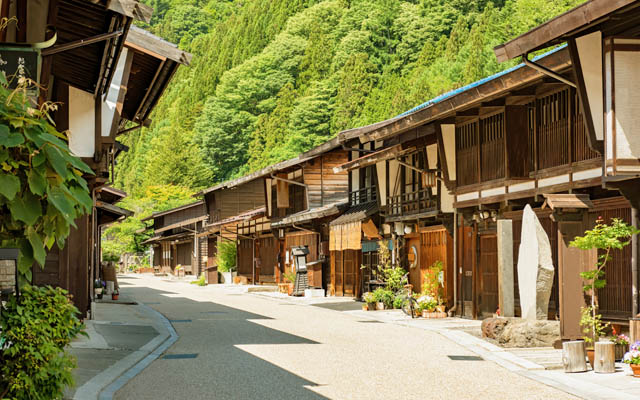
The Road Begins Where the City Ends
There is a stone bridge in Nihonbashi, in the heart of what is now Tokyo's financial district, where all distances in Japan were once measured. Stand there long enough and you can almost hear the wooden sandals of Edo-period travellers — merchants hauling silk, pilgrims bound for mountain temples, samurai on official business — setting out along five great roads that radiated from this single point like the spokes of a wheel. The roads are still there, beneath the asphalt and the vending machines and the high-speed rail. And now, Japan is asking visitors to walk them again.
The Edo Shogun Roads initiative, launched by the Kanto District Transport Bureau and the Greater Tokyo Convention & Visitors Bureau, is not a heritage project in the conventional sense. It is an invitation to slow down, to trade the bullet train for a mountain trail, to discover the Japan that exists in the intervals between cities. At Global Chic Voyage, we've watched the country's tourism apparatus recalibrate in recent years — away from the golden-route checklist of Tokyo-Kyoto-Osaka and toward the quieter prefectures that have always held the country's soul. This project is the latest, and perhaps most ambitious, expression of that shift.
Five Roads, Ten Prefectures, Four Hundred Years
The Gokaido — the five main routes of the Edo period — were not merely roads. They were the circulatory system of a feudal state, connecting the shogun's capital to the outer provinces and ensuring the flow of goods, information, and political control. Each route had its own character: the Tokaido hugged the Pacific coast, the Nakasendo threaded through the mountains, the Koshu Kaido headed west toward present-day Yamanashi, while the Nikko Kaido and Oshu Kaido pointed north.
Along these routes, the shogunate established shukuba — post towns where travellers could rest, eat, and resupply. Some of these towns, like Narai-juku and Tsumago-juku in Nagano Prefecture, have been preserved almost intact, their wooden facades and latticed windows still lining narrow streets that climb into the Japan Alps. Others have vanished entirely, swallowed by sprawl or bypassed by modern highways. The Edo Shogun Roads project highlights both the survivors and the traces, offering visitors a layered experience of continuity and change.
What makes the initiative compelling is its geographic ambition. It encompasses 10 prefectures surrounding Tokyo — Kanagawa, Yamanashi, Nagano, Tochigi, Fukushima, and others — each with its own cultural and culinary identity. The project encourages not just day trips but extended stays, a recognition that understanding a place requires more than a selfie at a checkpoint. It is, in effect, a slow-travel manifesto dressed up as heritage tourism.
Walking, Cycling, and the Architecture of Encounter
The suggested itineraries are deliberately varied. Visitors can hike sections of the old Nakasendo through the Kiso Valley, where the road narrows to a footpath and the forest closes in. They can cycle along flatter stretches of the Tokaido, stopping at roadside shrines and family-run soba shops. They can visit the Hakone Sekisho, the reconstructed checkpoint in Kanagawa Prefecture where Edo authorities once inspected travel permits and searched for contraband.
What distinguishes these experiences from conventional sightseeing is the emphasis on ritual and rhythm. At Minobusan Kuonji Temple in Yamanashi Prefecture, visitors are invited to attend early morning prayers, arriving in the pre-dawn darkness to hear the monks chant sutras as incense drifts through the hall. In Fukushima Prefecture, they can participate in kendo training sessions, learning the precise footwork and breath control that underpin Japanese swordsmanship. In Tochigi Prefecture, the trails of Ozu National Park offer a different kind of discipline — the steady, meditative pace of a long walk through cedar and beech forest.
These are not passive encounters. They require a willingness to wake early, to walk farther than is strictly comfortable, to sit in silence or move in unison with strangers. In a tourism landscape increasingly dominated by curated Instagram moments, the Edo Shogun Roads project asks something more demanding: presence.
The Garden as Anchor
The initiative also aligns with Yokohama's hosting of the International Horticultural Expo 2027, weaving garden visits and seasonal flower viewing into the broader narrative. This is more than opportunistic marketing. Japanese gardens — whether the moss-covered temple grounds of Yamanashi or the alpine wildflower meadows of Nagano — are not decorative spaces. They are philosophical statements, expressions of a worldview in which nature is both cultivated and revered.
By linking the Edo Shogun Roads to the horticultural expo, the project suggests a continuity between the aesthetics of the garden and the aesthetics of the road. Both are about careful composition, about guiding the eye and the foot through a sequence of carefully chosen moments. Both reward slow observation. And both, in their different ways, are about the relationship between human intention and natural form.
Why It Matters: Decentralization as Strategy
Japan's tourism industry has long grappled with the problem of overtourism in its most famous destinations. Kyoto's bamboo groves and Shibuya's crossings have become victims of their own photogenic success, overcrowded and stripped of the very atmosphere that made them appealing. The Edo Shogun Roads initiative represents a strategic response: not to cap visitor numbers, but to redistribute them.
By promoting the prefectures surrounding Tokyo, the project aims to channel international visitors into regions that have the infrastructure to host them but lack the brand recognition to draw them spontaneously. This is not altruism; it is economic development. The 10 prefectures covered by the initiative have aging populations, declining local industries, and underutilized hospitality assets. Attracting overnight visitors from Tokyo — whether Japanese or foreign — can stabilize rural economies and justify investment in heritage preservation.
At Global Chic Voyage, we've seen similar strategies unfold across Asia: Thailand promoting Isan and the northern provinces, Vietnam developing the Central Highlands, South Korea reviving the Jeolla trail network. The logic is consistent. Heritage routes offer a framework for dispersal, a narrative thread that connects lesser-known destinations and gives visitors a reason to keep moving. They also tend to attract a different kind of traveller — one more interested in depth than checklist completion, more willing to spend time and money in a single region rather than racing between highlights.
The Edo Shogun Roads project benefits from a head start: the infrastructure already exists. The roads are paved, the post towns are accessible by bus or train, and many of the historic sites have been maintained for decades by local governments. What has been missing is a cohesive marketing narrative and a digital platform to tie the pieces together. The dedicated website and curated itineraries provide that connective tissue.
The Long View
There is something quietly radical about a tourism initiative that encourages visitors to walk. Not to fly, not to drive, not even to take the train — but to move at the speed the landscape was designed for. The Edo Shogun Roads were built for foot traffic and pack horses, and their scale reflects that. The distances between post towns are walkable in a day. The sightlines are calculated for someone moving at three miles per hour. To experience these routes properly is to slow down to their original tempo.
Whether international visitors will embrace this kind of travel remains to be seen. The project's success will depend on its ability to reach beyond the Japan enthusiast niche and appeal to travellers seeking authenticity, physical challenge, and cultural immersion. It will also depend on the willingness of local businesses — guesthouses, restaurants, craft workshops — to adapt to the expectations and language needs of foreign guests.
But the potential is there. The roads are real, the history is deep, and the landscapes are extraordinary. And in a world where tourism increasingly feels like a series of frictionless transactions, the Edo Shogun Roads offer something rarer: the possibility of effort, of discovery, of walking into a place rather than simply arriving at it. The shogun's road begins where the city ends. The question is whether we are willing to follow it.
Spot something wrong? Email editors@globalchicvoyage.com. We log every correction publicly.
RELATED
SEE ALL →
4 May 2026 / 5 min

23 Mar 2026 / 5 min
25 Feb 2026 / 5 min
27 Jul 2026 / 5 min