
Artist-in-Residence: When Hotels Become Creative Studios
c
SI
22 May 2026 · 5 MIN READ · UPDATED 17 AUG 2026
Across the world, a quiet transformation is reshaping luxury hospitality. Hotels are no longer simply places to stay, they are becoming living studios, cultural laboratories, and creative sanctuaries where artists, designers, writers, and musicians are invited not only to visit, but to create.
The rise of the Artist-in-Residence (AIR) program reflects a larger shift in contemporary travel culture: today’s global travelers increasingly seek emotional connection, authenticity, and creative immersion over conventional luxury. In response, visionary hotels are redefining themselves as active participants in cultural production rather than passive backdrops for consumption. Such properties embrace the idea that creativity itself can become hospitality’s most meaningful amenity.
The Hotel as Cultural Ecosystem
Traditionally associated with museums, universities, and foundations, artist residencies were designed to give creators the time, space, and resources needed to develop new work. When integrated into hospitality, however, the concept evolves into something more public and experiential.
Guests might encounter a ceramicist firing pieces on-site, attend an intimate poetry reading at sunset, observe a photographer documenting local rituals, or participate in workshops led by resident artisans. The hotel becomes a constantly evolving narrative - one shaped by process, experimentation, and human exchange.
This approach aligns with a broader cultural movement in luxury design: the shift from static perfection toward layered, lived-in authenticity. Travelers increasingly value spaces that feel intellectually and emotionally alive.
Real Examples: Hotels Leading the Movement
Le Sirenuse - Contemporary Art Inside a Historic Palazzo
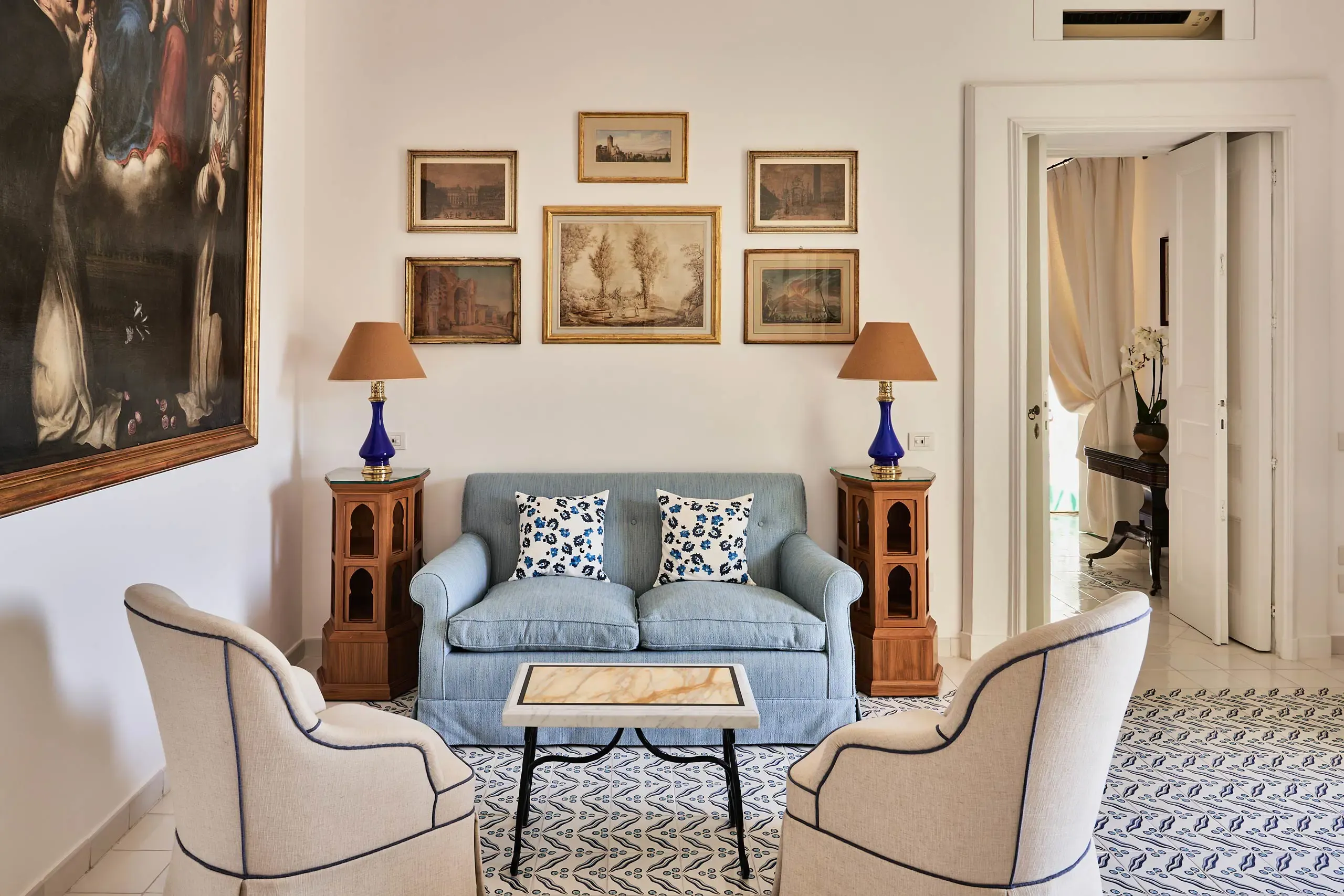
While best known as an iconic Amalfi Coast retreat, Le Sirenuse has also become a respected cultural destination through its contemporary art collaborations and “Artists at Le Sirenuse” program. The initiative invites internationally recognized artists to create site-specific works that interact with the hotel’s historic architecture and Mediterranean surroundings. Rather than existing as a separate gallery, installations are woven naturally into courtyards, corridors, and shared spaces, becoming part of the guest experience itself.
What makes the program distinctive is the contrast between contemporary art and the hotel’s layered Italian interiors - antique furnishings, handcrafted details, and sea-weathered textures. The result is a cultural atmosphere that feels both timeless and evolving, where heritage and modern creativity coexist naturally.


Photo Credit: Le Sirenuse
Fogo Island Inn - Preservation Through Creativity
Perched dramatically along the North Atlantic coastline, Fogo Island Inn has become one of the world’s most respected examples of culture-led hospitality. Its internationally acclaimed artist residency program invites creators from around the world to engage with the island’s traditions, landscapes, and communities. The architecture, designed by Todd Saunders, combines contemporary Scandinavian minimalism with vernacular Newfoundland building traditions.
What makes the residency exceptional is its social philosophy. Artists are encouraged to interact with local craftspeople, fishermen, storytellers, and residents, ensuring cultural exchange flows both ways. The result is not cultural extraction, but cultural continuity where hospitality becomes a platform for sustaining identity in remote communities.

Photo Credit: Fogo Island Inn
Ace Hotel Kyoto - Contemporary Creativity Meets Heritage
In Kyoto, a city renowned for craftsmanship and tradition, Ace Hotel Kyoto represents a modern interpretation of the artist-in-residence concept. Designed by Kengo Kuma alongside Commune Design, the hotel collaborates extensively with local artisans, ceramicists, textile makers, and musicians. Creative programming frequently includes exhibitions, live performances, and collaborative installations.
Rather than treating Japanese culture as decorative aesthetics, the property integrates craftsmanship into the operational and spatial experience itself - from handmade furnishings to locally produced objects and rotating artistic interventions. The hotel becomes less of a commercial product and more of a contemporary cultural house.


Photo Credit: Ace Hotel
Why the Model Resonates Today
The growing popularity of artist residencies in hospitality reflects several larger cultural and economic shifts.
1. Travelers Want Participation, Not Observation
Modern luxury travelers increasingly seek meaningful participation rather than passive sightseeing. They want to understand local culture through interaction, making, and storytelling. Residency programs create opportunities for guests to witness creativity in real time - an experience far more intimate than viewing finished artworks behind glass.
2. Hotels Are Competing Through Identity
In an era where aesthetic minimalism has become globally standardized, hotels are searching for ways to cultivate distinct emotional identities. Artistic collaborations provide originality that cannot be replicated through branding alone. Every residency leaves traces - objects, stories, relationships, or spatial transformations - making the property feel dynamic and singular.
3. Creativity Enhances Spatial Design
Artist-led interventions often reshape the visual language of hospitality interiors. Spaces become layered with narrative depth rather than merely styled for photography. This shift aligns with contemporary design movements emphasizing tactility, locality, and imperfection over uniform luxury aesthetics. In many cases, artists influence not only decoration, but programming, architecture, landscaping, scent design, sound environments, and culinary experiences.
The Rise of the Creative Traveler
The artist-in-residence model also reflects the emergence of a new type of traveler: culturally curious, design-conscious, and experience-driven. These guests are often drawn to destinations through creative ecosystems rather than traditional tourism infrastructure. Neighborhood galleries, independent bookstores, experimental restaurants, and craft workshops increasingly shape travel decisions. Hotels that support artists position themselves at the center of these ecosystems instead of standing outside them.
This strategy is especially relevant for emerging cultural destinations across Asia, the Middle East, and Latin America, where hospitality developments increasingly aim to establish long-term creative identities rather than simply attract short-term tourism.
Beyond Luxury: Creativity as Human Connection
Perhaps the most powerful aspect of the artist-in-residence movement is that it humanizes hospitality. Luxury hotels have long perfected comfort, efficiency, and visual beauty. But artist residencies introduce unpredictability, dialogue, vulnerability, and process - qualities that create emotional resonance.
A guest may forget thread counts or marble finishes. But they are unlikely to forget a midnight jazz performance in a courtyard, a conversation with a sculptor shaping local stone, or the feeling of watching creativity unfold inside the place where they are staying. In that sense, the future of hospitality may not be defined solely by service standards or architectural spectacle, but by a hotel’s ability to foster cultural intimacy. The most memorable hotels of the next decade may ultimately be those that function not just as destinations, but as living creative communities.
Spot something wrong? Email editors@globalchicvoyage.com. We log every correction publicly.
RELATED
SEE ALL →
17 Apr 2026 / 5 min
26 Mar 2026 / 5 min
4 Mar 2026 / 5 min
20 May 2026 / 5 min