
A Hidden Prohibition Bar Waits Inside JFK's Centurion Lounge
Beyond the marble counters and buffet stations, American Express has tucked a 1920s-inspired speakeasy into its New York flagship - proof that airport luxury has finally learned to whisper.
SI
3 Jul 2026 · 5 MIN READ · UPDATED 17 AUG 2026
The Art of the Hidden Door
There is a particular thrill that comes with finding a door you were not meant to notice. In the middle of John F. Kennedy International Airport, where transparency and efficiency typically govern every square foot of design, American Express has done something quietly subversive: it has hidden a bar.
Not just any bar, but a speakeasy modeled on the clandestine drinking dens of 1920s America, complete with the requisite unmarked entrance and the kind of atmospheric lighting that makes you forget, momentarily, that you are standing in Terminal 4. The space is called 1850, a nod to the year American Express was founded, and it occupies a discreet corner within the Centurion Lounge at JFK, the brand's largest airport sanctuary in New York.
At Global Chic Voyage, we have watched airport lounges evolve from carpeted waiting rooms with complimentary pretzels into something more ambitious: destinations in their own right, places designed not merely to kill time but to shape it. The speakeasy format, however, represents a different ambition altogether. It is not about scale or spectacle. It is about intimacy, about creating a sense of discovery in a place where everything is typically signposted and streamlined.
A Spatial Puzzle in the Age of Transparency
The decision to conceal rather than showcase a premium amenity runs counter to contemporary airport design, which tends toward the declarative. Lounges announce themselves with floor-to-ceiling glass walls and branded entrances. They are theaters of access, stages on which the traveling elite perform their status. A hidden bar, by contrast, rewards the curious and the observant. It reintroduces an element of urban exploration into the sterile choreography of air travel.
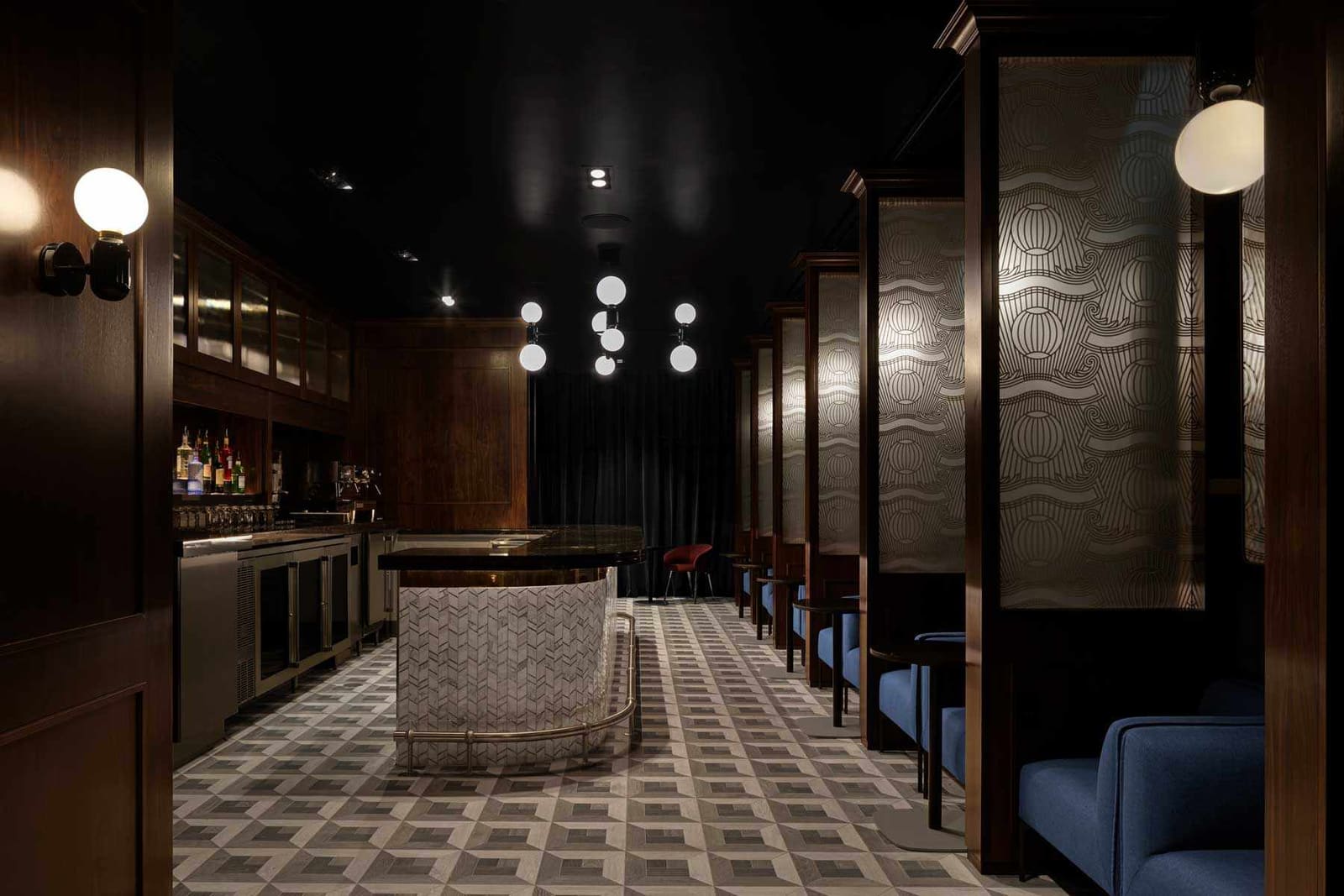
The 1850 speakeasy does not advertise its presence with signage or illuminated logos. Instead, visitors must know to look for it, must understand that the lounge they have entered contains more than what is immediately visible. This is a spatial puzzle, a throwback to the Prohibition era when discretion was not a design choice but a legal necessity. In 2026, when nearly every surface in an airport is optimized for legibility and flow, the act of hiding something feels almost radical.
Craftsmanship and Cocktail Culture
Inside, the speakeasy leans into the aesthetics of its historical inspiration without tipping into pastiche. The design vocabulary is one of dark wood, leather banquettes, and subdued lighting, materials that absorb sound and create pockets of privacy. The cocktail menu, curated to reflect the craft cocktail renaissance that has swept through major cities over the past two decades, emphasizes classic recipes and premium spirits.
This is not the realm of the self-service wine station or the grab-and-go beer fridge. The bar is staffed by bartenders who mix drinks to order, who understand the difference between stirring and shaking, who can discuss the provenance of a particular rye or the botanical profile of a gin. It is a level of service that mirrors what one might find in a high-end hotel bar in Manhattan, transposed into the liminal space of the airport.
For travelers accustomed to the transactional nature of airport hospitality, where speed and convenience trump nuance, the speakeasy offers a different proposition: slow down, sit down, let the ritual of a well-made drink recalibrate your sense of time before boarding. It is a counterintuitive message in an environment built on urgency, but one that speaks to a growing appetite for experiences that feel personal and curated, even in transit.
The Lounge as Narrative Space
The existence of 1850 also signals a shift in how premium travel brands think about storytelling. A lounge is no longer just a collection of amenities; it is a narrative space, a place where design, service, and programming combine to create a sense of place. The speakeasy format allows American Express to layer history and mystique into an environment that is, by definition, placeless.
Airports exist outside the usual coordinates of urban life. They are non-places, to borrow the anthropologist Marc Augé's term: spaces of transit that lack the markers of identity and history that define cities and neighborhoods. By embedding a Prohibition-era bar within its lounge, American Express attempts to anchor the experience in a specific cultural moment, to give travelers a sense of rootedness even as they prepare to leave the ground.
This is not without precedent. The best hotel bars have always understood that atmosphere is as important as the drinks themselves, that the right combination of design, music, and lighting can transport a guest somewhere else entirely. What is novel here is the application of that logic to the airport, a context where efficiency has traditionally trumped enchantment.
Implications for Airport Hospitality
The hidden speakeasy at JFK is part of a broader trend within premium airport hospitality: the move away from one-size-fits-all lounges toward spaces that offer differentiated experiences. We are seeing this in the proliferation of restaurant collaborations, wellness facilities, and now, in the creation of sub-spaces within lounges that cater to different moods and needs.
For travelers, this means that the lounge is no longer a single, undifferentiated room but a collection of micro-environments, each with its own character and purpose. You might choose the communal dining area if you are hungry, the quiet room if you need to work, or the speakeasy if you are in the mood for something more atmospheric. The lounge becomes a kind of miniature city, a place where you can move between different zones depending on your state of mind.
For the industry, it raises questions about the future of airport design. If lounges can successfully incorporate hidden bars, what else might they conceal? What other urban typologies - libraries, gardens, galleries - might be smuggled into the transit experience? And what does it mean for the broader airport environment when the most compelling spaces are the ones tucked behind access gates and membership requirements?
The Pleasure of the Unexpected
Ultimately, the appeal of 1850 lies not in its cocktails or its design, though both are executed with care, but in the simple fact of its existence. It is a small surprise in a place where surprises are rare, a reminder that even the most utilitarian environments can accommodate moments of delight.
In an era when so much of travel has been standardized and algorithmically optimized, when we book flights and hotels through the same platforms and scroll through the same curated recommendations, the hidden speakeasy offers something increasingly precious: the pleasure of the unexpected. You did not know it was there, and then you did, and that shift from ignorance to discovery is its own kind of luxury.
As airports continue to compete for the loyalty of high-spending travelers, we expect to see more experiments like this, more attempts to inject personality and narrative into spaces that have long been defined by their efficiency. The hidden bar at JFK is not just a place to drink before a flight. It is an argument, rendered in wood and whiskey, that airports can be more than they have been, that even in transit, we deserve a little mystery.
Photo: American Express
Spot something wrong? Email editors@globalchicvoyage.com. We log every correction publicly.
RELATED
SEE ALL →
29 Jul 2026 / 5 min
22 Jul 2026 / 5 min
20 Jul 2026 / 5 min
13 Jul 2026 / 5 min