When Television Becomes Geography: The White Lotus and the Changing Map of Desire
As the HBO satire heads to Cannes, luxury travel advisors are questioning whether set-jetting is reshaping not just where we go, but what we expect to find when we arrive.
The Geography of Illusion
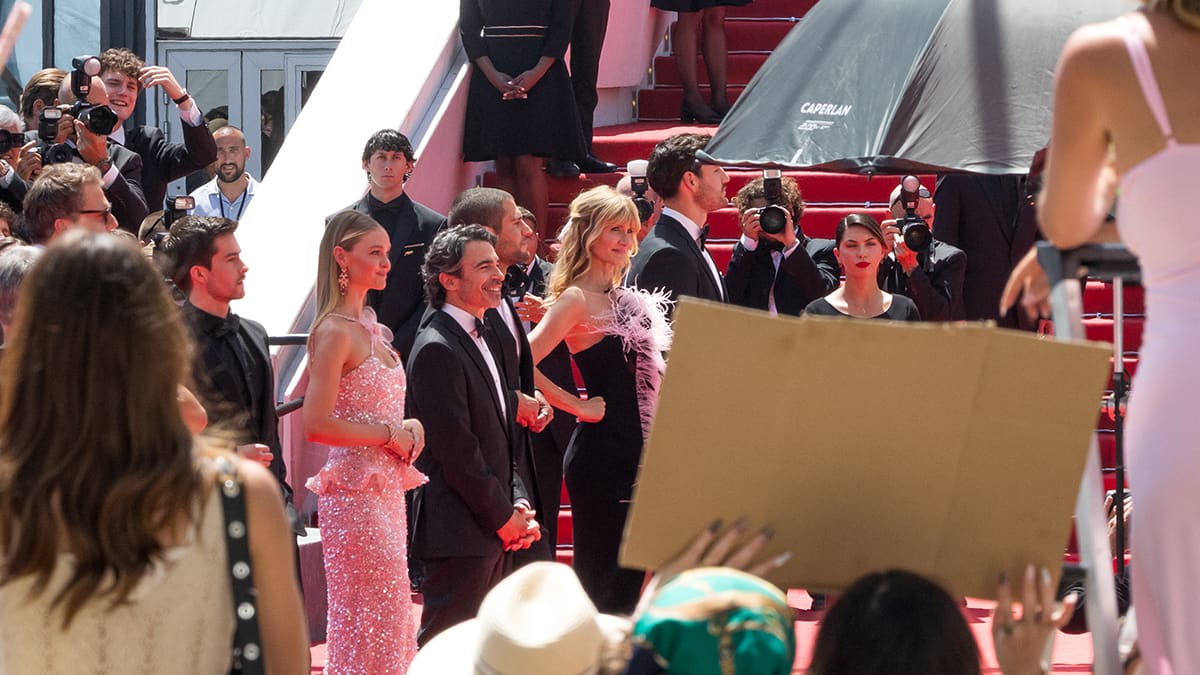
Stand on the Croisette in late October and the red carpets are rolled up, the paparazzi gone. Cannes in autumn is a city of shuttered convention halls and half-empty brasseries, a place built for the business of glamour rather than glamour itself. Yet millions of viewers will soon see it through a very different lens, one filtered through the lens of HBO's The White Lotus, which has turned its gaze toward the French Riviera for its fourth season.
The show has always trafficked in a particular kind of geographic alchemy, transforming real properties into backdrops for its caustic dissection of wealth and privilege. But this season marks a departure. Instead of the single-resort pressure cooker that defined Hawaii, Sicily, and Thailand, the narrative reportedly follows rival film crews arriving at the Cannes Film Festival, their competition playing out across two properties: the Hôtel Martinez on the Croisette and Airelles Château de la Messardière, perched high above Saint-Tropez.
On screen, according to HBO, the two hotels will stand in as the White Lotus Cannes and White Lotus du Cap, rival outposts locked in proximity. In reality, they sit nearly three hours apart by car. Television, it seems, has its own cartography.
The Paradox of Aspiration
Jaclyn Sienna India has watched this pattern unfold with increasing unease. The founder and CEO of Sienna Charles, a luxury travel firm, has built her career on curating experiences that transcend the Instagram feed, and she sees The White Lotus as symptomatic of what she calls the "celebritization of travel." The show, in her assessment, encourages tourists to chase hyped camera locations over authentic cultural exploration, turning storied hotels into social media backdrops and diluting the exclusivity that once defined them.
"Wealth has become a zoo," she says.
Jonathan Alder, founder and CEO of Jonathan's Travels, identifies a stranger tension. The series, he notes, inspires travel through dilemma, showcasing deeply flawed characters behaving badly, yet somehow making viewers desperate to visit the places where those failings unfold. It is aspiration laced with satire, a peculiar alchemy that has proven remarkably effective at driving bookings.
From Resort to Stage
The shift in setting is not merely geographic. According to Deadline, executive producer David Bernad described the season as an exploration of "the life of an artist," examining how fame and success distort personal identity. Where previous seasons revolved around guests attempting to unplug from reality, this installment reportedly centers on figures arriving for work, their presence tied to one of the entertainment industry's highest-stakes annual gatherings.
Production crews were spotted filming outside the Palais des Festivals, the ceremonial heart of the festival itself. The show is spilling out of the hermetic resort bubble and into a city defined by premieres, deal-making, and status anxiety. It is a fundamental rewiring of the show's DNA, one that trades passive leisure for public performance.
Alder points out the mismatch between expectation and reality. Cannes is a conference city, not a vacation city. Outside the frenzy of May, when the film festival consumes the Croisette, much of the hospitality infrastructure caters to trade shows and corporate events. Visitors arriving in search of non-stop red carpets may instead find a destination built primarily for business travel, its glamour concentrated into two feverish weeks each spring.
The Airelles Advantage
Stacy Fischer-Rosenthal, president of Fischer Travel and a member of Four Seasons' advisory board, believes Airelles Château de la Messardière could emerge as one of the season's biggest beneficiaries. With just seven properties, the French luxury brand has far more to gain from global exposure than a sprawling international chain. Saint-Tropez itself, she argues, carries a different energy than Cannes: more sensual, more vibrant, a place where the grounds of a property like Les Airelles can sprawl in ways the dense Croisette cannot accommodate.
Yet India takes a dimmer view, suggesting she would not recommend either hotel to clients once the season airs. In her reading, luxury brands risk sacrificing long-term cachet for short-term exposure, inviting a flood of visitors more interested in recreating a television moment than engaging with the destination on its own terms. She points instead to cultural hubs like Nice and properties such as Hôtel du Couvent as alternatives, though she cautions that smaller boutique collections may lack the infrastructure to absorb a major influx in the way global hotel groups can.
The timing is notable for Saint-Tropez. Oetker Collection, the group behind Hôtel du Cap-Eden-Roc, is preparing to open its first property in town, adding another layer to the competitive landscape just as the spotlight swings toward the coast.
The Price of Entry
Fischer-Rosenthal takes a pragmatic view of whether set-jetting will permanently alter these enclaves. Ultra-luxury pricing, she notes, acts as a natural barrier to entry. With peak summer rates regularly exceeding 3,000 euros per night, astronomical costs help preserve exclusivity regardless of television exposure. The properties may gain visibility, but they will not necessarily gain accessibility.
Michel Cottray, general manager of Hôtel Martinez, acknowledged a "sense of quiet excitement" about hosting the production, emphasizing that the Croisette landmark has long been woven into festival history. The hotel, in his framing, is not merely a location but a participant in the cultural fabric of Cannes itself.
The Cinematic Version
What The White Lotus manufactures is not simply exposure but a parallel geography, a version of the French Riviera that exists primarily on screen. It is a Cannes where rival hotels sit side by side, a Saint-Tropez that feels minutes away, a Côte d'Azur scrubbed of conference halls and off-season quiet. Millions of viewers will spend considerable sums attempting to locate that version, only to discover that television's map and the world's do not always align.
The show's legacy, then, may not be measured in bookings alone but in the way it reshapes expectation itself. Travelers increasingly arrive at destinations carrying a pre-written narrative, one authored not by guidebooks or word of mouth but by prestige television. The question is not whether they will come, but whether what they find will match the story they have already been told.
In that gap between screen and shore, between the cinematic Riviera and the one that exists in autumn light, lies the real cost of set-jetting: not overcrowding or lost exclusivity, but the slow erosion of the encounter itself, the discovery replaced by the reference, the experience by the recreation. The White Lotus may be heading to Cannes, but it is manufacturing a destination all its own.