The Hidden Cove Where Solitude Meets Turquoise
On St. John's quieter shores, a secluded stretch of sand proves that intimacy and beauty need not arrive with crowds.
A Shoreline That Rewards the Journey
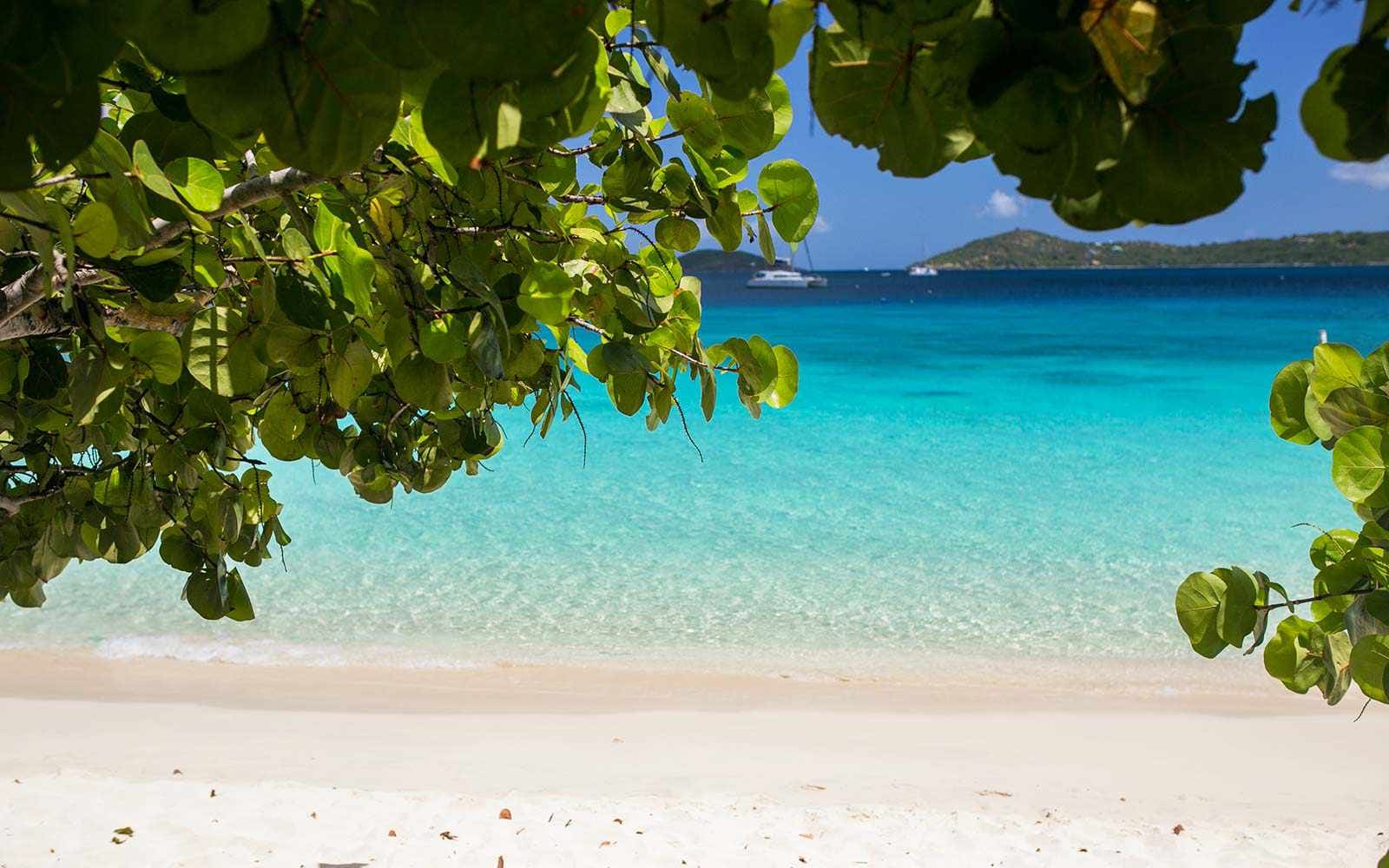
There are beaches that announce themselves with boardwalks and parking lots, and then there are the ones that ask a little more. Honeymoon Beach, tucked along the northern edge of St. John in the U.S. Virgin Islands, belongs firmly to the second camp. The approach is deliberate: a water-taxi ride from Cruz Bay or a half-mile footpath threading through dry forest and rock. By the time the sand appears, pale and fine against water that shifts from jade to cobalt, the effort feels less like inconvenience and more like initiation.
The cove is small, framed by low hills thick with seagrape and turpentine trees. The Atlantic swell is filtered by offshore reefs, leaving the shallows calm enough for long, uninterrupted swims. There are no vendors, no music, no jet skis cutting arcs across the bay. What remains is the sound of water lapping at volcanic rock and the occasional call of a brown pelican overhead.
The Geography of Seclusion
St. John itself is an exercise in restraint. Two-thirds of the island falls within Virgin Islands National Park, a designation that has kept development sparse and roads narrow. Honeymoon Beach sits on the western flank of this protected zone, accessible only to those willing to forgo the convenience of a car door opening onto sand.
The beach occupies a crescent roughly two hundred yards long, bordered on one side by a rocky promontory and on the other by a shallow channel that leads to Caneel Bay. The sand is coarse coral, not the powdery quartz of more famous Caribbean shores, and the water clarity is exceptional. Snorkelers report visibility often exceeding fifty feet, with elkhorn coral formations visible just beyond the swimming zone.
The isolation is structural, not accidental. The land behind the beach once belonged to a resort that closed years ago, and while trails remain, no commercial infrastructure has replaced it. This absence has become the beach's defining feature, a kind of negative space that amplifies everything else: the gradient of blue, the weight of afternoon heat, the particular quality of light that arrives unfiltered by anything human-made.
What the Water Holds
Beneath the surface, the reef system extends in terraces, dropping from shin-deep flats to channels fifteen feet down. Parrotfish work the coral with methodical precision, their beaks audible even above water. Sergeant majors school in the shallows, black stripes vivid against yellow bodies. Occasionally, a hawksbill turtle glides through, unbothered by the handful of swimmers who pause mid-stroke to watch.
The snorkeling here lacks the drama of wall dives or shipwrecks, but it offers something subtler: a functioning ecosystem at close range, intimate enough to observe without disturbing. Brain coral colonies the size of armchairs anchor the seabed. Christmas tree worms retract into their tubes at the slightest shadow. The reef is not pristine, evidence of storm damage and bleaching is visible in patches, but it remains vitally alive, a reminder that resilience and beauty are not always synonyms for perfection.
The Practicalities of Arrival
Getting to Honeymoon Beach requires either a boat or a willingness to walk. Water taxis depart regularly from Cruz Bay, the island's main port, and the crossing takes less than ten minutes. The fare is modest, and the boats are small enough that the ride feels more like a shuttle than a tour. Alternatively, the Lind Point Trail begins near the National Park visitor center and winds through coastal scrub before descending to the beach. The path is well-maintained but steep in sections, and the return climb under midday sun is not trivial.
There are no facilities on the beach itself. No restrooms, no freshwater showers, no shade structures beyond what the trees provide. Visitors bring what they need and take it back with them, a practice that has kept the sand relatively free of debris despite the lack of staff or signage. The result is a beach that feels less managed than trusted, a rare dynamic in an era when most coastal access comes with rules and waivers.
The Rituals of a Day
People arrive in the morning, stake a claim beneath a seagrape tree, and settle into a rhythm that has little to do with itinerary. Some swim out to the reef and stay there for an hour, surfacing only to clear their masks. Others read in the shade, moving their towels as the sun shifts. There is a conspicuous absence of performance, no one seems to be documenting their presence for an audience elsewhere.
By early afternoon, the heat drives most visitors into the water or back onto the trail. The beach empties incrementally, and by late day only a few stragglers remain, watching the light turn the hills behind Caneel Bay a deeper green. The water cools slightly, and the wind picks up, carrying the scent of salt and dry leaves.
Why Seclusion Still Matters
In a region where many beaches have become stages for tourism's most theatrical impulses, Honeymoon Beach functions as a counterpoint. It is not undiscovered, guidebooks mention it, and on certain days it can feel crowded by its own standards, but it has avoided the infrastructure that typically follows attention. The reasons are partly geographic, the lack of road access is a natural filter, and partly historical, the abandoned resort left a legal and physical buffer that has yet to be filled.
The value of such places extends beyond the aesthetic. Beaches that require effort attract a different kind of visitor, one more likely to carry out trash, respect reef zones, and tolerate the absence of amenities. This self-selection creates a feedback loop: the beach remains low-impact because it appeals to people predisposed to keep it that way. It is an informal system, fragile and dependent on continued restraint, but for now it holds.
The Light at the End of the Day
Sunset at Honeymoon Beach is not a spectacle. The cove faces northeast, so the sun drops behind the hills rather than into the water. What it leaves behind is softer: a diffuse glow that turns the sea silver and the sand a pale gold. The temperature drops a few degrees, enough to make the walk back comfortable. The last water taxi of the day idles near the shore, its captain in no particular hurry.
There is no dramatic conclusion, no reason to linger beyond the simple fact that leaving feels premature. But the trail waits, and the boat will not stay forever. The beach will be here tomorrow, empty again by mid-morning, holding the same quiet it held before anyone arrived.