Gobi Desert, Mongolia: Where Silence Becomes The Landscape
Gobi Desert
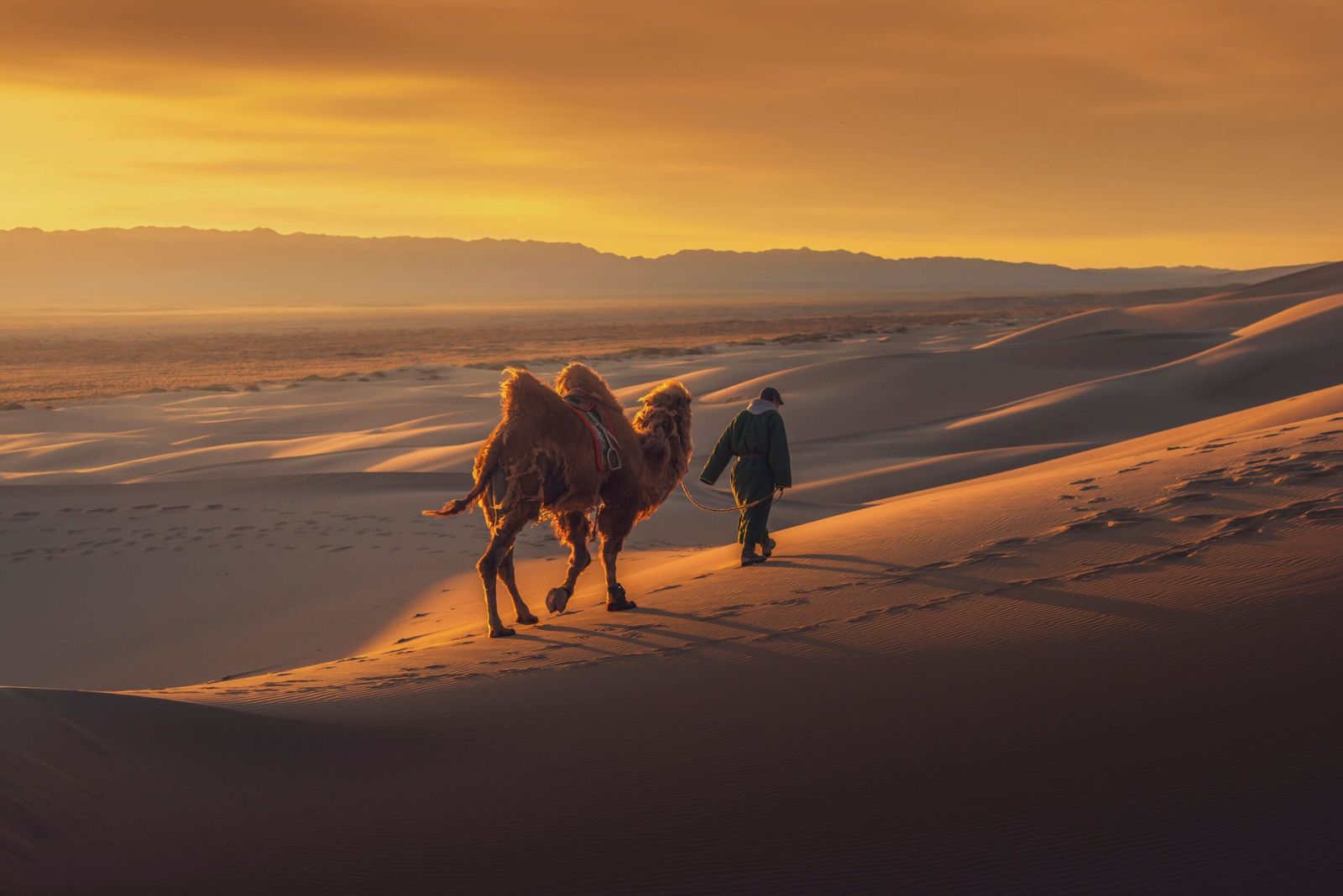
Stretching across southern Mongolia and into northern China, the legendary Gobi Desert is not the endless sea of sand many travelers imagine. Instead, it unfolds as a vast mosaic of dramatic cliffs, fossil-rich valleys, windswept plains, and towering dunes. The landscape feels almost otherworldly - an immense, quiet wilderness where time slows down and the horizon seems to stretch forever.
In the Gobi, the beauty lies in its contrasts. Flaming red cliffs glow at sunset, golden dunes shift with the wind, and green oases suddenly appear in remote valleys. For travelers seeking raw nature, cultural encounters, and a sense of true remoteness, the Gobi offers one of Asia’s most unforgettable journeys.

Golden ridges rise dramatically from the desert floor, their shifting sands producing the haunting “song” of the wind
Photo Credit: Selena Travel
A Landscape of Ancient Wonders
Few deserts are as geologically and historically rich as the Gobi. At the heart of its allure is Bayanzag, famously known as the Flaming Cliffs. The rust-red formations blaze under the evening sun and are globally known as one of the first places where dinosaur eggs were discovered.
Further west, the towering dunes of Khongoryn Els rise up to 300 meters high and stretch over 180 kilometers. Often called the “Singing Dunes”, the sands create a deep humming sound when the wind moves across their slopes.
Meanwhile, the icy gorge of Yolyn Am surprises visitors with its dramatic cliffs and occasional summer ice fields - a stark contrast to the surrounding desert terrain.

The glowing red formations of Bayanzag ignite at sunset, the historic site where the world’s first dinosaur eggs were discovered
Photo Credit: Three Camel Lodge

Rolling golden dunes rise beyond the grassy steppe in the vast landscape of the Gobi Desert
Photo Credit: B.Bayar
Things to Do in the Gobi Desert
Climb the Singing Dunes
Scaling the massive slopes of Khongoryn Els is both challenging and rewarding. From the summit, travelers are greeted by sweeping views of endless desert plains, especially spectacular at sunrise or sunset.

Travelers climb the sweeping sands of Khongoryn Els, where towering dunes offer panoramic views across the vast desert
Photo Credit: Pete Rojwongsuriya
Dinosaur Fossil Exploration
At Bayanzag, visitors can walk through the same terrain where paleontologists once unearthed some of the world’s most important dinosaur fossils. The site offers a rare chance to stand in a place where prehistoric history literally lies beneath your feet.

Exploring the fossil-rich cliffs of Bayanzag in the Gobi Desert
Photo Credit: Michael Sakas
Camel Trekking Across the Desert
Traditional two-humped Bactrian camel caravans remain a symbol of Gobi travel. Riding across the open desert provides a glimpse into the nomadic rhythms that have shaped this region for centuries.

Camel trekking across the vast landscapes offers a traditional way to explore Mongolia’s remote desert terrain
Photo Credit: B.Temuulen
Meet Nomadic Families
Many travelers visit local ger (yurt) camps, where Mongolian nomadic families share traditional meals, stories, and insight into life in the desert - one of the most authentic cultural experiences in Central Asia.

Visiting Nomadic families offers travelers a glimpse into Mongolia’s enduring pastoral traditions and desert way of life
Photo Credit: Ch.Batzaya
Stargazing in Absolute Darkness
With almost no light pollution, the Gobi offers some of the clearest night skies on Earth. On moonless nights, the Milky Way stretches vividly across the desert sky.

The night sky above the Gobi Desert reveals a brilliant sweep of stars and the Milky Way in extraordinary clarity
Photo Credit: Buman Tour Mongolia
Where to Stay
Accommodations in the Gobi emphasize authenticity and immersion in the landscape.
Luxury Desert Camps
Eco-conscious lodges like Three Camel Lodge combine traditional Mongolian architecture with modern comfort. Designed as a collection of upscale gers, the lodge offers sustainable hospitality alongside curated desert excursions.
Boutique Ger Camps
Smaller camps scattered across the desert offer cozy stays in traditional felt tents with wood stoves, allowing travelers to experience nomadic life while still enjoying essential comforts.
Nomadic Homestays
For those seeking deeper cultural immersion, staying with local herder families provides insight into daily life in one of the world’s most remote environments.

Blending traditional architecture with eco-conscious design, Three Camel Lodge offers a refined gateway to the remote beauty of Mongolia’s southern desert
Photo Credit: Three Camel Lodge
How to Travel to the Gobi
Most journeys begin in Ulaanbaatar, Mongolia’s capital. From there, travelers have several options:
+ Domestic Flights: Short flights connect Ulaanbaatar with regional towns such as Dalanzadgad, the gateway to the South Gobi.
+ Overland Expeditions: Multi-day jeep tours are the most popular way to explore the desert, allowing travelers to visit multiple sites including dunes, canyons, and fossil beds.
+ Private Guided Tours: Many visitors join organized expeditions with experienced guides due to the remote terrain and limited infrastructure.
Travel across the Gobi is part of the adventure - long drives across open steppe landscapes punctuated by occasional nomadic settlements and wildlife sightings.
Travel Tips for the Gobi Desert
Choose the Right Season
The best time to visit is between May and September when temperatures are milder and roads are more accessible.
Prepare for Extreme Conditions
Daytime temperatures can soar, while nights can become surprisingly cold. Layered clothing is essential.
Respect Nomadic Culture
Always ask permission before photographing people or entering gers. Hospitality is central to Mongolian culture, and visitors are often welcomed warmly.
Pack Smart
Bring sunscreen, lip balm, a scarf for dust protection, and plenty of water. Desert conditions can be harsh even for seasoned travelers.
A Journey Into Vastness
Traveling through the Gobi Desert is less about ticking off attractions and more about experiencing scale, silence, and time itself. In a world increasingly defined by speed and connectivity, the Gobi offers something rare: space to breathe, to wander, and to feel the ancient pulse of the earth beneath an endless sky.
For travelers seeking landscapes that stir the imagination and cultures that remain deeply connected to nature, the Gobi Desert remains one of Asia’s last great frontiers.