
Why Tokyo Remains the World's Most Livable City
From midnight ramen runs to manicured parks, the Japanese capital offers a quality of life rooted in safety, efficiency, and quiet ambition.
YN
6 Jul 2026 · 5 MIN READ · UPDATED 17 AUG 2026
The Midnight Test
There's a simple measure of urban success that rarely makes it into official assessments: can you find a proper meal after the theatre lets out, the dinner reservation runs long, or jet lag keeps you wandering? In Tokyo, the question doesn't just have an answer - it has dozens. Izakayas glow warm into the early morning. Ramen counters steam through the night. Yakitori smoke curls skyward in Shibuya and Shinjuku long after other cities have rolled up their sidewalks and gone to bed.
At Global Chic Voyage, we've spent years tracking how cities treat their residents after dark, and Tokyo stands apart. Not because it never sleeps - that's New York's tired boast - but because it remains fundamentally itself at three in the morning: safe, functional, welcoming. Walk alone through Ikebukuro at an hour when other capitals grow anxious, and you'll pass salarymen catching last trains, couples sharing convenience-store onigiri, elderly women pulling shopping trolleys home from twenty-four-hour supermarkets. The city doesn't shift its personality when the sun goes down. It simply continues.
Infrastructure as Urban Poetry
Tokyo's recent recognition in global quality-of-life assessments speaks to something deeper than efficient trains, though the trains are remarkable. Approximately 84 per cent of central Tokyo lies within a ten-minute walk of a station - a statistic that sounds dry until you've lived it, until you've understood how that proximity reshapes daily life. The anxiety of car ownership dissolves. The calculus of where to live shifts from parking availability to which neighbourhood feels right. Fares begin at 170 yen, roughly the price of a decent coffee elsewhere.
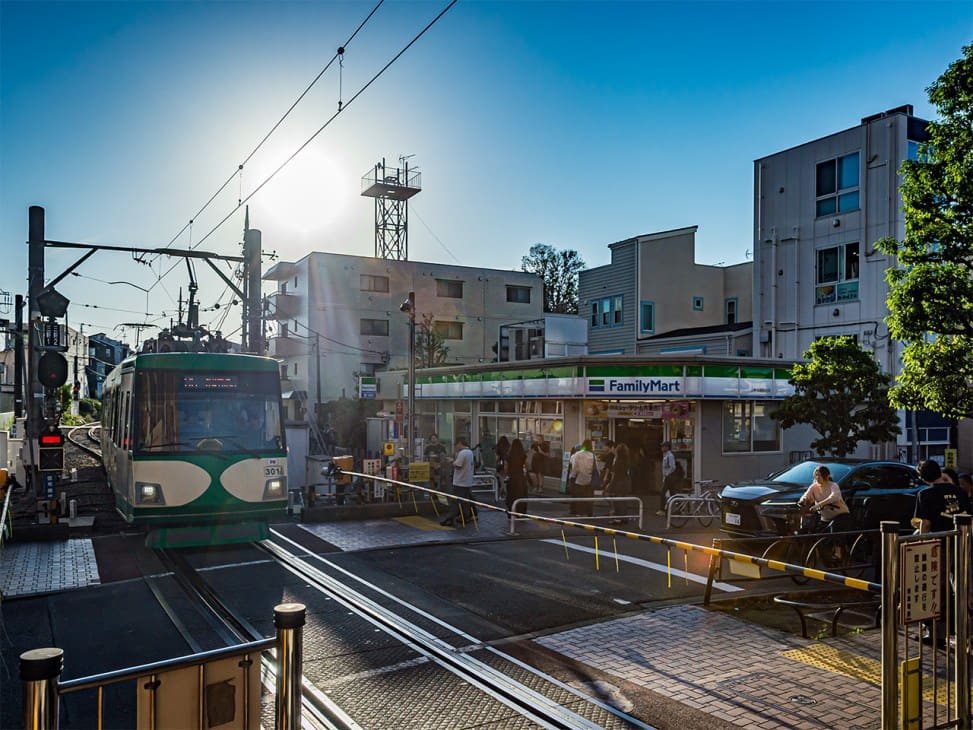
But the real poetry lies in the maintenance. Graffiti doesn't exist not because of draconian enforcement but because of collective pride. Stations get cleaned daily with a meticulousness that would seem obsessive if it weren't so effective. The Setagaya Line tram, running just five kilometres with ten stops, embodies this philosophy: a modest suburban route maintained as though it were a mainline express.
The bicycle culture reflects similar values. Mamachari - "mum's bikes" - crowd residential streets, often fitted with child seats fore and aft for school runs. Tokyo hasn't built Copenhagen's cycling infrastructure, but it's achieved something arguably harder: a shared understanding among pedestrians, cyclists, and drivers that streets belong to everyone. The Docomo Bike Share network now operates across sixteen of the city's twenty-three wards, all electric-assist, seamlessly integrated into an already comprehensive transit web.
The Sunday Question
Cities reveal their true character on Sundays. Do they shut down, forcing residents into suburban exile or mall purgatory? Tokyo's commercial districts pulse seven days a week. Smaller neighbourhood shops might close, but they typically choose Mondays through Wednesdays, keeping weekends alive. The result is an urban fabric that never feels abandoned.
Shopping districts layer vertically and horizontally: bookshops beside supermarkets beside designer boutiques beside century-old department stores. Some neighbourhoods specialize - Kappabashi for kitchen equipment, Jimbocho for antiquarian books - but most offer the full spectrum of daily life within walking distance. This isn't planning; it's organic urbanism that's evolved over decades.
Green Lungs and Seasonal Rituals
Tokyo's parks function as the city's living rooms. Ueno Park anchors world-class museums. Yoyogi Park borders Meiji Shrine, offering a transitional space between the sacred and the secular. Shinjuku Gyoen charges 500 yen admission - a nominal fee that helps maintain its manicured perfection - and delivers gardens worth ten times that.
But the real magic happens seasonally. Hanami transforms parks into impromptu festivals each spring, when cherry blossoms draw crowds for picnics under pale pink canopies. Autumn foliage creates a second wave of park culture, as maples turn and temperatures cool. These aren't just aesthetic moments; they're communal rituals that reconnect urbanites to natural cycles, reminding everyone that cities exist within, not apart from, the turning year.
Even the Kokyo Gaien National Garden, mere blocks from the Imperial Palace in central Tokyo, offers shade and contemplation. Dogs walk their ambitious owners through Yoyogi. The city breathes.
The Housing Paradox
Tokyo's residential market defies Western assumptions. Housing remains relatively abundant because the city actually builds it - new construction constantly refreshes the stock, with older homes frequently demolished to make way for structures engineered to the world's strictest earthquake standards. Units tend toward compact, but compact doesn't mean cramped when design is thoughtful and infrastructure brings the entire city within reach.
The market favours newness, which might seem wasteful until you consider the seismic reality. Every building represents a bet on survival, on engineering that can flex and absorb rather than crack and collapse. Safety isn't an amenity; it's foundational.
The Integration Challenge
No honest assessment can ignore the difficulties newcomers face. Tokyoites offer legendary politeness and one-on-one helpfulness, yet true social integration requires navigating substantial bureaucracy and a formidable language barrier. Banking, apartment hunting, municipal paperwork - all demand either Japanese fluency or patient intermediaries.
But society here operates on mutual respect, not mere tolerance. Surface-level interactions remain warm and functional even for non-Japanese speakers. Moving deeper requires dedication: language study, attention to social cues, awareness of cultural nuance. The city doesn't make it easy, but it makes it possible for those willing to invest the effort.
Education and Equity
Japan's public education system achieves something increasingly rare: genuine equity. Funding, curriculum, and teacher rotations are centrally managed, ensuring consistent quality regardless of neighbourhood wealth. Schools emphasize community responsibility alongside academics, fostering social cohesion from an early age. The enrolment rate for upper secondary school reaches 98 per cent - a figure that speaks to both opportunity and cultural expectation.
This educational consistency reinforces Tokyo's broader character. The city works for everyone not through dramatic interventions but through steady, equitable investment in shared infrastructure.
Ambition Without Bluster
Tokyo doesn't shout about its future. The Tokyo Metropolitan Government's Tokyo 2050 strategy lays out a thirty-point vision focused on resilience: telework adoption, congestion reduction, even commercial flying vehicles. These aren't marketing slogans; they're infrastructural commitments rooted in the understanding that great cities are built incrementally, over generations.
The tax burden is real - a top marginal rate approaching 56 per cent - but the return on investment surpasses what high-tax Western cities deliver. Subsidized healthcare, immaculate public spaces, reliable transit, genuine safety: these aren't luxuries. They're the baseline.
The Return
We've watched Tokyo navigate the past decade with a quiet confidence that comes from knowing it already leads in the metrics that matter. Other cities chase innovation for its own sake, building bike lanes without bike culture, funding transit without maintenance, proclaiming safety while residents check over their shoulders. Tokyo simply does the work.
The city's livability isn't about dramatic gestures. It's about ramen at midnight and trains that arrive on time and parks that welcome dogs and children and elderly couples with equal grace. It's about streets where a woman can walk alone at two in the morning without fear, where a child can take the subway to school, where a bicycle can share the road without aggression.
That's not just livability. That's civilization, quietly maintained, day after day, season after season, into a future the city is already building.
Spot something wrong? Email editors@globalchicvoyage.com. We log every correction publicly.
RELATED
SEE ALL →
23 Jun 2026 / 5 min
8 Aug 2026 / 5 min
7 Aug 2026 / 5 min
31 Jul 2026 / 5 min