
Where Saigon's Creative Class Gathers: Inside Thảo Điền's Transformation
Once an expatriate enclave, this riverside neighborhood has emerged as the city's most compelling showcase of contemporary Vietnamese design, dining, and craft.
SI
9 Jul 2026 · 5 MIN READ · UPDATED 17 AUG 2026
A Neighborhood Finds Its Voice
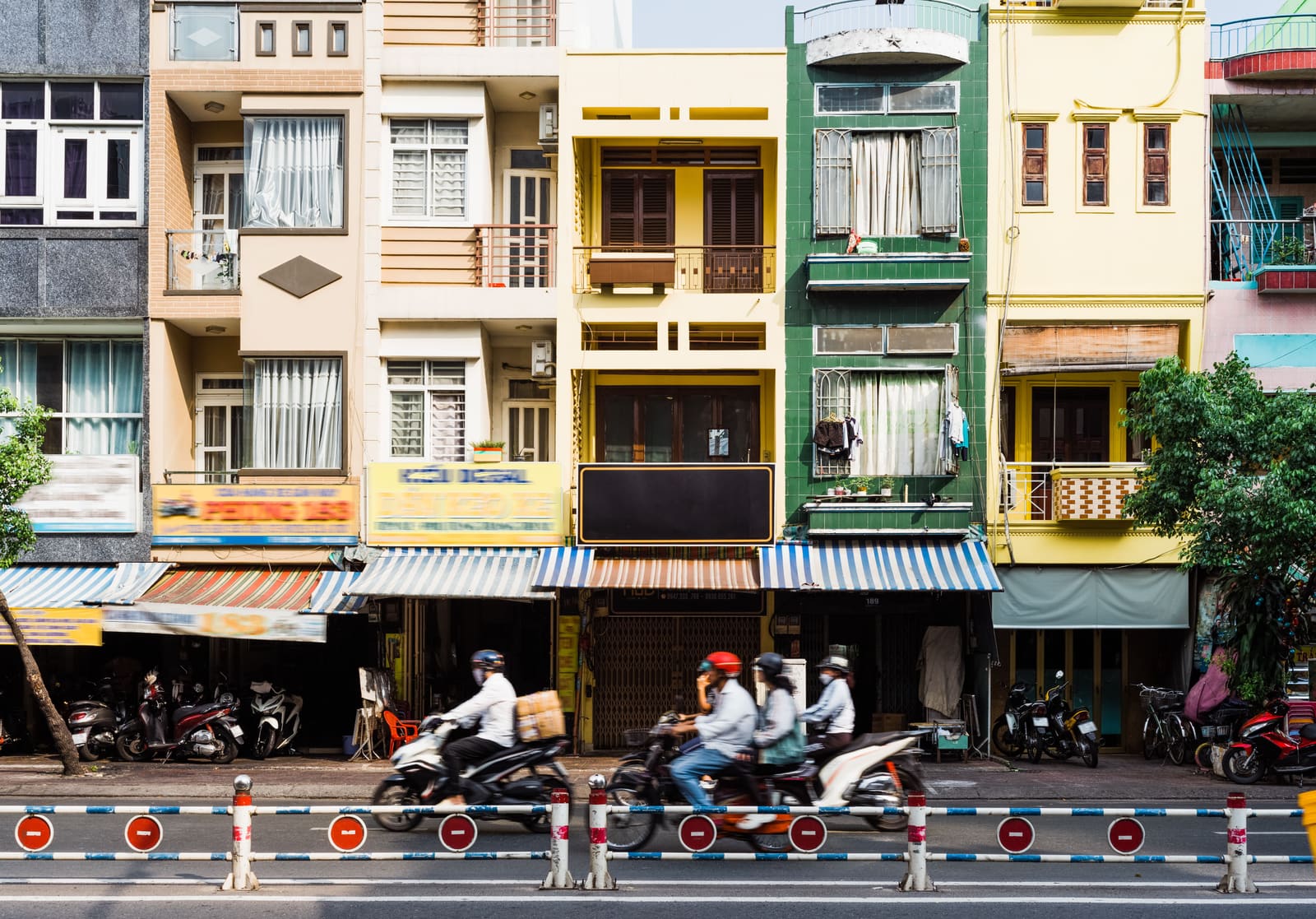
There is a particular quality of light that arrives in Thảo Điền around midmorning, filtered through the old tamarind trees that line Xuân Thủy Street. It falls across villa walls painted in faded pastels, catches the edges of hand-painted signage, and pools in the doorways of shops that did not exist five years ago. The rhythm here is different from downtown Saigon, a few kilometers and one river crossing away. Motorbikes still thread through the streets, but at a pace that allows for conversation. Cafés spill into gardens rather than onto crowded sidewalks. And increasingly, the faces behind the counters, the names on the storefronts, and the sensibilities shaping the neighborhood belong to a generation of Vietnamese creatives who have chosen this leafy district as their canvas.
At Global Chic Voyage, we have watched Thảo Điền undergo a transformation that speaks to broader currents in Southeast Asian urban culture. What began as a residential area favored by international school families and expatriate workers has become something more intriguing: a testing ground for contemporary Vietnamese identity, expressed through fashion, food, objects, and social spaces that refuse the binary of traditional versus modern. The result is a neighborhood that rewards slow exploration, where a morning coffee can lead to an afternoon of discovery, and where the boundary between shopping, dining, and cultural immersion dissolves into something closer to experience.
Morning: Coffee as Ritual and Stage
The day begins, as it should in Vietnam, with coffee. But at Hôm, the ritual extends beyond the cup. The space occupies a corner property transformed into a series of pavilions surrounding a garden dense with ferns, palms, and flowering vines. Furniture is arranged as it might be in a well-traveled friend's living room, because much of it is actually for sale, part of Hôm's dual identity as café and concept store. The Vietnamese espresso arrives strong and sweet, prepared with the unhurried attention that characterizes the neighborhood's better establishments.
What draws regulars here, beyond the excellent matcha drinks and freshly prepared pastries, is the atmosphere of productive leisure. Laptops open on wooden tables. Sketchbooks emerge from tote bags. Conversations drift between Vietnamese and English, sometimes mid-sentence. The garden cabanas, shaded by tree canopy, have become informal co-working spaces where Saigon's creative class gathers not just to caffeinate but to be seen, to connect, to participate in the neighborhood's ongoing conversation with itself.
The New Vietnamese Object
A short walk delivers you to a cluster of shops that represent Thảo Điền's most significant contribution to the city's cultural landscape: spaces dedicated to Vietnamese design as a living, evolving practice rather than a heritage to be preserved in amber.
OHQUAO occupies a bright storefront where illustrator Simon Phan and creative director Hoa Phạm have assembled a collection of paper goods, ceramics, textiles, and small objects that reimagine Vietnamese visual language. The store's name, a phonetic rendering of "oh, wow," captures its playful approach to cultural motifs. Traditional patterns appear on contemporary stationery. Customizable stamps allow visitors to compose their own designs. Board games reference Vietnamese street life and folklore. Everything is designed and produced domestically, a deliberate choice that positions the store as both retailer and advocate for local manufacturing.
Down the street, OBJoff takes a different approach to the same underlying question: what does contemporary Vietnamese style look like? The answer here involves clothing racks stocked with independent labels like Aeie Studios, Latui Atelier, and Paradise Saigon, brands that draw on global streetwear vocabulary while maintaining distinctly local references. The space functions as boutique, gallery, and community hub, hosting DJ sets and pop-up events that blur retail into social gathering. An attached café ensures that browsing can extend into lingering, and that fashion becomes part of a larger afternoon's exploration rather than a transactional stop.
Fashion's Flagship Moment
If a single project encapsulates Thảo Điền's arrival as a destination beyond its own residents, it might be the Fancì Club flagship. Designer Trần Khánh Duy opened the 6,500-square-foot space in 2024, and it immediately established a new benchmark for retail ambition in Ho Chi Minh City. Mirrored surfaces multiply the soaring ceiling height. Sculptural fixtures display garments as art objects. A hidden VIP salon, painted in deep ruby red, offers private consultations. The aesthetic is maximalist, theatrical, unapologetically luxurious.
Fancì Club's trajectory mirrors the neighborhood's. The brand began as a digital-native label, gaining international attention when its sheer fabrics and sculptural tailoring appeared on musicians and models from Bella Hadid to Blackpink members. The Thảo Điền flagship represents its maturation into a full fashion house, complete with a recently launched menswear line. But the store's significance extends beyond the brand itself. It signals that Saigon-based designers no longer need to establish themselves abroad before building ambitious retail spaces at home. The global and the local can occupy the same square footage, and the result can be as compelling as anything in Bangkok, Seoul, or Singapore.
Michelin Comes to the Neighborhood
By evening, attention turns to Ciel, the restaurant that has done more than any other single establishment to reposition Vietnamese fine dining on the global stage. Chef Việt Hồng opened the restaurant in 2025, and it earned a Michelin star less than a year later. The accolade matters not because of the star system itself but because of what Hồng's cooking represents: a refusal to choose between Vietnamese ingredients and international technique, between tradition and innovation, between local palate and global conversation.
The tasting menu unfolds across a horseshoe-shaped counter, allowing diners to watch Hồng and his team compose each course. Drunken chicken is deconstructed and reassembled. Fish maw, a texture-driven ingredient common in Cantonese cooking, receives a butter sauce treatment. The progression feels distinctly Vietnamese in its flavor profile and ingredient sourcing, yet the plating and pacing reflect Hồng's training abroad. It is, in many ways, the culinary equivalent of what the neighborhood's fashion and design shops are attempting: a contemporary Vietnamese identity that does not require choosing between roots and reach.
Late Night, Local Style
As dinner concludes, Thảo Điền's nightlife reveals a different side of the neighborhood's personality. Lost Birds occupies a space that could be a converted warehouse, with exposed brick, high ceilings, and chandeliers that cast dim, flattering light. The cocktail program skews toward whisky, with bartenders employing techniques like fat-washing alongside tropical fruits and regional botanicals. The crowd here tends toward industry professionals, bartenders on their nights off, hospitality workers who appreciate craft without pretension. It has the feel of an insider's spot that happens to welcome outsiders who understand the etiquette of a serious drinking establishment.
For a louder, more exuberant close to the evening, Mámi offers an alternative energy. Jason Pham designed the space as a tribute to the Vietnamese auntie archetype, bold and warm and impossible to ignore. The ground floor wraps a 12-seat counter around an open kitchen serving fusion small plates. Upstairs, a bar clad in mahjong tiles anchors a neon-lit room where the cocktails lean heavily on Vietnamese fruits, botanicals, and domestically produced spirits. Depending on the night, a DJ might set up inside the kitchen, or the party might spill onto Xuân Thủy Street, temporarily claiming the sidewalk for dancing.
The Neighborhood as Laboratory
What makes Thảo Điền compelling is not any single venue but the density of intention. In the span of a few tree-lined blocks, you encounter multiple attempts to articulate what contemporary Vietnamese culture might look and taste and feel like. Some experiments succeed more than others. Some spaces will likely not survive the next few years. But the collective energy, the willingness to invest in local design and homegrown brands and ambitious culinary projects, suggests a neighborhood that has moved beyond serving an expatriate population and begun serving a larger cultural purpose.
For travelers, this translates into a district worth more than a quick café stop. Thảo Điền rewards a full day, or better yet, multiple visits across a longer stay. The neighborhood's rhythm encourages drifting rather than checklist tourism. A morning coffee extends into browsing. Shopping leads to an unplanned lunch. An evening cocktail becomes a conversation with a bartender who recommends tomorrow's itinerary better than any guidebook.
As Vietnamese cities continue to grow and modernize, the question of how to build urban neighborhoods that honor craft, support local enterprise, and create space for cultural experimentation becomes increasingly urgent. Thảo Điền does not offer a complete answer, but it suggests a promising direction: slower rhythms, investment in domestic talent, and a willingness to let a neighborhood's identity emerge from the people who choose to create there rather than from top-down planning. The result is a district that feels both distinctly of Saigon and unlike anywhere else in the city, a paradox that defines the most interesting neighborhoods in any global city.
The light changes again in late afternoon, casting long shadows across Xuân Thủy Street. The tamarind trees filter the heat. Inside Hôm, a new shift of remote workers settles into the garden. At Fancì Club, a bride-to-be examines a sculptural jacket in the ruby salon. Somewhere in Ciel's kitchen, prep begins for the evening's tasting menu. The neighborhood continues its ongoing work of defining itself, one café, one boutique, one cocktail at a time.
Photo: Getty Images
Spot something wrong? Email editors@globalchicvoyage.com. We log every correction publicly.
RELATED
SEE ALL →
8 Aug 2026 / 5 min
7 Aug 2026 / 5 min
31 Jul 2026 / 5 min
31 Jul 2026 / 5 min