
The Quiet Refuge That Keeps Winning Las Vegas
How a smoke-free, casino-less tower has earned its place at the top of the Strip's hierarchy two years running.
ML
22 Jul 2026 · 5 MIN READ · UPDATED 17 AUG 2026
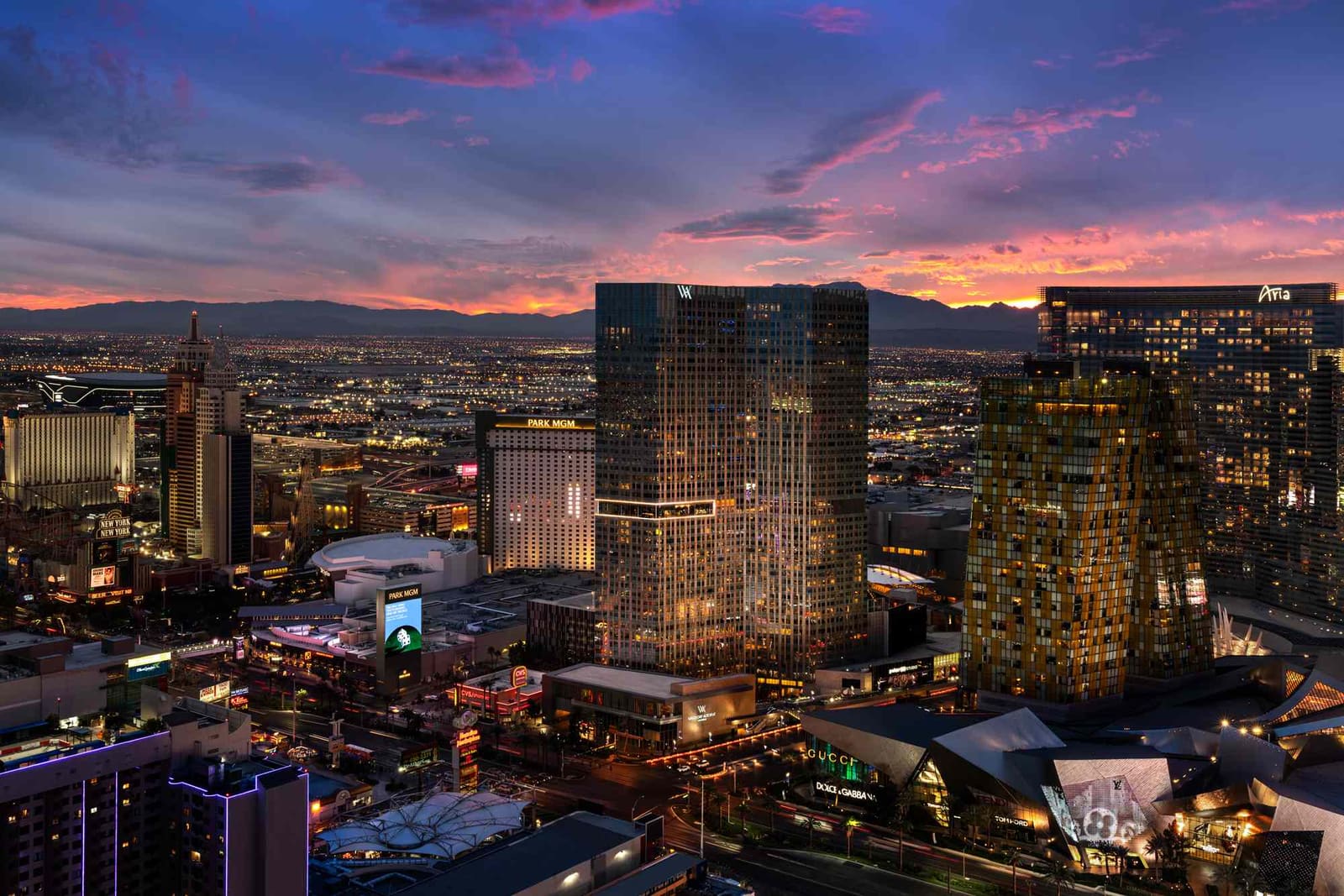
A Tower Apart
There is a particular kind of silence that exists sixty-four floors above the Las Vegas Strip. It is not the absence of sound, exactly, but the absence of a certain frequency - the chime and clatter of slot machines, the low hum of cigarette smoke mingling with air conditioning, the ambient tension of a casino floor at three in the morning. At the Waldorf Astoria Las Vegas, this silence is intentional, designed, and according to the 2026 World's Best Awards, exactly what travelers want most from the city that never sleeps.
For the second consecutive year, the property has secured the top position among Las Vegas hotels, a recognition that speaks less to novelty than to a sustained understanding of what luxury means when everything around you is designed for sensory overload. At Global Chic Voyage, we've watched the city's hospitality landscape shift over the past decade, and this back-to-back win confirms what we've observed in our own stays: the most coveted rooms in Las Vegas are often those that feel least like Las Vegas.
The Architecture of Retreat
The Waldorf Astoria occupies floors 23 through 64 of a tower it shares with private residences, a vertical geography that matters more than it might seem. You enter not through a casino - there isn't one - but through a lobby that borrows its design vocabulary from Manhattan hotel atriums rather than themed resort complexes. The elevator ride is long enough to feel like a transition, a decompression chamber between the Strip's visual cacophony and the hushed corridors above.
What distinguishes the property is not opulence for its own sake but a kind of edited elegance. Floor-to-ceiling windows frame the desert and the city in equal measure, reminding you that Las Vegas exists in a specific landscape, not just as a collection of façades. The absence of smoking throughout the tower is less a policy than a philosophy; air quality here is treated as part of the guest experience, not an afterthought.
The rooms themselves favor space over ornament. Soaking tubs face those expansive windows. Beds are positioned to wake to either sunrise over the mountains or the slow dimming of neon as dawn approaches. The materials - stone, linen, dark wood - ground the interiors in tactility, a counterpoint to the screens and projections that dominate much of the Strip.
What the Win Reveals
Awards of this nature, particularly those determined by traveler voting, function as a kind of annual referendum on shifting priorities. That the Waldorf Astoria has held the top position for two years suggests that its model - quiet, smoke-free, casino-less - is not an anomaly but a template that resonates with a particular segment of visitors.
This is the guest who comes to Las Vegas for a conference, a restaurant opening, a performance, but who does not want to live inside the machinery of the city's entertainment complex. It is the traveler who wants proximity without immersion, access without saturation. The hotel's repeat recognition indicates that this demographic is both substantial and willing to pay a premium for distance, even when that distance is measured in floors rather than miles.
The broader implication is that Las Vegas is maturing into a more segmented market. The mega-resorts still draw millions, but there is now room - and demand - for properties that offer an alternative experience within the same geography. The Waldorf Astoria's success does not diminish the appeal of the Bellagio's fountains or the Venetian's canals; it simply occupies a different niche, one that values restraint as much as spectacle.
The Luxury of Absence
What the hotel understands, and what its continued recognition underscores, is that luxury in a city like Las Vegas can be defined as much by what is not present as by what is. No slot machines means no sonic undertow, no subliminal pull toward the gaming floor. No smoking means air that does not carry the residue of thousands of cigarettes. No casino means no need to navigate a labyrinth designed to disorient you on your way to the elevator.
These absences are not neutral. They are deliberate subtractions that create space for other experiences: uninterrupted sleep, morning light that is not filtered through tinted glass, the ability to return to your room without passing through a commercial gauntlet. In a city built on more - more lights, more sound, more stimulation - the Waldorf Astoria's value proposition is less, and that proposition is clearly resonating.
We have seen this dynamic play out in other destinations where luxury hospitality evolves to offer refuge from the very attractions that draw visitors in the first place. Tokyo's high-end hotels provide serenity amid urban density. Bali's resorts create pockets of stillness in a landscape increasingly crowded with tourists. Las Vegas, in its own way, is following a similar trajectory, and the Waldorf Astoria is at the vanguard of that shift.
The View From Here
Standing in one of the upper-floor suites as evening settles over the valley, you can see the entire Strip laid out below: the Eiffel Tower replica, the pyramid, the canals, the fountains. From this height, the spectacle becomes景观 rather than environment, something to admire rather than inhabit. It is a perspective that the hotel's design encourages - engaged but detached, present but protected.
This is not to suggest that the Waldorf Astoria is somehow opposed to Las Vegas or disconnected from it. The city's best restaurants, shows, and attractions are minutes away. But the hotel provides what urban theorists call a "third place" - neither fully immersed in the Strip's ecosystem nor entirely removed from it. It is a base camp for a particular kind of Vegas experience, one that involves curation, selectivity, and the ability to retreat when the city's intensity becomes too much.
As Las Vegas continues to expand its appeal beyond gaming - adding professional sports, world-class dining, major art installations - the demand for hotels like the Waldorf Astoria will likely grow. The city is no longer just a destination for gamblers and convention-goers; it is becoming a legitimate luxury travel hub, and that evolution requires accommodations that can serve travelers whose priorities extend beyond the casino floor.
The Waldorf Astoria's repeat win is not just a validation of one property's approach. It is a signal that the future of Las Vegas hospitality may involve more quiet towers, more smoke-free environments, more spaces designed for rest rather than stimulation. In a city that built its identity on excess, the most sought-after experience may increasingly be the one that offers less - or at least, offers it differently.
For now, the view from the sixty-fourth floor remains one of the best in the city: high enough to see everything, far enough to hear nothing but the hum of your own thoughts. In Las Vegas, that kind of silence is worth winning for.
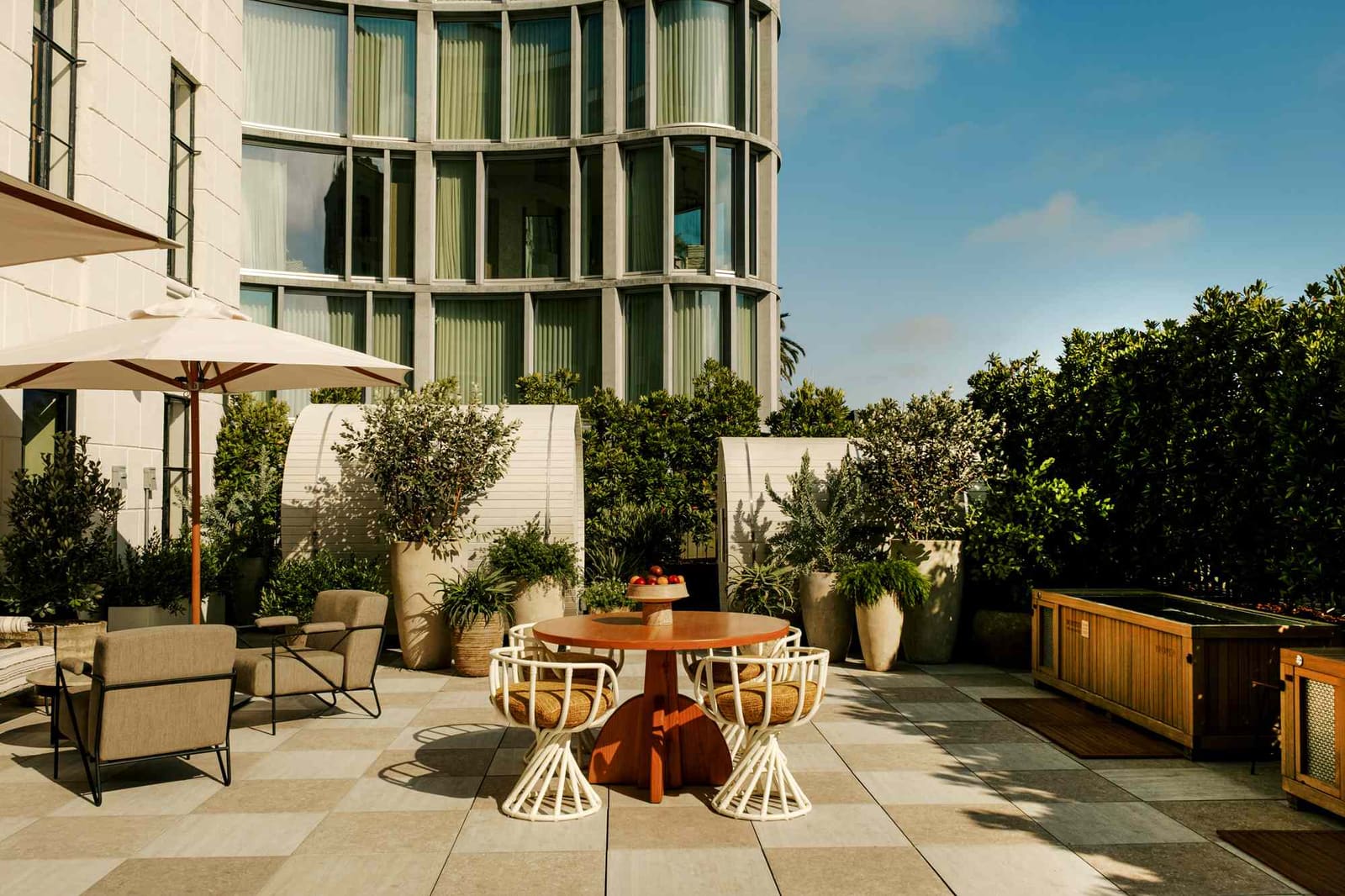
Photo: Waldorf Astoria Las Vegas
Spot something wrong? Email editors@globalchicvoyage.com. We log every correction publicly.
RELATED
SEE ALL →
21 Jun 2026 / 5 min
30 Jul 2026 / 5 min
30 Jul 2026 / 5 min
27 Jul 2026 / 5 min