
The Andean City Where History Breathes at Altitude
Cuzco has claimed the highest honor among South and Central American destinations, and a visit reveals why ancient stones still speak louder than modernity.
SI
8 Jul 2026 · 5 MIN READ · UPDATED 17 AUG 2026
A City Built on Empires
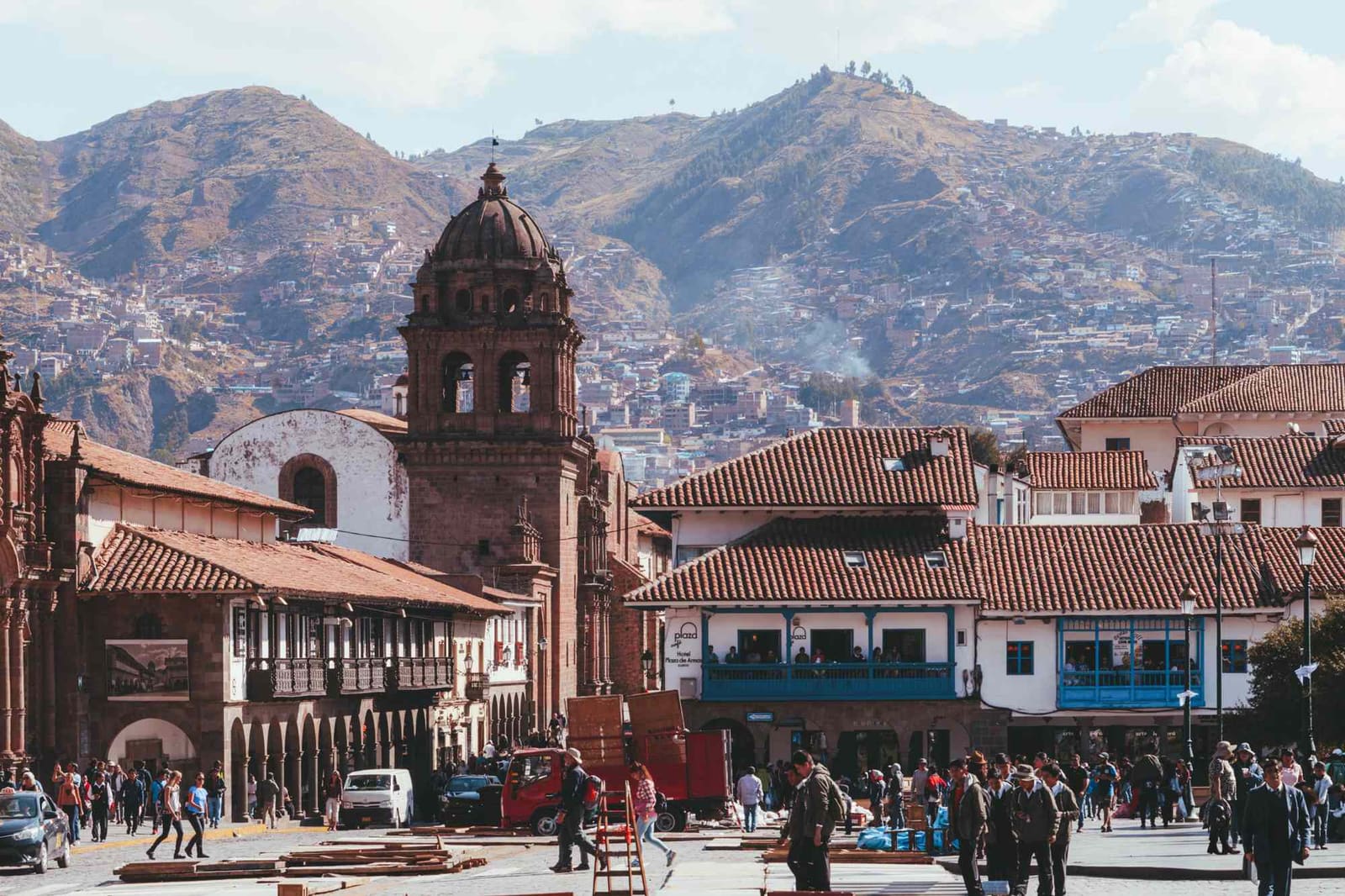
There is a particular quality to light at 3,400 meters. It arrives thinner, sharper, cutting through the mountain air with a clarity that makes every stone and roofline appear etched against the sky. In Cuzco, that light falls on walls built by hands that never knew iron tools, on plazas where Spanish colonial arches rise from Incan foundations, on streets that have carried footsteps for more than seven centuries. According to the 2026 World's Best Awards, this is now officially the finest city in South and Central America, a recognition that feels less like news and more like confirmation of what the place has always quietly insisted about itself.
At Global Chic Voyage, we have returned to Cuzco across seasons and years, watching it navigate the delicate choreography between preservation and progress. What strikes us each time is not the spectacle but the persistence: the way ancient stonework still dictates the rhythm of modern streets, how altitude shapes every breath and every pace, how history here is not curated behind glass but lived alongside, woven into the fabric of daily existence.
The Weight of Stones
The Incan walls that line Cuzco's oldest quarters are famous for their precision, stones fitted together without mortar in joints so tight a knife blade cannot slip between them. What photographs cannot convey is the sheer mass of these constructions, the way each block seems to settle into the earth with a permanence that makes the surrounding colonial buildings appear almost temporary by comparison. These are not ruins in the conventional sense. They are foundations, still bearing weight, still defining boundaries, still shaping how the city grows and moves.
Walk the narrow passage of Hatun Rumiyoc Street and you encounter the twelve-angled stone, a single block carved with such complexity it has become a symbol of Incan engineering. Yet it is not an isolated marvel. The entire street is a study in adaptive reuse, Spanish-era facades rising directly from pre-Columbian bases, doorways framed by stones that were already ancient when Pizarro arrived. The effect is disorienting in the best possible way, a reminder that cities are palimpsests, written and rewritten but never fully erased.
Altitude as Character
Cuzco sits at an elevation that transforms everything. Water boils at a lower temperature. Sunlight feels more intense. The air holds less oxygen, and visitors arriving from sea level find themselves moving more slowly, breathing more deliberately, adjusting to a pace the city has always known. This is not a flaw to be overcome but a defining characteristic, one that shapes architecture, cuisine, social rhythms, and even the way conversations unfold.
The markets reflect this reality. Vendors sell mate de coca, the traditional tea brewed from coca leaves, not as a tourist curiosity but as a practical remedy for altitude discomfort. Bakeries produce dense breads that rise differently in the thin air. Restaurants have learned to adjust cooking times and methods, creating a culinary tradition that is as much about adaptation as it is about heritage. The altitude is not backdrop; it is an active participant in daily life, a force that every resident and every visitor must negotiate.
Beyond the Plaza
The Plaza de Armas anchors Cuzco's historic center, a vast open space flanked by the cathedral and the Church of La Compañía, both built atop Incan temples. It is undeniably beautiful, and undeniably crowded, a magnet for tour groups and selfie sticks. But the city's deeper rewards lie in the neighborhoods that radiate outward, in the quieter streets where residential life continues largely unperformed for tourists.
San Blas, the artisan quarter, climbs the hillside in a tangle of steep lanes and whitewashed walls. Studios and workshops open directly onto the street, offering glimpses of weavers at their looms, ceramicists shaping clay, painters working in styles that blend indigenous motifs with contemporary abstraction. This is where Cuzco's creative economy lives, sustained not by souvenir sales but by a genuine commitment to craft traditions that predate the city itself.
Further out, the ruins of Sacsayhuamán loom on the northern edge, massive zigzagging walls that once formed part of the Incan capital's ceremonial complex. The site is less visited than Machu Picchu, but in many ways more impressive for the sheer scale of its stonework and the commanding views it offers over the city below. From this vantage, Cuzco appears as a red-tiled expanse nestled in a bowl of green mountains, its growth constrained by geography, its identity anchored by the stones beneath.
The Question of Authenticity
Cuzco's recognition as the best city in its region raises inevitable questions about what such honors mean and whom they serve. Tourism is the lifeblood of the local economy, but it is also a source of tension, driving up prices, straining infrastructure, and sometimes reducing complex cultural heritage to consumable experiences. The challenge for any city in this position is to welcome visitors without erasing the qualities that made it worth visiting in the first place.
We have seen Cuzco grapple with this balance. There are moments when the city feels overrun, when the sheer volume of travelers threatens to turn the historic center into a theme park. But there are also moments when the place reasserts itself, when a sudden rainstorm clears the plazas and the city reverts to itself, when a local festival fills the streets with dancers and musicians performing for their own community rather than an audience, when the everyday business of life pushes back against the pressure to perform.
The recognition from the World's Best Awards may bring more attention, more arrivals, more pressure. But it also offers an opportunity to reflect on what makes a city genuinely excellent, what qualities deserve protection, and how growth can be managed in ways that honor both past and future.
What Draws Us Back
We return to Cuzco not because it is easy or comfortable, but because it demands something from its visitors. The altitude forces a slower pace, a deliberate approach to movement and breath. The history requires engagement, a willingness to look beyond surfaces and consider the layers beneath. The city does not reveal itself quickly or completely; it insists on time, on attention, on a kind of respect that cannot be faked.
This is not a destination for those seeking effortless luxury or frictionless experience. It is a place where ancient and modern coexist in uneasy but fascinating proximity, where every stone has a story and every street a memory, where the past is not preserved in amber but lives on in active, sometimes uncomfortable dialogue with the present. That tension, that refusal to be easily categorized or consumed, may be precisely what makes Cuzco the best of its kind.
Photo: Maria Ligaya / Travel + Leisure
Spot something wrong? Email editors@globalchicvoyage.com. We log every correction publicly.
RELATED
SEE ALL →
25 Jul 2026 / 5 min
8 Aug 2026 / 5 min
7 Aug 2026 / 5 min
31 Jul 2026 / 5 min