
Sri Lanka Reopens Without Red Tape: What Free Visas Mean for Southeast Asia's Quieter Rival
As the island nation abolishes entry fees for 40 countries, it signals a pivot from administrative caution to competitive urgency—one shaped by regional pressure and geopolitical turbulence.
SI
29 May 2026 · 5 MIN READ · UPDATED 17 AUG 2026
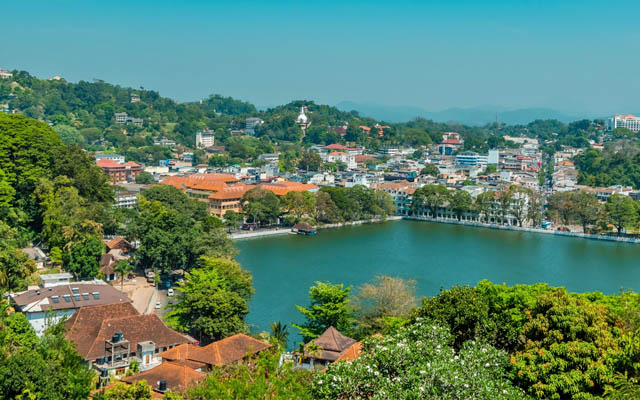
The Sound of Paperwork Falling Away
There's a particular relief that comes with landing in a country where the visa queue has been legislated out of existence. No currency exchange fumble at the kiosk, no half-completed forms on a clipboard under fluorescent airport light. On May 25, Sri Lanka made that relief available to nationals of 40 countries, eliminating the US$50 entry fee that had, for years, added friction to what should have been a seamless arrival. The move—long discussed, longer delayed—is less a gesture of hospitality than a calculated repositioning in a region where Thailand, Singapore, and Malaysia have long understood that the easiest border is often the most profitable one.
At Global Chic Voyage, we've watched Sri Lanka oscillate between ambition and hesitation for the better part of a decade. The island's tourism infrastructure is world-class in pockets—Aman's cliffside geometry in Tangalle, Geoffrey Bawa's gardens folding into the Indian Ocean—but its administrative apparatus has rarely matched that fluidity. The new visa scheme, which grants 30-day stays without cost to travelers from markets as varied as the United Kingdom, China, Saudi Arabia, and Indonesia, is an acknowledgment that in 2026, accessibility is no longer a perk but a baseline expectation.
A Delayed Pivot, Now Urgent
The policy's origins trace back to mid-2024, when the proposal first surfaced in Cabinet discussions. Its implementation, however, stalled for nearly a year—a delay attributed to bureaucratic inertia rather than political opposition. That lag is telling. While Thailand rolled out visa-on-arrival for dozens of markets years ago, and Singapore has operated a de facto open door for transit and short stays since the 1990s, Sri Lanka has historically approached border liberalization with caution, wary of overstay risks and informal economic activity.
What changed? Two forces converged. The first is competitive pressure from Southeast Asia, where ease of entry has become a defining feature of the tourism value proposition. The second is more immediate: a 20 percent decline in arrivals following the escalation of conflict in the Middle East, a critical transit corridor for European travelers. With Emirates and Qatar Airways rerouting or scaling back frequencies, Sri Lanka's tourism sector—already fragile after the 2019 Easter attacks and the 2022 economic crisis—found itself without the buffer of Gulf-routed foot traffic. The visa abolition, then, is both carrot and tourniquet.
Notably, the scheme builds on an earlier framework. India, China, Russia, Japan, Malaysia, Thailand, and Indonesia have enjoyed free visas since 2023 under a separate arrangement, a recognition of their outsize contribution to arrival figures. The expansion to 40 countries—adding the United States, Canada, Germany, France, Australia, and the UAE, among others—signals a shift from targeted incentives to broad-based liberalization. Travelers from the Maldives, Seychelles, and Singapore, benefiting from bilateral reciprocity, will receive 90-day visas, a tier above the standard offering.
The Infrastructure Behind the Welcome Mat
One administrative hurdle remains: the Electronic Travel Authorisation (ETA), still required before arrival. It's a digital formality, processed online in minutes, but its persistence suggests that Sri Lanka's liberalization is not absolute. The ETA functions as a screening layer, a way to maintain oversight without reinstating fees. Whether this strikes the right balance between openness and control will depend on how efficiently the system handles volume. Thailand's e-visa platform, by comparison, has been criticized for server overloads during peak seasons; Sri Lanka would do well to avoid similar bottlenecks.
Industry response has been cautiously optimistic. Devindre Seneratne, a former president of the Travel Agents Association of Sri Lanka, framed the policy in regional terms, noting that Singapore and Thailand have long leveraged visa accessibility as a competitive advantage. His call for a coordinated destination marketing campaign underscores a persistent gap: Sri Lanka has struggled to translate policy shifts into sustained visibility. Without a narrative to accompany the visa abolition—one that positions the island as more than a fallback option when Bali or Phuket feel overrun—the policy risks becoming a technicality rather than a draw.
Hiran Cooray, chairman of Jetwing Symphony Hotels, welcomed the move but issued a caveat. Earlier in May, authorities arrested over 120 foreign nationals for overstaying visitor visas and allegedly engaging in unauthorized business activities, including financial fraud and unlicensed commercial operations. In southern beach towns, reports have surfaced of tourists operating bars through local proxies, a gray-market phenomenon that complicates enforcement. The visa liberalization, Cooray suggested, must be paired with stronger monitoring to ensure it doesn't inadvertently ease entry for actors with non-tourism agendas.
What Regional Precedent Suggests
Sri Lanka's gambit echoes moves by neighbors, but with a lag that may prove instructive. When Thailand introduced visa exemptions for Chinese nationals in 2023, arrivals from China surged, but so did reports of zero-dollar tours and unregulated guides. Malaysia's visa liberalization for Indian and Chinese travelers in 2024 was similarly successful in volume terms, yet strained immigration checkpoints ill-prepared for the influx. The lesson: removing barriers is the easy part. Managing the consequences—ensuring that tourism growth doesn't outpace regulatory capacity—is where policy meets reality.
Sri Lanka's advantage, if it chooses to leverage it, lies in its relative under-penetration. The island receives fewer than two million annual visitors, a fraction of Thailand's 40 million or Malaysia's 26 million. That gives it room to scale thoughtfully, to avoid the overtourism pathologies that have prompted backlash in Bali and Barcelona. But it also means the margin for error is slimmer. A few high-profile enforcement failures, or a perception that the visa scheme has attracted undesirable activity, could undermine the policy's credibility before it gains traction.
Why It Matters
The visa abolition is less a standalone reform than a signal of intent—a recognition that in an era of frictionless travel, administrative inconvenience is a competitive liability. For travelers, the implications are straightforward: Sri Lanka is now as easy to enter as any Southeast Asian destination, with the added advantage of being less crowded and, in many respects, less commodified. For the island's tourism sector, the policy is a test of whether accessibility alone can drive growth, or whether deeper investments in infrastructure, marketing, and product development are required.
What remains to be seen is whether Sri Lanka can sustain the momentum. Visa liberalization is a blunt instrument; it removes a barrier but doesn't create a reason to visit. That work—the storytelling, the curation, the articulation of what makes the island distinct—still lies ahead. The visa is now free. The question is whether the destination can make itself indispensable.
The Longer Arrival
There's a rhythm to travel in South Asia that Southeast Asia has largely engineered out of existence: the waiting, the negotiating, the sense that arrival is a process rather than a moment. Sri Lanka's visa abolition doesn't erase that entirely—the ETA remains, as do the infrastructural gaps that make overland travel between the north and south a test of patience. But it does shift the calculus, making the island a more plausible answer to the question of where to go when the usual circuits feel exhausted. Whether that's enough to reverse the 20 percent decline in arrivals, or to position Sri Lanka as more than a second-tier alternative, will depend on what comes next. The door is open. Now the island must decide what it wants travelers to find on the other side.
Spot something wrong? Email editors@globalchicvoyage.com. We log every correction publicly.
RELATED
SEE ALL →
31 Jul 2026 / 5 min
10 Jul 2026 / 5 min
8 Aug 2026 / 5 min

7 Aug 2026 / 5 min