
Singapore Bets S$740 Million on Becoming Asia's Next Great Travel Destination
A five-year blueprint to reimagine islands, precincts, and the art of arrival
HQ
9 May 2026 · 5 MIN READ · UPDATED 17 AUG 2026
A City That Refuses to Wait
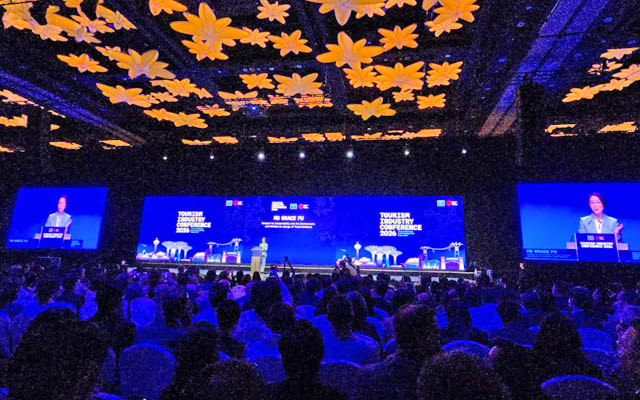
On a humid May morning in Marina Bay, Grace Fu stood before an audience of hoteliers, cruise executives, and MICE organizers to announce what amounts to a wager: that Singapore, already among the world's most visited city-states, can double down on its own success without losing the thread of what made it magnetic in the first place. The sum—S$740 million over five years—is not just capital. It is intention made concrete, a signal that in an era when travelers crave authenticity as much as efficiency, Singapore intends to offer both.
This is the second tranche of the Tourism Development Fund, following an initial S$300 million allocation in 2024. Together, they form the financial spine of Tourism 2040, the government's roadmap to lift annual tourism receipts to between S$47 billion and S$50 billion by the end of the next decade. But the ambition is less about the arithmetic than the alchemy: how does a city already synonymous with seamlessness evolve without erasing itself?
Three Pillars, One Vision
Fu, who serves as Minister for Sustainability and the Environment and Minister-in-Charge of Trade Relations, framed the investment around three interlocking priorities. The first: fortify Singapore's role as a vital, trusted hub. This is not mere infrastructure talk. It is about rewiring the archipelago's connective tissue—maritime, aerial, experiential—so that arrival itself becomes part of the journey.
Consider the proposed integrated cruise and ferry terminal, slated for development within the sprawling Greater Southern Waterfront precinct. If realized, it would mark a rare convergence of urban planning and hospitality design, where embarkation and disembarkation are no longer utilitarian thresholds but curated moments. Singapore has long been a port city; now it wants to be a portal city, where the act of coming and going is as choreographed as the stay itself.
Parallel to this is the planned Downtown MICE Hub in Marina Bay, designed to expand the city's already formidable business events infrastructure. The timing is strategic: Singapore has secured a string of first-in-Asia gatherings—Passenger Terminal Expo Asia 2026, Breakbulk Asia 2026, the WCA Worldwide Conference 2027—that position it not just as a meeting place but as a convening force in industries that shape global mobility and trade.
Melissa Ow, Chief Executive of the Singapore Tourism Board (STB), underscored the marketing dimension. The agency's We Don't Wait for Fun campaign, initially aimed at Early Careers travelers in 2025, will now target families—a segment that values both spontaneity and structure. New partnerships amplify reach: a joint regional push with Grab to surface hidden precincts; a renewed MoU with Weixin Pay to scale Palm Technology (biometric payments) beyond China for the first time; and a collaboration with Xiaohongshu (Little Red Book) to decode the consumer journeys of Chinese millennials and Gen Z, culminating in the platform's first Global Tourism Summit outside the mainland.
These are not vanity partnerships. They are infrastructural moves disguised as marketing, embedding Singapore into the digital ecosystems where travel decisions are increasingly made—not on booking sites, but on social feeds and super-apps.
Rejuvenation Without Erasure
The second pillar—building a world-class city and endearing home—is where the rhetoric meets the street. Fu spoke of "rejuvenating the cityscape with refreshed products and experiences that reflect Singapore's unique character." It is a delicate balance: how to innovate without gentrifying the soul out of a place.
Ow was more specific. She emphasized "strong home-grown brands, anchored by a distinctive local core," as the vehicle for authentic storytelling. In practice, this means new developments across Sentosa, Mandai, and Orchard Road—three precincts that have long anchored Singapore's tourism geography but risk becoming museum pieces if left static.
At the Tourism Industry Conference on May 8, an interactive exhibit offered a glimpse of what's to come: reconfigured beachfronts on Sentosa, nature-forward attractions in Mandai (already home to the acclaimed Rainforest Wild Asia), and a reimagined Orchard Road that leans into retail as theater rather than transaction. There will be new hotels, wellness sanctuaries, culinary events, and a "robust line-up" of entertainment spanning sports, fashion, and the arts.
But perhaps most intriguing is the commitment to home-grown intellectual property—original concepts, not imported franchises. Singapore has historically excelled at execution; now it is betting on origination. This is the difference between being a stage and being a storyteller.
The Human Variable
The third focus area—developing strong businesses and investing in human capital—is the least glamorous and arguably the most critical. Fu announced that STB, in partnership with the Infocomm Media Development Authority, is guiding tourism operators toward pre-approved digitalisation and productivity solutions under Enterprise Singapore's EDGE grant. By the second half of 2026, funding support will be streamlined, lowering the barrier for small and mid-sized players to adopt technology that enhances both guest experience and workforce efficiency.
Other initiatives include a review of the Attractions industry technology roadmap by early 2027; an expanded Training Industry Professionals in Tourism (TIP-iT) Scheme to fund stretch assignments and in-house upskilling for rank-and-file workers; and efforts to professionalize and streamline the licensing of tourist guides—those often-overlooked cultural interpreters who can make or break a first impression.
In a region where labor shortages and burnout plague the hospitality sector, these are not peripheral concerns. They are existential ones. Technology can automate check-ins and optimize housekeeping schedules, but it cannot replace the warmth of a well-trained guide or the intuition of a concierge who knows when to recommend a hawker center over a Michelin-starred restaurant.
Why It Matters
Singapore's S$740 million gambit is instructive beyond its borders. It represents a model of destination development that is neither purely market-driven nor state-imposed, but something in between: a choreographed evolution that respects heritage while refusing nostalgia, that courts global capital while privileging local identity.
For travelers, the implications are tangible. In the coming years, Singapore will offer more than frictionless efficiency—it will offer friction with purpose: moments of surprise, neighborhoods with narrative, experiences that feel less like consumption and more like conversation.
For the broader Asian travel ecosystem, it is a case study in how mature destinations can reinvent without rebranding, how infrastructure can be storytelling, and how policy—when executed with nuance—can be poetry.
The Long Game
As the conference attendees filed out of the Marina Bay venue, past artist renderings of future cruise terminals and digital mock-ups of Orchard Road's next chapter, the question was not whether Singapore would hit its S$50 billion target by 2040. The question was what kind of place it would be when it did.
Would it remain a city where efficiency and enchantment coexist? Where a hawker stall and a luxury spa can share the same block without irony? Where arrival feels less like landing and more like belonging, even if only for a weekend?
The money is a start. But the real work—the human, messy, beautiful work—happens in the decades between the press release and the postcard.
Based on reporting from TTG Asia (https://www.ttgasia.com/2026/05/08/singapores-tourism-war-chest-gets-s740-million-boost/), with additional context and analysis.
Spot something wrong? Email editors@globalchicvoyage.com. We log every correction publicly.
RELATED
SEE ALL →
28 Jul 2026 / 5 min
2 Jul 2026 / 5 min
31 Jul 2026 / 5 min
27 Jul 2026 / 5 min