
San Clemente: Where Spanish Revival Dreams Meet the Pacific
A Southern California coastal enclave that has quietly preserved its architectural soul while the surf breaks roll in - and refuses to shout about it.
ML
20 Jul 2026 · 5 MIN READ · UPDATED 17 AUG 2026
A Town That Remembers Its Opening Act
There is a particular quality of light that arrives in San Clemente around four in the afternoon, when the marine layer has burned off completely and the sun angles low enough to turn the white stucco walls of the old Spanish Colonial buildings into something closer to gold. Stand anywhere along Avenida Del Mar, the town's gentle commercial spine that slopes toward the sea, and you will notice how the red-tile roofs seem to catch fire in that hour. This is not accidental. When Ole Hanson, a former Seattle mayor turned visionary developer, laid out San Clemente in 1925, he imagined a "Spanish Village by the Sea" and enforced design codes that would have made even the most zealous historic preservation board blush. A century later, those codes remain, and so does the aesthetic coherence they produced.
At Global Chic Voyage, we have watched countless coastal towns trade their architectural heritage for glass boxes and modernist anonymity. San Clemente did not. The result is a Southern California beach town that feels less like a real estate opportunity and more like a place that knows what it is.
The Architecture of Restraint
The Spanish Colonial Revival style that defines San Clemente is not merely decorative. It represents a deliberate act of placemaking, an attempt to root a new American town in the romance of an older, Mediterranean tradition. The style borrows liberally: arched doorways and colonnades from Spanish missions, ironwork from Andalusia, courtyards from Mexico, and a color palette that mirrors the dry hills and terracotta earth of coastal Southern California. What makes San Clemente unusual is not that it adopted this style, many California towns did in the 1920s, but that it maintained it with such discipline.
The Casa Romantica Cultural Center and Gardens, once Hanson's personal estate, perches on a bluff above the beach and serves as the town's architectural anchor. Its thick walls, hand-painted tiles, and terraced gardens overlooking the Pacific illustrate what the entire town aspired to become. Walking through its rooms, you understand that this was never about historical accuracy. It was about crafting an atmosphere, a lived-in fantasy that could survive the scrutiny of daily life.
Elsewhere in town, smaller examples abound: the arcade shops along Del Mar, the old train depot, even the public library. Each structure observes the same grammar of form. The effect is cumulative. You do not notice any single building so much as you notice that the town itself has a voice, and that voice is consistent.
Where the Waves Have Always Mattered
San Clemente's surf culture predates the Beach Boys and the Gidget films. The breaks here, Trestles in particular, are woven into the mythology of California surfing. Trestles sits just north of town, technically within the boundaries of San Onofre State Beach, and its waves are the kind that surfers speak about in hushed, reverent tones. The sandbar bottom, the offshore winds, the way the swell wraps around the point, all of it conspires to produce rides that are long, clean, and forgiving enough for intermediates while still offering enough wall for advanced surfers to carve.
What San Clemente has managed, perhaps better than its more famous neighbors to the north and south, is to let surf culture permeate the town without turning it into a theme park. There are no surf museums with admission fees, no branded surf walks of fame. Instead, there are wetsuit-clad figures walking barefoot down Avenida Del Mar at dawn, board shops run by people who actually shape boards, and a tacit understanding that the ocean is not an amenity but the reason the town exists.
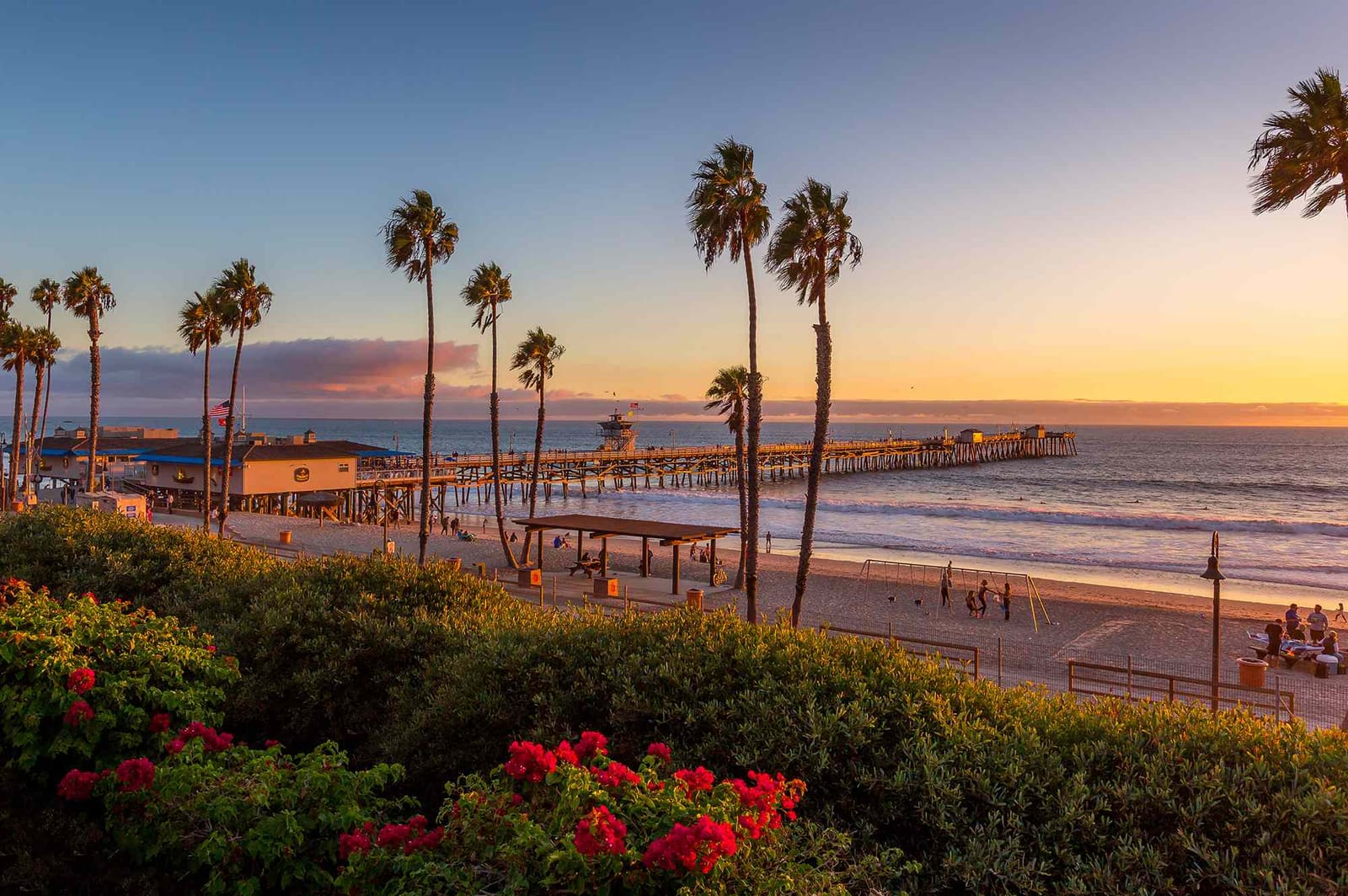
The San Clemente Pier, a wooden structure that stretches 1,200 feet into the Pacific, serves as the town's social and geographic center. Fishermen line the railings. Joggers use it as a turnaround point. At sunset, it becomes an impromptu theater where locals and visitors gather to watch the sky perform. The pier is unremarkable in its construction, it is simply a pier, but it is beloved in the way that only functional, unpretentious public infrastructure can be.
Lodging That Leans Into the Landscape
The accommodations in San Clemente reflect the town's broader ethos: comfort over flash, location over luxury. The beachfront options tend to be boutique inns and smaller hotels that prize proximity to the sand above all else. Many occupy mid-century structures that have been renovated just enough to offer modern plumbing and Wi-Fi without erasing the architectural bones.
What you will not find, at least not yet, are the sprawling resort complexes that dominate other stretches of the Southern California coast. Zoning and community resistance have kept development relatively modest. The result is a lodging landscape that feels more like a collection of well-kept secrets than a portfolio of branded properties.
For travelers accustomed to the high-thread-count arms race of contemporary luxury hospitality, this may feel like a step back. But for those seeking a different kind of luxury, the luxury of waking up to the sound of waves without the mediation of a resort's orchestrated experience, San Clemente offers something increasingly rare.
The Choreography of a Coastal Day
A day in San Clemente unfolds with a particular rhythm. Mornings belong to the surfers and the early walkers, the beach nearly empty save for the gulls and the occasional dolphin pod visible beyond the breakers. By mid-morning, the cafes along Del Mar fill with a mix of retirees, remote workers, and families ordering breakfast burritos and cold brew.
Afternoons are for the beach itself. The sand is wide and clean, the water cold enough to remind you this is the Pacific, not the Caribbean. Families stake out territory with umbrellas and coolers. Teenagers play volleyball. Someone always has a speaker, but the music is never quite loud enough to be intrusive.
As the day cools, the town shifts. The pier draws a crowd. The restaurants begin to fill. There is a casualness to the dining scene here, an absence of the see-and-be-seen energy that defines coastal towns further north. You eat fish tacos or wood-fired pizza. You drink local beer. You watch the light change.
What San Clemente Understands
There is a tension at the heart of every successful coastal town in California: how to welcome visitors without becoming a place that exists only for them. San Clemente has managed this balance better than most, in part because it has resisted the economic pressure to monetize every square foot of oceanfront, and in part because its architectural and zoning legacy has made rapid transformation difficult.
The town is not frozen in time. New shops open. Old buildings are renovated. But the pace of change is slower here, and the direction of that change is more carefully managed. The result is a place that still feels like it belongs to the people who live there, even as it opens its arms to those passing through.
At Global Chic Voyage, we return to places that understand the difference between hospitality and spectacle. San Clemente understands. It does not need to announce itself. The Spanish arches, the breaking waves, the unhurried rhythm of its days, these speak clearly enough. You either hear them or you do not. And if you do, you will find a town that has been waiting, quietly, all along.
Photo: Cameron Cosgrove / Getty Images
Spot something wrong? Email editors@globalchicvoyage.com. We log every correction publicly.
RELATED
SEE ALL →
8 Aug 2026 / 5 min
7 Aug 2026 / 5 min

31 Jul 2026 / 5 min

30 Jul 2026 / 5 min