
How Macau's Entertainment Push Is Rewriting the Rules of Integrated Resort Travel
As Galaxy Macau and Trip.com formalize a three-year alliance, the SAR is testing whether live events—not gaming—can anchor a new era of regional tourism.
ML
10 Jun 2026 · 5 MIN READ · UPDATED 17 AUG 2026
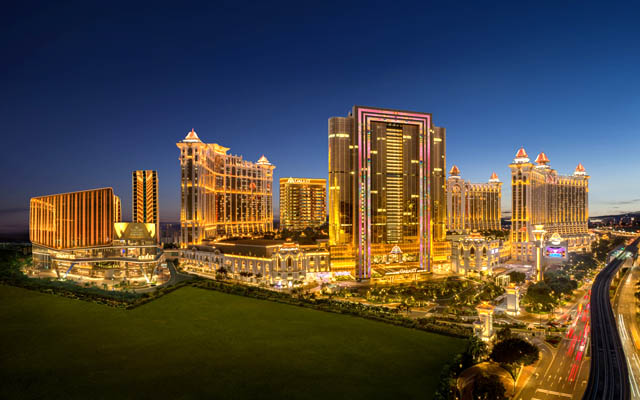
The Night the Arena Went Dark
On a humid evening last spring, the Galaxy Arena sat empty between shows—a rare pause in what has become one of Macau's busiest non-gaming venues. Technicians adjusted rigging for the next headline act; outside, banners in three languages promised a rotating calendar of K-pop, boxing, and Broadway imports. The scene distills a question now central to Macau's identity: can the SAR become a destination where people fly in for the encore, not the baccarat table?
Galaxy Macau's announcement of a three-year partnership with Trip.com Group offers one answer. Running through 2029, the alliance will link the integrated resort's event programming—concerts, sporting fixtures, cultural showcases—with Trip.com's travel platform and 500-million-strong membership base. The mechanics are straightforward: Galaxy supplies the venues and content; Trip.com supplies the audience infrastructure. But the implications reach further. At Global Chic Voyage, we've watched Macau spend the better part of a decade trying to diversify beyond gaming revenue, and this partnership represents the first time two heavyweight operators have formalized the connective tissue between travel distribution and live entertainment at scale.
The timing is deliberate. Galaxy Macau will mark its 15th anniversary in 2026, and the SAR's government has made cultural and leisure tourism a policy priority. What remains to be seen is whether integrated resorts can credibly pivot from gaming anchors to entertainment anchors—and whether travelers will follow.
The Mechanics of the Alliance
The partnership centers on three operational pillars. First, Galaxy Macau will develop and promote a year-round calendar of live events at venues including Galaxy Arena, a 16,000-capacity hall that has hosted everything from Cirque du Soleil residencies to esports finals. Trip.com will integrate these events into its platform, offering bundled packages that combine tickets, flights, and accommodation.
Second, the companies will merge aspects of their membership programs. Galaxy's Galaxy Privilege Club and Trip.com's loyalty tiers will offer cross-platform benefits: ticket pre-sales for Galaxy events, discounts on Trip.com bookings, and on-site perks such as priority seating or backstage access. The goal is to create a closed-loop ecosystem where booking a concert in Macau becomes as frictionless as booking a flight.
Third, both parties will co-develop destination marketing campaigns aimed at regional and long-haul markets. These campaigns will position Macau not as a gaming stopover but as a multi-day leisure destination where live entertainment is the anchor experience. It's a narrative shift that requires sustained investment—and a willingness to let non-gaming revenue streams grow even if they cannibalize gaming margins in the short term.
According to Galaxy Macau, the partnership will also explore new tourism formats, including curated itineraries that blend cultural programming with Macau's heritage sites and culinary scene. The SAR's UNESCO-listed Historic Centre, often overlooked by casino-bound visitors, may finally get its due.
Why Macau Needs This to Work
Macau's gaming revenue remains formidable, but the SAR's economic planners have spent years trying to reduce dependence on a single sector. The challenge is structural: integrated resorts were designed to capture gaming spend, with hotels, restaurants, and shows serving as amenities rather than profit centers. Flipping that logic requires not just new programming but new infrastructure—ticketing platforms, event calendars, partnerships with promoters and artists.
The Galaxy-Trip.com alliance addresses several bottlenecks at once. Trip.com brings distribution reach that no single resort can match on its own, particularly in mainland China, where platform dominance translates directly into booking behavior. Galaxy brings venue scale and operational expertise in live events, a category where margins are thin but brand equity is high. Together, they can test whether Macau's entertainment offering can compete with Singapore, Hong Kong, or Seoul—cities that have successfully built tourism economies around concerts, festivals, and sporting events.
There's also a demographic wager embedded in the partnership. Younger travelers, particularly those from Greater China and Southeast Asia, increasingly prioritize experiences over gaming. A K-pop concert or a headline boxing match offers social currency that a casino visit does not. If Galaxy and Trip.com can convert event attendees into repeat visitors, the SAR gains a more sustainable, less cyclical tourism base.
But the model is unproven at this scale. Live entertainment is capital-intensive, seasonally uneven, and vulnerable to geopolitical disruption. A single canceled tour or visa restriction can crater months of planning. The question is whether the partnership can generate enough volume—and enough ancillary spend—to justify the investment.
The Regional Context
Macau is not alone in trying to rebrand as an entertainment hub. Singapore's integrated resorts have hosted Formula 1, Marina Bay Sands concerts, and theater residencies for years. Bangkok and Manila are investing heavily in arena infrastructure. Even Las Vegas, the original template, has doubled down on live events as gaming revenues plateau.
What distinguishes Macau is its proximity to mainland China and its unique regulatory status. The SAR can host international acts and events that would face censorship or logistical hurdles on the mainland, making it a natural staging ground for regional tours. But that advantage is contingent on stable cross-border travel policies and a willingness by Chinese travelers to spend leisure time—and leisure budgets—outside the mainland.
The Galaxy-Trip.com partnership also reflects a broader shift in how travel platforms think about content. Trip.com is no longer just a booking engine; it's a curator of experiences, and live events are a high-margin, high-engagement category. By embedding Galaxy's event calendar into its platform, Trip.com can differentiate itself from Booking.com, Expedia, and Agoda, all of which are chasing the same audience but lack exclusive content partnerships.
For Galaxy, the partnership is a hedge. If entertainment can drive occupancy and F&B spend, the resort becomes less vulnerable to gaming downturns. And if Macau's broader diversification push succeeds, Galaxy positions itself as the operator that got there first.
What Comes Next
The three-year timeline suggests both parties are treating this as a pilot program. By 2029, they'll have enough data to assess whether bundled travel-entertainment packages can scale, whether membership integration drives loyalty, and whether Macau's brand as a leisure destination has shifted in measurable ways.
Success will depend on execution. Galaxy will need to deliver a consistent calendar of marquee events—no easy feat in a region where artist availability, government approvals, and sponsor commitments can delay or derail programming. Trip.com will need to convert platform traffic into ticket sales and hotel bookings, which requires sophisticated marketing and a user experience that makes multi-component bookings feel seamless.
There's also the question of replicability. If the partnership works, expect other integrated resorts—Wynn, MGM, Sands—to pursue similar alliances with Ctrip, Fliggy, or regional OTAs. The race to own the entertainment-travel nexus in Asia is just beginning, and Macau is the testing ground.
At Global Chic Voyage, we've seen enough failed diversification efforts to know that good intentions don't guarantee good outcomes. But we've also watched travelers—especially younger ones—vote with their wallets for destinations that offer more than duty-free and jackpots. If Galaxy and Trip.com can deliver on the promise of a Macau where the show is the reason you came, not the reason you stayed an extra night, the SAR may finally have a second act worth applauding.
Spot something wrong? Email editors@globalchicvoyage.com. We log every correction publicly.
RELATED
SEE ALL →
8 Aug 2026 / 5 min
7 Aug 2026 / 5 min
31 Jul 2026 / 5 min

31 Jul 2026 / 5 min