
California's Mountain Villages Where Trails Meet Tables
Beyond the coastal highway and desert highways lie alpine settlements that merge backcountry access with refined hospitality - and a slower rhythm of travel.
SI
2 Jul 2026 · 5 MIN READ · UPDATED 17 AUG 2026
A Different California
We first understood California through its edges: the surf breaks of Malibu, the fog-shrouded piers of San Francisco, the desert sprawl of Palm Springs. But the state's interior tells a quieter story, one written in elevation gain and granite, in settlements that emerged wherever prospectors struck gold or loggers found timber or ranchers discovered meadows wide enough to winter cattle. These mountain villages remain, long after the boom-and-bust cycles faded, and they've evolved into something rarer than their origins might suggest: places where trailheads meet tasting rooms, where heritage architecture stands beside farm-to-table kitchens, where the pace of travel slows to match the geography.
At Global Chic Voyage, we've watched these alpine enclaves mature over the past decade. What once felt like weekend escapes for Bay Area hikers now pulse with a confidence that comes from balancing preservation and progress. The best of them resist theme-park nostalgia while honoring the bones of their past: false-front storefronts converted into wine bars, mining-era hotels reimagined as boutique lodgings, main streets that still function as genuine civic centers rather than open-air malls.
The Geography of Elevation
California's mountain towns occupy distinct ecologies. The Sierra Nevada range carves the eastern spine of the state, its granite peaks holding snowmelt that feeds rivers and alpine lakes. Here, settlements cluster at elevations between 4,000 and 8,000 feet, where summer temperatures moderate and winter transforms landscapes into powder zones. Further south, the San Bernardino and San Jacinto ranges rise abruptly from desert floors, creating islands of pine and oak. To the north, the Cascades and Klamath ranges harbor volcanic peaks and dense forests, their towns fewer and more remote.
Each geography shapes the character of its villages. Sierra towns like Truckee and Mammoth Lakes developed around railroad corridors and ski resorts, their economies tied to seasonal tourism and second-home ownership. Smaller enclaves in the San Bernardino range, such as Idyllwild and Big Bear Lake, serve as weekend retreats for Southern California's urban populations. Northern mountain settlements, including Mount Shasta, retain a frontier quality, their economies leaner, their visitor infrastructure less polished.
What unites them is access - not just to wilderness, but to a particular quality of experience. These are places where you can hike into backcountry solitude in the morning and return by afternoon to a table set with local wine and seasonal cooking. The juxtaposition feels less jarring than symbiotic, as if the landscape itself demands both exertion and restoration.
Trails That Teach
The trails radiating from California's mountain towns vary as widely as the towns themselves. Around Lake Tahoe, the Tahoe Rim Trail encircles the basin in 165 miles of high-alpine traverses, offering day-hike segments that climb through Jeffrey pine forests to ridgelines where the lake appears as a blue mirage below. In the Eastern Sierra, trails from Mammoth Lakes push into the Ansel Adams Wilderness, where granite domes and glacial tarns recall the photographer's monochrome visions.
Further south, the San Jacinto range above Palm Springs hides a network of paths accessible via the Palm Springs Aerial Tramway, which lifts hikers from desert heat to montane cool in minutes. The contrast is instructive: California's mountains are not remote in the European sense, requiring days of approach. They rise abruptly from populated valleys, making wilderness accessible without being tame.
Northern California's Shasta-Trinity region offers a different proposition. Here, trails wind through old-growth forests and volcanic landscapes, their trailheads marked by hand-painted signs rather than digital kiosks. The remoteness is real, the infrastructure minimal. For travelers weary of curated experiences, the rawness feels like a return to an older model of mountain travel, one that required more self-reliance and rewarded it with solitude.
The Resurgence of Place-Based Dining
A decade ago, dining in California's mountain towns often meant choosing between predictable resort restaurants and roadside diners serving breakfasts large enough to fuel a day of skiing. That binary has collapsed. In Truckee, chefs trained in Bay Area kitchens have opened bistros that foreground Sierra foothills produce and local ranchers' beef. In Nevada City, a Gold Rush-era town in the Sierra foothills, restaurants occupy Victorian storefronts and serve menus that shift with the seasons, drawing from nearby farms and the town's own network of foragers.
Wine culture has migrated upward as well. Tasting rooms in towns like Grass Valley and Murphys pour bottles from nearby appellations - Calaveras County, El Dorado County - regions that have quietly built reputations for high-elevation Rhône varietals and old-vine Zinfandel. The tasting-room aesthetic skews rustic rather than corporate, with reclaimed barn wood and open-air patios that blur the line between indoors and out.
This shift reflects broader changes in American food culture, but it also responds to the specific demands of mountain travelers. After hours on a trail or a lake, the body craves substance, and the mind craves context. Restaurants that can provide both - food that tastes of its region, served in spaces that honor local history - become anchors for return visits.
Lakes as Gathering Points
California's alpine lakes function as both destination and social infrastructure. Lake Tahoe, the largest and most developed, has long balanced natural grandeur with resort amenities. Its clarity - visible depths exceeding 70 feet in places - results from its volume and the absence of significant agricultural runoff. Towns along its shore, including Tahoe City and South Lake Tahoe, have worked to manage overdevelopment, with mixed success. The lake remains a draw, but the experience now requires navigating crowds and traffic, especially in summer.
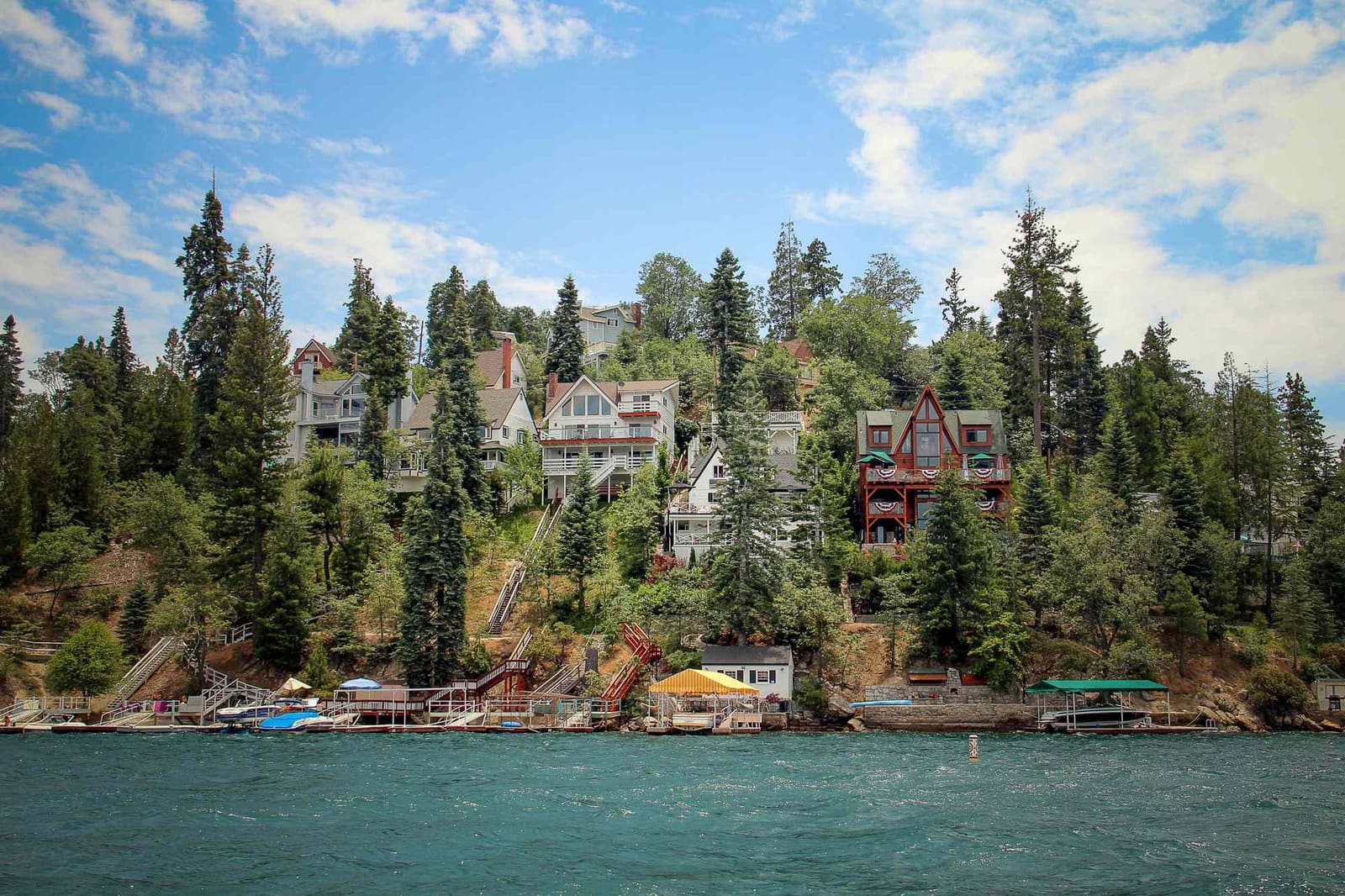
Smaller lakes offer different rhythms. Big Bear Lake in the San Bernardino Mountains maintains a mid-century cabin culture, its shoreline dotted with family retreats passed down through generations. The lake itself, a reservoir created in the late 1800s, supports fishing, kayaking, and sailing without the jet-ski intensity of larger bodies of water. The village of Big Bear Lake retains a low-slung, unpretentious character, its main street lined with outfitters and casual eateries.
Mono Lake, east of Yosemite, occupies a category of its own. This ancient, saline lake - one of the oldest in North America - sits at the edge of the Great Basin, its tufa towers rising like petrified coral from the shallows. The town of Lee Vining, on the lake's western shore, serves as a waypoint for travelers crossing Tioga Pass. It's not a resort town but a functional outpost, its few restaurants and motels catering to transient visitors. Yet the lake itself holds a strange beauty, especially at dawn when light catches the mineral deposits and the water glows silver.
Heritage Architecture and Adaptive Reuse
Many of California's mountain towns owe their architectural character to their origins. Gold Rush settlements like Nevada City and Grass Valley built in brick and stone after early wooden structures burned. The result is a streetscape that feels substantial, with Victorian commercial buildings housing galleries, bookstores, and cafes. Preservation efforts have maintained these facades while allowing interiors to evolve, a balance that keeps towns functional rather than frozen.
Truckee's downtown retains the wooden false fronts typical of railroad towns, though gentrification has polished the rough edges. What was once a working-class hub for Southern Pacific Railroad employees now caters to weekenders from the Bay Area and Sacramento. The transformation is evident in the retail mix - outdoor gear shops and wine bars outnumber hardware stores - but the bones of the town remain legible.
In smaller settlements, adaptive reuse happens on a more modest scale. Old ranger stations become visitor centers, logging-era cabins turn into vacation rentals, general stores expand to include espresso bars. The changes reflect economic necessity as much as aesthetic preference: mountain towns must adapt to survive, and tourism provides the most viable path. The challenge lies in managing that adaptation without erasing the qualities that made these places distinctive in the first place.
Seasonal Rhythms and the Question of Overtourism
California's mountain towns operate on dual calendars. Winter brings skiers and snowboarders to resorts like Mammoth Mountain and Heavenly, transforming quiet villages into seasonal boomtowns. Summer draws hikers, mountain bikers, and families seeking relief from valley heat. Shoulder seasons - late spring and early fall - offer the most balanced experience: trails accessible but not crowded, restaurants open but not overwhelmed, lodging available without advance booking.
The question of capacity looms. Lake Tahoe has grappled with overtourism for years, its infrastructure strained by visitation that exceeds what the basin's roads and parking lots can accommodate. Towns around the lake have implemented measures to manage crowds, including paid parking and shuttle systems, but the tension between access and preservation remains unresolved.
Smaller towns face their own pressures. As remote work enables more people to relocate from urban centers, mountain communities experience housing shortages and rising costs. Long-term residents find themselves priced out, and the service workers who staff restaurants and hotels struggle to find affordable accommodation. The demographic shift alters the character of these places, replacing year-round communities with part-time populations.
At Global Chic Voyage, we've seen this pattern repeat across mountain regions worldwide. The solution, where it exists, involves deliberate planning: limiting short-term rentals, investing in workforce housing, protecting open space through conservation easements. Some California mountain towns have begun these efforts; others lag behind, waiting for crises to force action.
Choosing Your Elevation
The choice of mountain town depends on what you seek. For travelers who want polished amenities and easy access to wilderness, Truckee and Mammoth Lakes deliver. Their infrastructure supports comfortable stays, and their proximity to major trailheads and ski resorts means less time driving, more time outside.
If you prefer quieter rhythms and don't mind fewer dining options, consider northern towns like Mount Shasta or McCloud. These settlements offer rawer landscapes and fewer crowds, though you'll trade convenience for solitude. The experience feels less curated, more contingent - weather and road conditions matter, and services close early or unexpectedly.
For those drawn to Gold Rush history and foothill wine country, Nevada City, Grass Valley, and Murphys provide a different balance. These towns sit at lower elevations, their summers hotter but their winters milder. The focus shifts from alpine pursuits to cultural exploration: historic theaters, art galleries, tasting rooms, and main streets designed for strolling rather than speed.
Southern California's mountain towns - Big Bear Lake, Idyllwild, Julian - serve weekend escapees from Los Angeles and San Diego. They're accessible, affordable, and family-friendly, with a casualness that contrasts with the polish of Sierra resorts. Expect cabin culture, pine-shaded trails, and a pace that resists hurry.
The Enduring Appeal
What keeps us returning to California's mountain towns is not novelty but consistency - the reliability of certain pleasures. A morning hike that ends at a lake so still it mirrors the sky. An afternoon spent on a patio with a glass of something local and a view of ridgelines stacked to the horizon. An evening meal that tastes of its place, served by people who live there year-round and know the names of the ranchers who raised the meat and the growers who harvested the vegetables.
These are not experiences that photograph well or reduce easily to social media captions. They require presence, a willingness to move at the speed of elevation gain, to let the landscape set the rhythm. In an era of frictionless travel and algorithmic recommendations, California's mountain towns offer something increasingly rare: places that reward slowness, that ask you to pay attention, that give back in proportion to what you invest.
We suspect that's why they endure, even as the state around them accelerates. Mountains resist hurry. The towns that have learned to live within that resistance - honoring their history while adapting to new realities, welcoming visitors without losing their identity - these are the ones that will remain, long after trends shift and attention moves elsewhere. They've found a balance, and in doing so, they've become more than destinations. They've become refuges.
Photo: Claire / Adobe Stock
Spot something wrong? Email editors@globalchicvoyage.com. We log every correction publicly.
RELATED
SEE ALL →
18 Jul 2026 / 5 min
8 Aug 2026 / 5 min
7 Aug 2026 / 5 min

31 Jul 2026 / 5 min