
DESTINATIONSTHE VOYAGE ESSAY
AlUla, Saudi Arabia: Desert Monuments And Timeless Stone
AlUla
RA
4 Feb 2026 · 5 MIN READ · UPDATED 17 AUG 2026
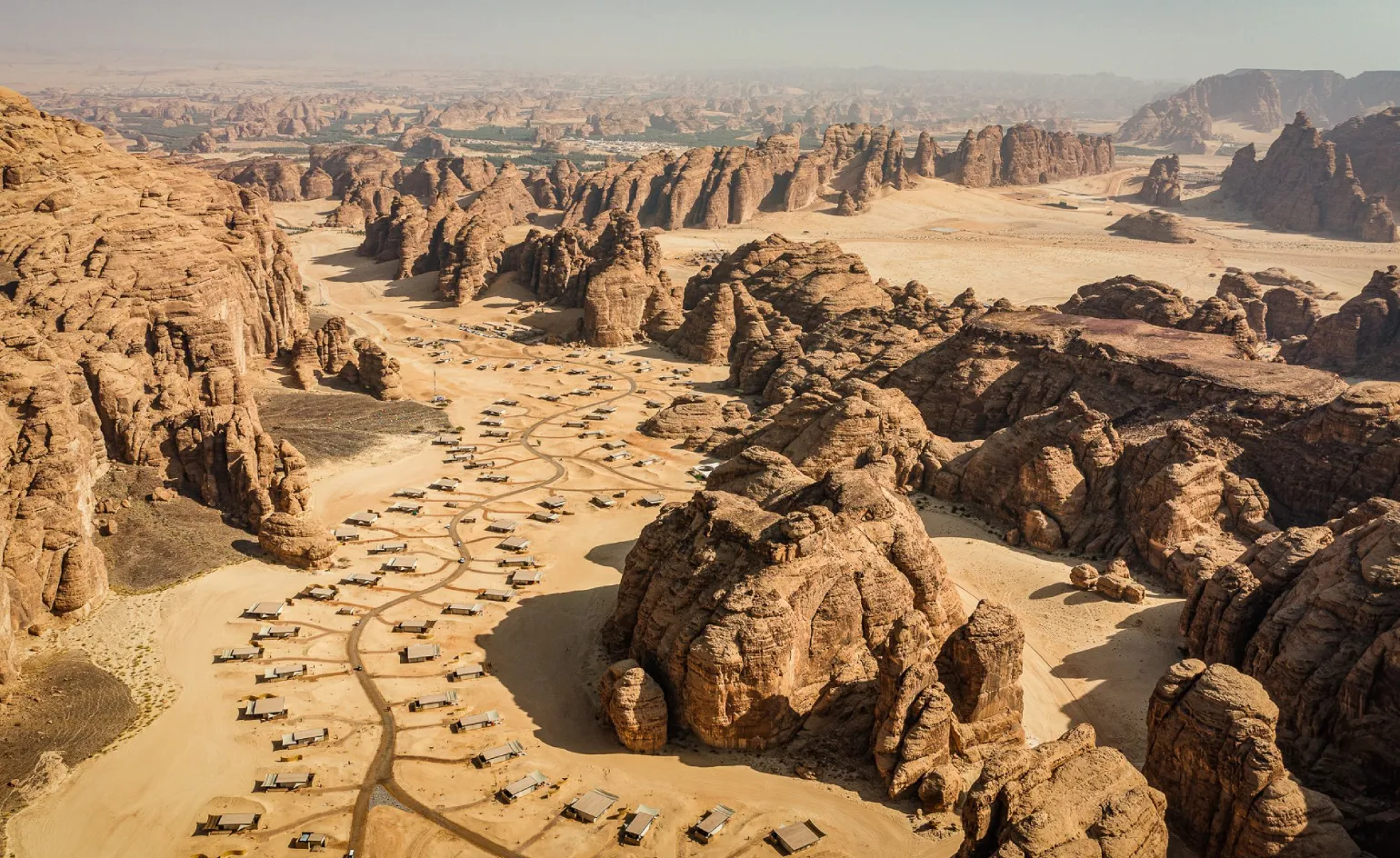
Rising from the sands of northwestern Saudi Arabia, AlUla feels less like a destination and more like a revelation. Here, monumental sandstone cliffs, ancient tombs, and vast desert plains form a landscape shaped by time on a truly epic scale. Once a crossroads of incense trade routes, AlUla has emerged as one of the Middle East’s most compelling cultural destinations, where archaeology, nature, and contemporary hospitality meet in quiet grandeur.
A Destination Shaped by Time
AlUla’s story is etched into stone. The region has been inhabited for thousands of years, leaving behind layers of Nabataean, Dadanite, and Islamic heritage. At its heart lies Hegra (Madain صالح), Saudi Arabia’s first UNESCO World Heritage Site, where more than 100 monumental tombs are carved directly into rose-hued rock faces. Unlike Petra, its more famous Jordanian counterpart, Hegra remains strikingly serene - its scale and detail unfolding slowly as the desert light shifts.
Beyond its archaeology, AlUla captivates through its raw natural beauty. Wind-sculpted formations such as Elephant Rock and the dramatic canyons of Ashar Valley create an almost cinematic backdrop, while palm-filled oases and old mudbrick villages soften the desert’s intensity. This interplay between monumentality and intimacy defines AlUla’s unique character.

Hegra (Madain صالح)
Photo Credit: Tanveer Badal

Ashar Valley
Photo Credit: Banyan Tree AlUla
Things to Do in AlUla
Explore Ancient Civilizations
A guided visit to Hegra is essential, offering insight into Nabataean engineering, symbolism, and funerary traditions. Nearby, the ruins of Dadan and Jabal Ikmah - often called an open-air library - reveal inscriptions carved in multiple ancient scripts, providing rare glimpses into pre-Islamic Arabia.

Dadan and Jabal Ikmah
Photo Credit: Experience AlUla
Experience the Landscape
AlUla’s desert is best experienced beyond the vehicle. Sunrise hikes, guided canyon walks, and horseback rides across sandy plains allow travelers to engage directly with the land. For a more dramatic perspective, hot-air balloon rides float silently over rock formations and oasis farms, turning the desert into a living map of color and shadow.
Art, Culture, and Events
Contemporary culture has found a powerful stage in AlUla. The mirrored Maraya Concert Hall, blending seamlessly into its surroundings, hosts international performances, exhibitions, and festivals. Seasonal events like Winter at Tantora celebrate music, art, and gastronomy, transforming the desert into a cultural gathering ground without overwhelming its sense of calm.

Mirrored Maraya Concert Hall
Photo Credit: Experience AlUla
Refined Desert Dining
Dining in AlUla is an experience rooted in place. From starlit desert pop-ups to refined restaurants highlighting regional ingredients, meals often unfold slowly, framed by firelight and stone. Local dates, honey, lamb, and herbs feature prominently, connecting cuisine to the land itself.
Where to Stay
AlUla’s hospitality offering reflects its landscape - luxurious yet restrained. High-end desert resorts and eco-conscious lodges are designed to blend into the terrain, prioritising privacy, natural materials, and expansive views. Many properties offer curated experiences, from guided heritage tours to private desert dinners, making the stay as immersive as the destination.
Our Habitas AlUla
Set within the dramatic Ashar Valley, Our Habitas AlUla is a low-impact luxury resort built with modular villas that sit lightly on the desert floor. The design emphasises raw materials, outdoor bathing, and uninterrupted views of sandstone cliffs, with experiences ranging from canyon hikes to wellness rituals and stargazing.
Banyan Tree AlUla
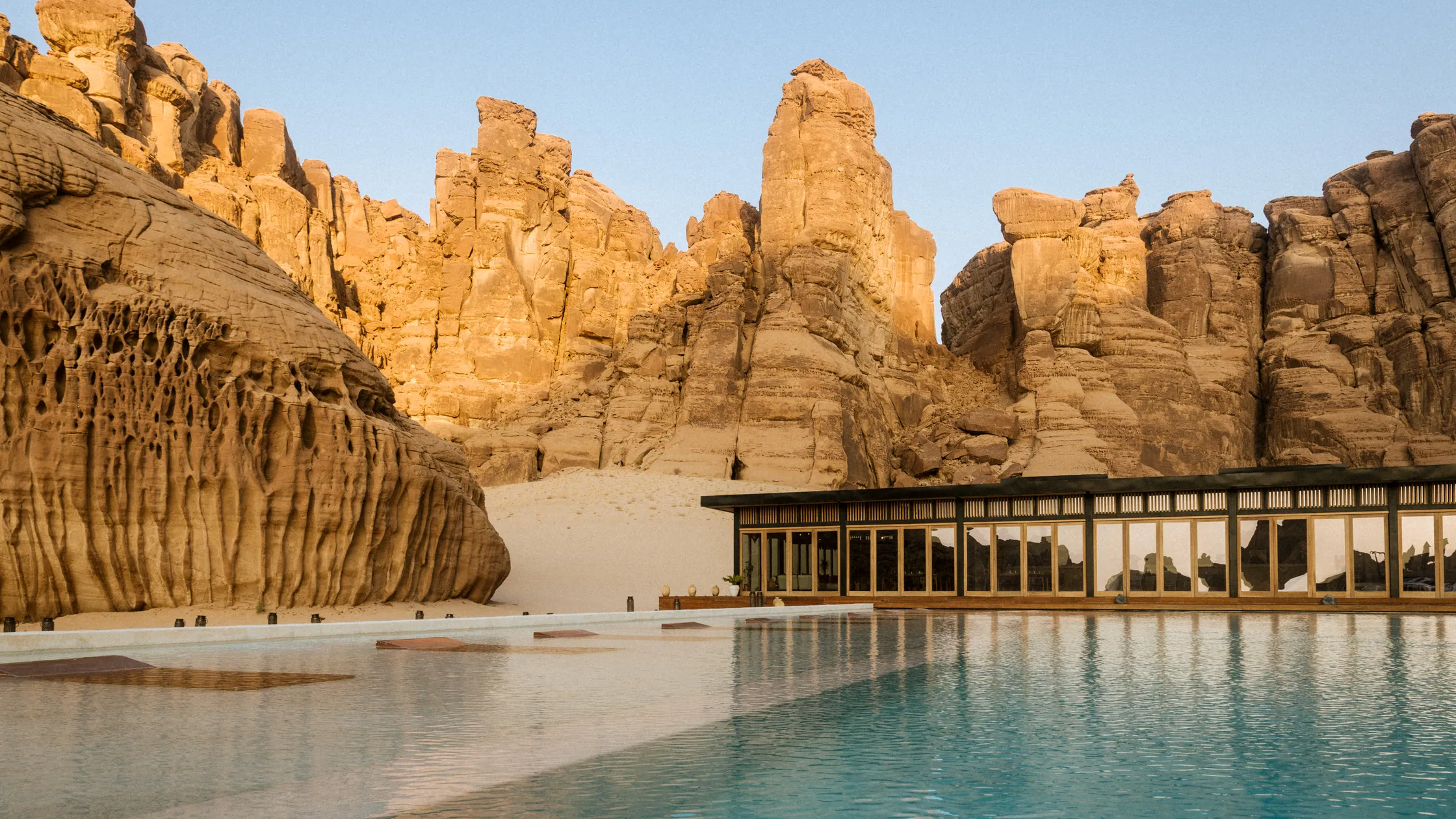
Nestled among towering rock formations, Banyan Tree AlUla offers tented villas with private pools that blend Bedouin-inspired forms with contemporary luxury. The resort focuses on seclusion, slow dining, and curated desert experiences, including private dinners among the rocks and guided heritage excursions.
Dar Tantora The House Hotel
Located in AlUla Old Town, Dar Tantora occupies restored mudbrick houses dating back centuries. The hotel operates on a sustainability-driven concept inspired by the traditional “Tantora” sundial, reconnecting guests with pre-modern rhythms of light, climate, and community life.
Shaden Resort
Positioned near key heritage sites, Shaden Resort provides private chalet-style units that echo traditional desert forms. While more accessible in price point, it still offers proximity to archaeological landmarks and desert scenery.

Our Habitas AlUla
Photo Credit: Tanveer Badal

Banyan Tree AlUla
Photo Credit: Banyan Tree AlUla
Travel Tips for AlUla
+ Best Time to Visit: October to March offers cooler temperatures and the region’s main cultural events. Summers can be extremely hot and are best avoided.
+ Getting There: AlUla International Airport connects to Riyadh, Jeddah, and select international hubs. On arrival, guided transport is recommended for accessing heritage sites.
+ Dress & Etiquette: Modest, breathable clothing is advised, especially when visiting cultural sites. Evenings can be cool, so light layers are essential.
+ Planning Ahead: Many sites, including Hegra, require advance booking and guided entry. Planning ahead ensures access to key experiences.
+ Slow Travel Mindset: AlUla rewards patience. Allow time for changing light, quiet moments, and unstructured exploration - this is a destination to absorb, not rush.
A Living Desert Monument
AlUla is not defined by a single landmark or attraction, but by atmosphere - by the way stone glows at dusk, by the silence of vast open spaces, and by the sense of standing within history rather than observing it from afar. For travelers drawn to places where landscape and legacy are inseparable, AlUla offers a rare and deeply resonant journey into the timeless heart of the desert.
Spot something wrong? Email editors@globalchicvoyage.com. We log every correction publicly.
RELATED
SEE ALL →
11 Feb 2026 / 5 min
28 Feb 2026 / 5 min
12 Feb 2026 / 5 min
24 Apr 2026 / 5 min